



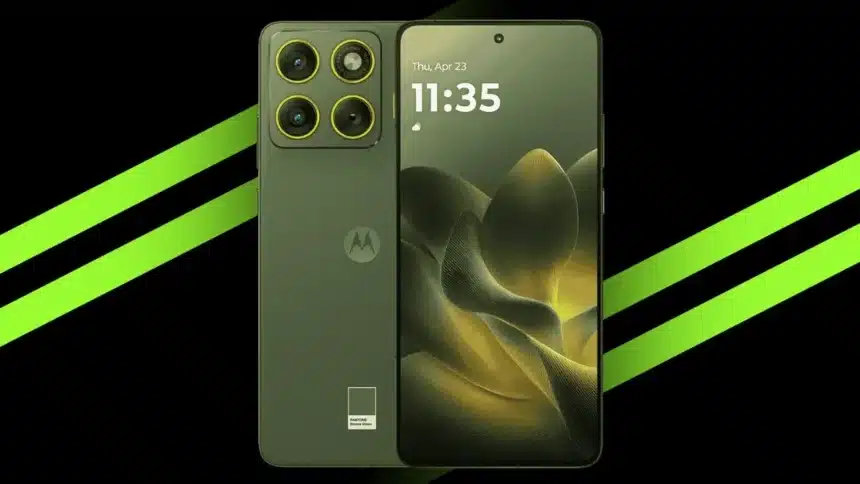
Motorola Edge 70: Motorola has made a surprise move into the ultra-slim smartphone space, aiming directly at established rivals Samsung and Apple.
Rather than positioning the Edge 70 as a flashy statement device, Motorola has taken a more restrained approach. The name itself is understated, simply Edge 70, and it arrives as the first model in a wider Edge 70 lineup expected later in the year.
Pricing also reflects this more grounded strategy. The Edge 70 is thinner than most phones at 5.99mm, compared to 5.8mm from Samsung and 5.6mm from Apple, but it comes in at a noticeably lower price. That makes the trade-offs more acceptable and raises the question of whether Motorola has made smarter choices with its slim design.
Motorola Edge 70 – Price and availability:
The Motorola Edge 70 launched in early November and is widely available across the UK and Europe. It costs £699.98 or €799.99 and is sold exclusively with 512GB of storage.
At the time of writing, Motorola is offering incentives such as free Moto Buds, a 68W charger, Moto Tag, Moto Watch Fit, and a 10 percent discount when buying directly. These extras improve the overall value proposition.
While competitively priced against other ultra-slim phones, it remains expensive compared to many mid-range alternatives. The Edge 70 is expected to launch in Australia later this year, with pricing still to be confirmed, but it will not be released in the USA.
Moto Edge 70 vs Moto Edge 60:
The Edge 70 effectively replaces the Edge 60 in Motorola’s lineup, although it sits higher in price. Compared to its predecessor, it introduces a slimmer and lighter design but removes some features to achieve that form factor.
Key changes include fewer cameras, the removal of the telephoto lens, and a smaller battery. The Edge 70 uses a 4800mAh silicon-carbon battery and measures 5.99mm thick while weighing 159g, compared to the Edge 60 at 7.99mm and 179g. Performance is improved thanks to the Snapdragon 7 Gen 4 processor, replacing the Dimensity 7300.
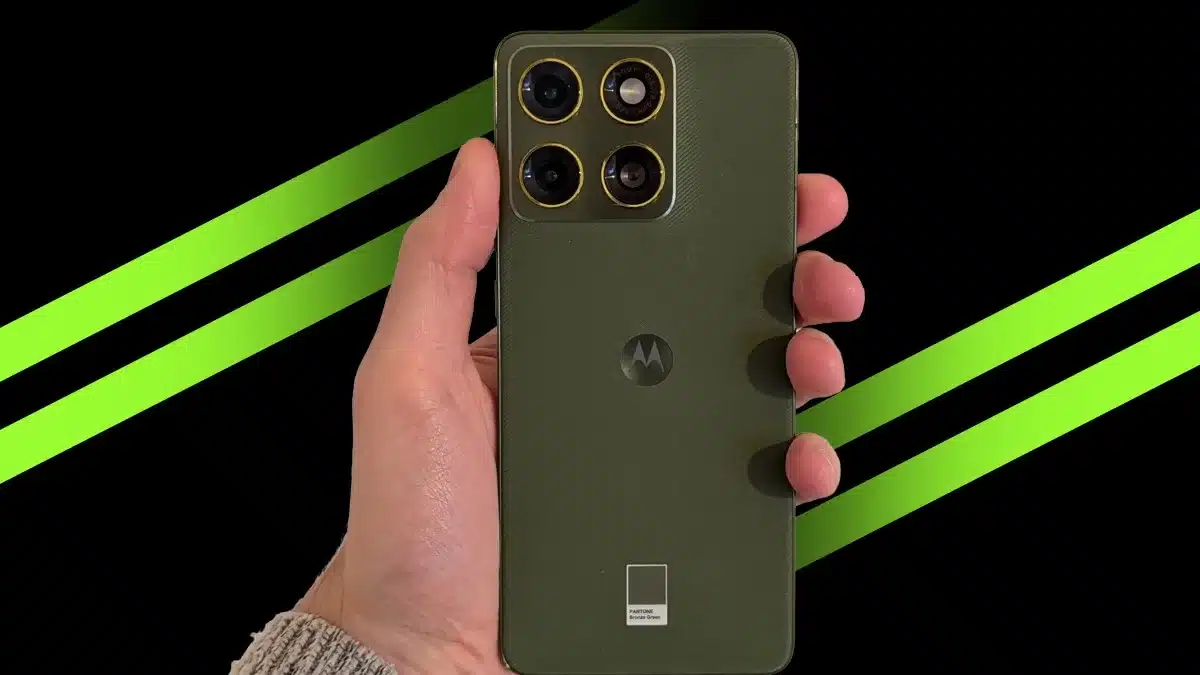
Visually, the two devices are very similar. Unlike the iPhone Air and S25 Edge, which appear as “special” variants, the Edge 70 looks like a standard Motorola phone. It retains four roundels on the camera bump, even though only two house lenses, one is the flash, and the third contains a “3-in-1 light sensor”.
Motorola Edge 70 – Design and display:
The Edge 70 features a 6.67-inch OLED display with a 2712 x 1220 resolution, 120Hz refresh rate, and a 20:9 aspect ratio. Slim bezels, vibrant colours, and Pantone Validated certification contribute to an impressive visual experience. Brightness reaches up to 4500 nits, ensuring strong outdoor visibility.
The design follows Motorola’s recent style, with a Pantone-coloured rear in a “Nylon-inspired” finish and an aluminium frame. The device is protected by IP68 and IP69 ratings, along with MIL-STD 810H certification.
At 159 x 74 x 5.99mm and 159g, the phone feels notably slimmer and lighter than previous models. Even with the included case, it remains close to the thickness of a standard phone. In everyday use, this makes it easier to handle, more comfortable in a pocket, and slightly more refined in appearance.
Motorola Edge 70 – Performance and battery:
The Edge 70 is powered by the Snapdragon 7 Gen 4, paired with 12GB of RAM and 512GB of storage. This places it firmly in the mid-range category, below flagship devices using Snapdragon 8-series chips.
In real-world use, performance is smooth and responsive for everyday tasks such as browsing, messaging, and multitasking. While more powerful alternatives exist at similar prices, the Edge 70 does not feel underpowered in typical use.
Battery capacity is 4800mAh, supported by 68W wired charging and 15W wireless charging. Although smaller than some competitors pushing beyond 7000mAh, endurance is solid for a full day. Fast charging helps offset the reduced capacity, especially compared to Samsung’s slim phone with a 3900mAh battery.
Motorola Edge 70 – Software experience:
The Edge 70 runs Android 16 with Moto AI and comes with a promise of four OS updates and five years of security updates.
Motorola has traditionally been praised for its near-stock Android experience, but the addition of Moto AI introduces more complexity. During setup, users are prompted to install additional apps, and the app drawer now includes AI-powered search and a “newsfeed”.
Moto AI exists alongside Google Gemini, while Copilot Vision duplicates features already available through Gemini Live or Google Lens. This results in overlapping functionality and a less cohesive experience.
A dedicated AI button on the side launches Moto AI features and requires a Moto account. While some users may find these tools useful, others may prefer to disable them to reduce clutter.
Motorola Edge 70 – Camera performance:
The Edge 70 uses a dual rear camera setup, consisting of a 50MP main camera with optical image stabilisation and a 50MP ultrawide camera with autofocus. A dedicated telephoto lens has been removed, matching a similar decision by Samsung and Apple.
Zoom relies on sensor cropping for 2x and digital zoom up to 20x, with noticeable quality loss beyond 2x. Low-light performance can appear inconsistent, with softer detail and colour variation. The device also does not display Google’s Ultra HDR in Google Photos, which affects how images appear compared to Pixel devices.
In good lighting, the main camera performs well, producing detailed and pleasing results. Video capture is improved, offering 4K at 60fps, and the 50MP front camera handles portraits effectively with clear subject separation.
Verdict:
The Motorola Edge 70 stands out by offering an ultra-slim design at a lower cost than its main competitors. It feels more like a conventional smartphone, which may appeal to users who want a thinner device without a dramatic design shift.
However, it remains a mid-range phone in performance, camera quality, and software experience. While the display, build quality, and battery charging are strong, it struggles to compete with similarly priced devices that offer better cameras or cleaner software.
The Edge 70 represents a positive step for slim phones, delivering reduced thickness without extreme compromises. It is not yet a defining moment for the category, but it shows that ultra-slim designs can be more accessible and practical than before.
Also consider:
While the Samsung Galaxy S25 Edge and iPhone Air are obvious comparisons in terms of slim design, both are significantly more expensive, making their compromises harder to justify.
At its price point, the Edge 70 competes more directly with mid-range and sub-flagship devices. Alternatives include the OnePlus 15R with higher performance, the Honor 400 Pro with stronger camera hardware but weaker software, or the Google Pixel 9a, which offers better camera performance, lower pricing, and a cleaner Android experience.