




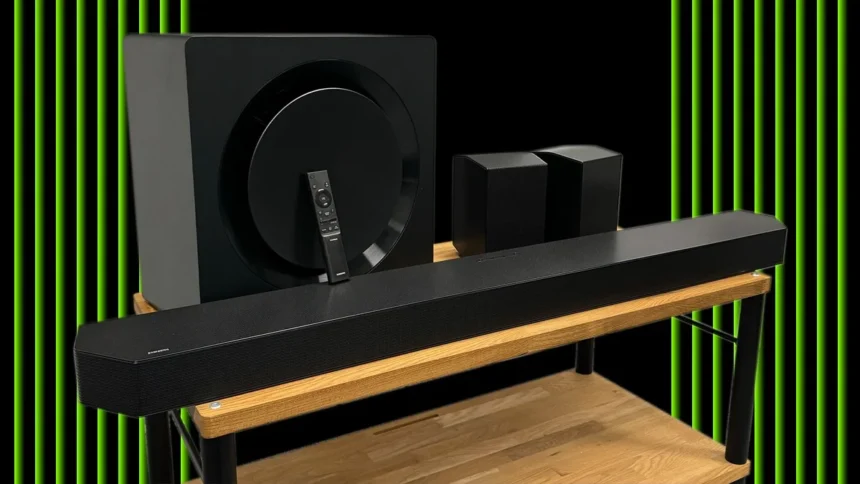
Samsung HW-QS700F: Samsung’s relationship with soundbars has been anything but consistent. The brand reached the top end of the market this year with the Samsung HW-Q990F, a premium Dolby Atmos system that picked up a What Hi-Fi? Award. With a price tag of £1699 / $1999 / AU$1999, it firmly sits in flagship territory.
However, that success hasn’t always carried over to Samsung’s more affordable soundbars. Several budget-friendly models have fallen short of five-star expectations, leaving room for improvement.
Meet the Samsung HW-QS700F:
The HW-QS700F is Samsung’s latest attempt to strike a balance between price and performance. The system includes a main soundbar and a wireless subwoofer, and Samsung says it is “designed for clear, dynamic, cinematic sound”.
Priced at £649 / $649 / AU$999, it sits squarely between two popular Sonos options. The premium Sonos Arc Ultra launched at £999 / $999 / AU$1799, while the more compact Sonos Beam Gen 2 comes in at £449 / $449 / AU$649. Both are well-regarded What Hi-Fi? Award winners, so the competition is stiff.
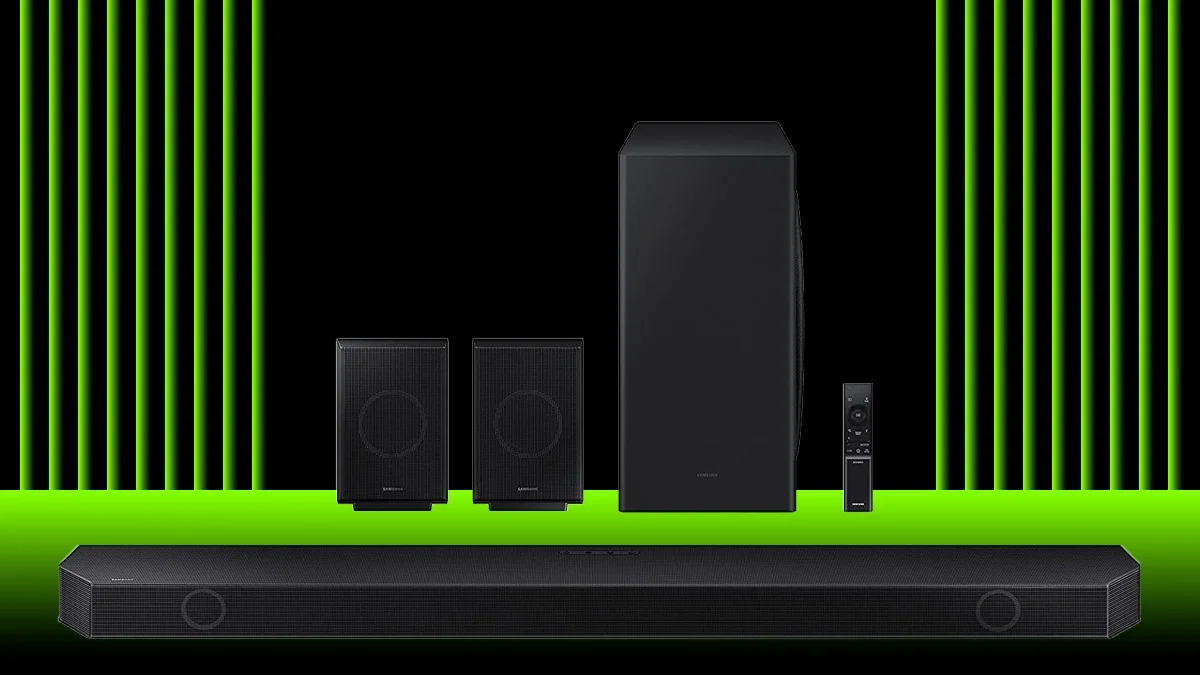
What’s Inside the Box:
This is an 11.1.4-channel system with a total of 23 drivers spread across the soundbar, surrounds and subwoofer. The main soundbar alone houses 15 drivers, the surround units feature three drivers each, and the subwoofer packs dual 20cm force-cancelling drivers with a claimed 300W output.
After testing the QS700F with colleagues, it’s clear that this system has plenty going for it. It delivers strong bass and offers flexible placement options, though it doesn’t quite reach the sound quality of the very best in its class.
Clear Dialogue That Cuts Through the Noise:
One of the main reasons people invest in soundbars is to improve speech clarity, and the QS700F does not disappoint in this area. Dialogue is clean, focused, and easy to understand, offering a noticeable step up from most TV speakers.
While watching Thunderbolts in Dolby Atmos, Yelena’s conversations with her unlikely allies are easy to follow. The voices carry good tone and weight, even if they don’t feel quite as natural or expressive as they do on the Sonos Arc Ultra.
Even so, the forward presentation ensures you won’t miss a single line of dialogue in movies or TV shows.
A Design That Adapts to Your Space:
Samsung has put real thought into the design of the QS700F. It can be placed flat on a TV unit with the grille facing upward or mounted on a wall facing the listener. This is handled through Samsung’s ‘Convertible Fit’ feature, which uses a built-in gyro to detect the soundbar’s orientation.
The front and up-firing speakers automatically adjust depending on how the bar is positioned. During testing, this feature worked smoothly, making it easy to switch setups without affecting sound quality.
Setup is quick and stress-free, with automatic calibration and simple pairing with the subwoofer. Once everything is placed correctly, there’s little need for further adjustments.
Bass That Packs a Serious Punch:
The wireless subwoofer plays a big role in shaping the overall sound. It’s the same size as the one included with the flagship Samsung HW-QS700F, measuring 25 x 25 x 25cm.
While it doesn’t quite match the deeper low-end reach of its more expensive sibling, stopping at 34Hz compared to 32Hz, it still delivers powerful, room-shaking bass.
This really shines during Jurassic World on 4K Blu-ray, especially when the Mosasaurus bursts from the water. The impact is dramatic and thrilling, adding tension and weight to the scene while keeping other sounds clear.
When Loudness Starts to Work Against It:
Despite its strengths, the Samsung HW-QS700F isn’t flawless. At higher volumes, the sound can become a little shouty, particularly during quieter or more emotional moments.
The lack of subtle low-level dynamics means softer scenes don’t breathe as naturally as they should, which can feel tiring over long viewing sessions.
In Wicked, during the gentle opening of Defying Gravity, Glinda and Elphaba’s vocals remain clear but sound slightly harsh, reducing the emotional impact. The Sonos Arc Ultra handles this kind of moment with far more finesse.
Atmos Sound That Falls Short of Immersion:
The Dolby Atmos performance is another area where the QS700F struggles to truly impress. While it delivers height effects, the placement lacks precision.
In Unbroken, the bombing scenes should feel tightly controlled and surround the listener. Instead, the explosions land in a more general space, without the sharp accuracy that makes Atmos really convincing.
The soundstage doesn’t extend much beyond the width of the TV either, which limits the sense of scale. By comparison, the Sonos Arc Ultra creates a wider and taller soundfield that feels far more immersive.
Final Verdict:
The Samsung HW-QS700F doesn’t dethrone the class leaders, but it does offer a compelling mix of features. Strong bass, clear dialogue, and flexible positioning make it a solid mid-range option.
While spending more will get you better refinement and Atmos performance, the QS700F remains a good choice for buyers who want a cinematic upgrade without stretching their budget too far. And given Samsung’s history, it may become an even better deal once discounts start to appear.
ALSO READ: China-founded Tripo AI Supercharges 3D Creation as Global User Base Soars