



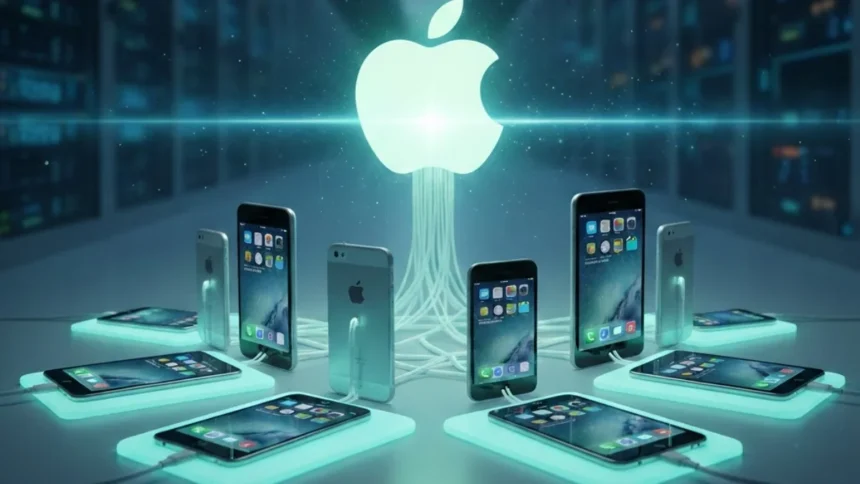
Apple has quietly rolled out new updates for some surprisingly old versions of iOS, including iOS 12 and iOS 15. These versions are more than ten years old in some cases, so the updates caught many people off guard.
These updates are not about shiny new features or traditional security fixes. Instead, they focus on something much more basic but still important. They update the security certificates that let services like iMessage, FaceTime, and Apple account sign-ins continue working beyond January 2027.
Old iPhones Get a Quiet Lifeline from Apple
Apple also released a similar update for iOS 18.7.4. That part makes sense, since iOS 18 is still actively supported on devices like the iPhone XS and iPhone XR.
What feels odd is the inconsistency in Apple’s approach. iOS 16 recently received an update, but it does not mention any certificate renewal. At the same time, there is no equivalent patch for devices stuck on iOS 17. Even more confusing, newer iPhones did not receive this update at all.
This uneven rollout leaves many users unsure how long their older iPhones and iPads will continue to work properly with basic Apple services.
Older iOS Versions Are Hard to Use Day to Day
Devices running iOS versions from 12 through 16 are becoming less practical as everyday smartphones or tablets.
Many of these devices only have 1 or 2GB of RAM. Their versions of Safari are outdated and lack the features and security protections needed for today’s web. On top of that, third-party apps tend to drop support for these iOS versions fairly quickly, which further limits what users can do with them.
Still, that does not mean these devices are completely useless.
Old iPhones Still Have a Place
A phone like the iPhone 5S can continue doing simple jobs long after its mainstream support ends. Apple has a long history of providing limited security updates for older hardware, usually for a year or two after full support stops.
The recent updates fit this pattern. Examples include iOS 12.5.8 for devices like the iPhone 5S and iPhone 6, iOS 15.8.6 for the iPhone 6S, 7, and iPad Air 2, and iOS 16.7.13 for the iPhone 8 and iPhone X.
These updates help older devices keep doing the basics, even if they cannot run the latest apps or system features.
Why These Updates Still Matter
Many older iPhones and iPads continue to be useful long after Apple moves on, especially in low-income countries where buying a new device is not always possible. Even phones that are more than a decade old can still handle simple tasks like messaging, listening to music, or running basic automation.
Some people turn them into dedicated media players, alarm clocks, or starter phones for children. Others keep them as backup devices. In all of these cases, core services like iMessage and FaceTime still matter.
That is why these small, quiet updates are more important than they might seem. Even without new features or major fixes, keeping essential services running helps older devices stay useful just a little bit longer.