



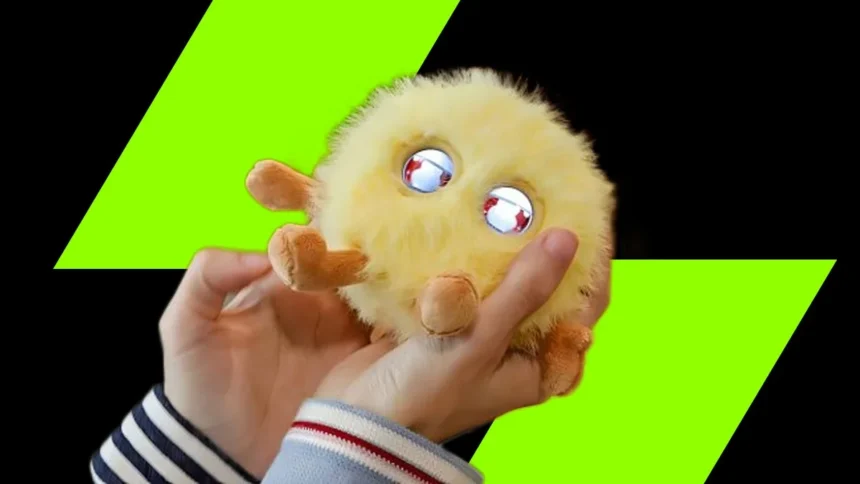
Huawei Technologies made a strong entrance into the AI toy space in late November, selling more than 10,000 units of its new Smart Hanhan plush toy in just its first week. The quick uptake highlights how smart toys are becoming a popular choice for consumers around the world.
Based in Shenzhen, Huawei describes Smart Hanhan as an AI-powered emotional support plush toy. Priced at 399 yuan (US$57), it offers interactive companionship through movement recognition, voice, and touch. When a user asks it to do something simple, like counting sheep, Smart Hanhan often adds funny remarks or even cheekily refuses to follow instructions exactly, giving it a playful personality.
The toy works smoothly with other Huawei devices running HarmonyOS 5.0 or later. It also uses Huawei’s voice assistant, Xiaoyi, which allows for more natural conversations.
One early buyer on JD.com, who chose to remain anonymous, said the toy’s features were “still a bit limited”, but noted that this was understandable for a first-generation product.
Smart Hanhan is Huawei’s latest step into a fast-growing global market for AI-powered toys.
A Fast-Growing Global Market
According to research firm IMARK Group, the global AI toy market is expected to grow from US$18.1 billion in 2024 to US$60 billion by 2033. The firm said the trend is especially strong in North America and Asia, where high internet use and widespread smartphone ownership make online shopping easy.
With strong policy backing from Beijing, China’s AI toy industry is also set for rapid growth. Data from Chinese research firm AskCI Consulting shows the market could expand from 24.6 billion yuan this year to 85 billion yuan by 2030.
Smart dolls and plush toys made up 28 per cent of China’s AI toy market in 2023, according to AskCI. Robots accounted for 22 per cent, while educational and learning toys represented 13 per cent.
Start-ups and Tech Giants Join the Race
China’s AI toy scene is not limited to big players like Huawei. In 2024, Chinese start-up Haivivi launched BubblePal, an AI-powered toy designed for children to talk with, listen to stories, and interact using voice. Powered by large language models, BubblePal has been a hit, with Haivivi saying more than 200,000 units had been sold worldwide by mid-2025.
Rising demand at home has also pushed major tech companies into the market. JD.com rolled out its own plush toy animal line, JoyInside, just a week before Huawei launched Smart Hanhan. Each JoyInside toy sells for 239 yuan.
In May, Shenzhen-based UBTech Robotics introduced Meng UU, a palm-sized doll with built-in AI that can interact with users. “It’s like putting a large language model into people’s pockets,” said Michael Tam, chief brand officer at UBTech.
Robots That Teach and Connect
UBTech is no stranger to AI-powered companions. Its Wukong robot, also known as Alpha Mini, stands about as tall as an iPad and shares many features with Meng UU. Tam emphasized its role in education, saying children can use the robot to help with homework.
“You’ll see Wukong has many expressions; he converses by reading into your meaning, tone and even your facial cues,” said Tam. He added that children can ask Wukong questions about their schoolwork, tapping into its built-in large language model.
“Wukong possesses a sense of empathy and the ability to form emotional connections,” said Tam.
“Meng UU was designed for portability and companionship, and for providing emotional value,” Tam said. He explained that both Wukong and Meng UU reflect UBTech’s vision for small-scale humanoid robots.
Rising Investment and Quick Returns
Investment in China’s intelligent toy sector has been picking up speed. Chinese research firm IT Juzi reported that 13 AI toy projects received a total of 219 million yuan in funding in 2024. In just the first half of 2025, nine projects attracted 224 million yuan.
This rush into AI toys is largely about turning artificial intelligence into profit, according to Zhang Yi, CEO and chief analyst at iMedia Consulting. “At this stage, toys are actually the fastest to monetise among AI applications, and the supply chain is already quite mature.”
Zhang also pointed out that AI toys are no longer just for children. “Among adults, especially those looking for emotional companionship and stress relief, and those attracted by fashion and tech, the interest spans all age groups, from young people to seniors, which points to a large and diverse market.”
He added that these products come with a premium price. “Based on our research, AI toys are priced at around eight times the average price of traditional plush toys,” Zhang said. “That is a sizeable premium.”
Fighting Loneliness With Technology
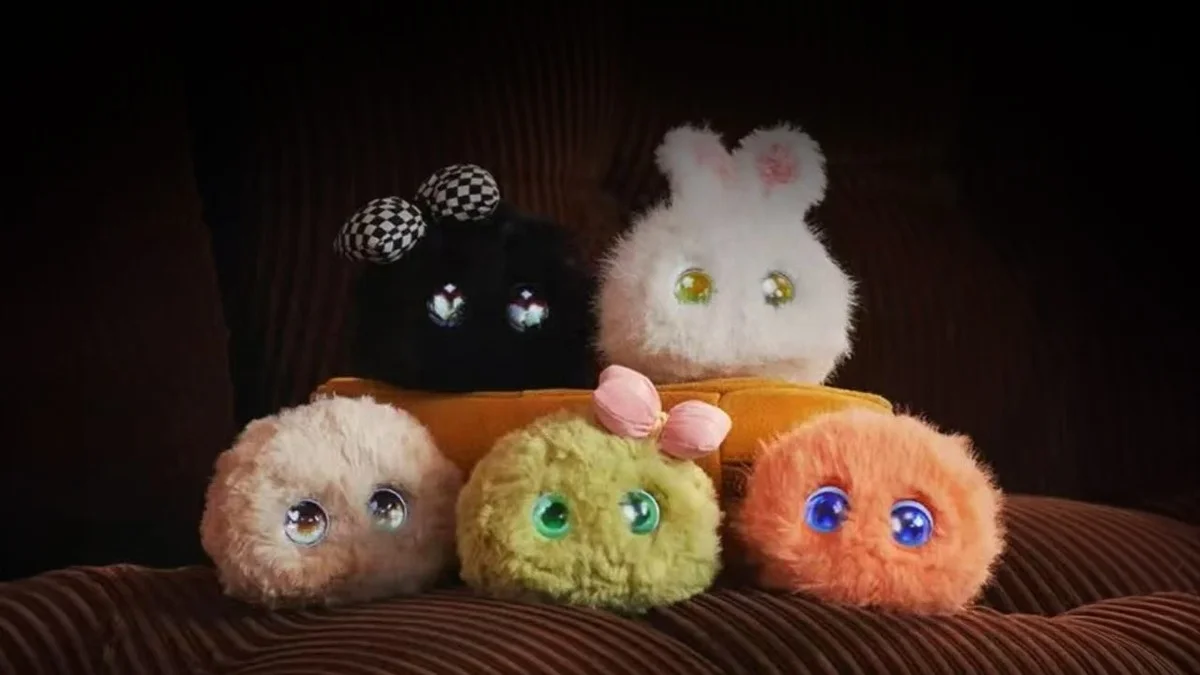
For some founders, the appeal of AI toys goes beyond profits. He Jiabin, co-founder of AI-powered toy pet maker Ropet and a former ByteDance product designer, believes these products can help tackle loneliness.
“This loneliness is not simply about being alone. It arises from fast-paced lives and an excessive focus on external striving, which can leave people emotionally numb and deprived of genuine emotional connection,” He said.
Drawing on his own experience as a cat owner, He explained that emotional value is key. “Whether it’s a static designer collectible on a shelf or a real pet you care for, the core value lies in providing emotional support and a sense of presence.”
As AI toys continue to evolve, companies across China are betting that companionship, comfort, and a touch of personality will keep consumers coming back for more.