



Dozens of Chinese smart glasses makers stole the spotlight at this year’s CES trade show in Las Vegas, showing off lightweight, AI-powered eyewear that could challenge a market long shaped by Meta Platforms’ Ray-Ban Display.
During the four-day event, which wrapped up on Friday, Chinese companies made up the majority of the roughly 60 smart eyewear exhibitors. Their offerings covered a wide range, from audio-focused glasses designed for all-day comfort to advanced augmented reality models that project digital content into the wearer’s view.
A wide range of new smart eyewear
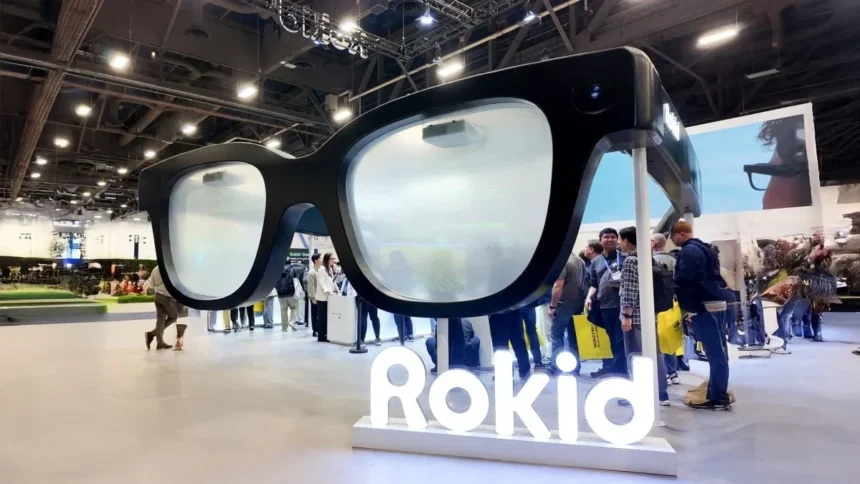
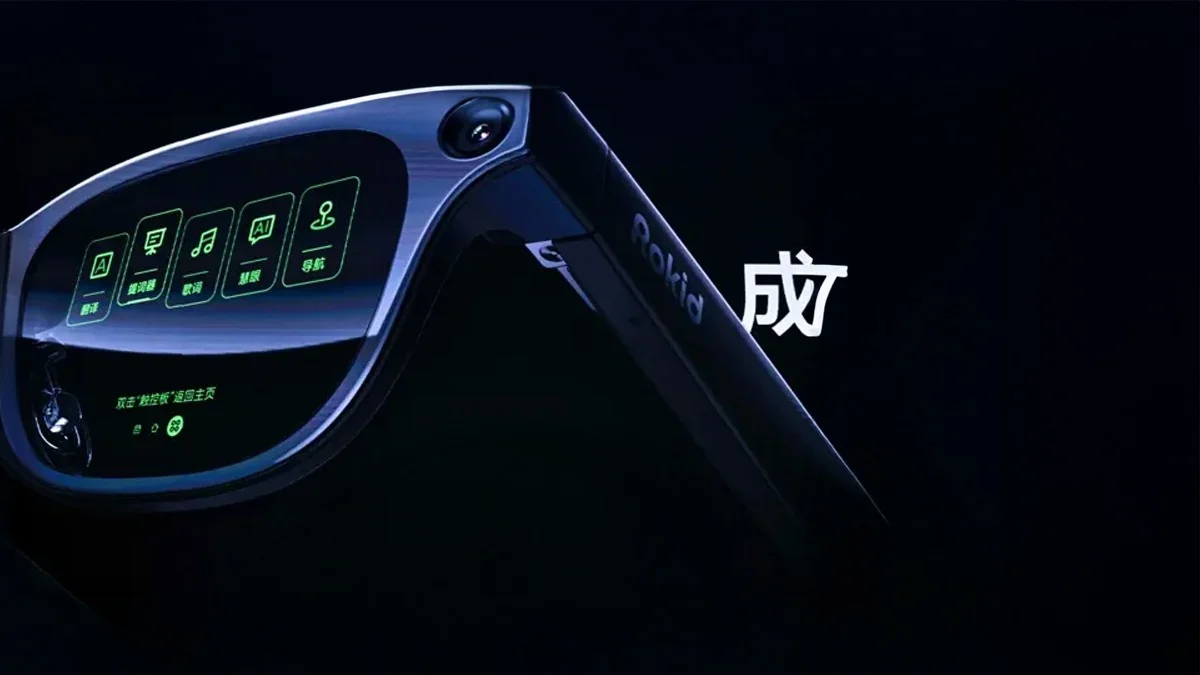
Among the standout exhibitors was Rokid, which introduced its audio-first, screen-free Rokid AI Glasses Style, powered by a mix of US and Chinese large language models. Xreal unveiled several new AR devices, including the Xreal 1S and the gaming-focused ROG Xreal R1. RayNeo also drew attention with its X3 Pro Project, which features eSIM support so the glasses can work independently without being connected to a smartphone.
Other Chinese companies also made their mark. LLVision Technology showcased its Leion Hey2 glasses designed specifically for translation. Even Realities presented its newly released Even G2 smart glasses, weighing just 36 grams and paired with a smart ring. Alibaba Group Holding, owner of the South China Morning Post, displayed its Quark AI Glasses. Additional exhibitors included Meizu, Sharge, INMO, projector maker Xgimi, and audio brand Shokz.
AI fuels the next wave of wearables
The strong presence of Chinese brands at CES highlighted how fast advances in large language models and multimodal AI are making smart, connected hardware easier to build. Some industry watchers now see smart glasses as a possible next major personal computing platform after smartphones.
“The rise of smart glasses is riding directly on advances in AI,” said Wu Fei, founder and CEO of LLVision.
Wu explained that his Beijing-based company chose to “did less” with its latest product by focusing entirely on translation rather than packing in many features. Powered by LLMs, the glasses can handle mixed-language input and conversations involving multiple speakers, while showing real-time transcripts directly in the user’s field of view.
Strong growth at home and abroad
Market data shows that demand is already climbing quickly. According to IDC, smart eyewear shipments in China reached 623,000 units in the third quarter, a 62.3 per cent increase from a year earlier. Audio and video-recording glasses accounted for 454,000 units, while AR and virtual reality devices made up the remaining 169,000.
On a global scale, Counterpoint Research reported that smart glasses shipments more than doubled in the first half of 2025, jumping 110 per cent year on year. Meta led the market with a 73 per cent share, driven by its Ray-Ban Display line. Founder Mark Zuckerberg has reportedly set a sales goal of 5 million units for 2025.
Chinese manufacturers are catching up fast, helped by a tightly connected supplier network that allows increasingly advanced parts to fit into slim, lightweight frames.
“So many players are entering the market,” said Chen Menghao, general manager of the innovation centre at Appotronics, a laser technology company that builds optical engines for smart glasses with displays.
At CES, Appotronics showed off its ultra-compact Dragonfly G1 Mini, a 0.2 cubic centimetre single-green engine, along with the 0.4cc full-colour Dragonfly C1. Both enable a single-engine binocular design, an important step toward lighter AR glasses.
Suppliers prepare for a big turning point
Demand from smart eyewear makers has surged, according to Chen. He said Appotronics expects 2027 to be “a very big year” for the category, when smart glasses become “good enough” and affordable at prices below US$300.
A staff member at Lens Technology, who asked not to be identified, said rising orders and supply chain discussions suggest the market is entering the early acceleration phase of AI hardware, “not the peak of a bubble”. Lens Technology, based in central Hunan province and a supplier to Apple, also works with Hangzhou-based Rokid. Other major Chinese suppliers seen at CES included Goertek, O-Film and Sunny Optical.
“The evolution of chips and optical displays will be critical,” said Jason Low, a research director at Omdia. “They directly shape what smart glasses could become next.”
Competition drives faster innovation
According to LLVision’s Wu, smart glasses brands and their suppliers are pushing one another to move faster. As components shrink, become lighter and use less power, production costs are expected to fall as well.
“Advances across smartphones, cars, communications and semiconductors have lifted China’s overall manufacturing and design capabilities,” Wu said.
This progress is also intensifying competition as smart glasses reach a wider audience.
“The pace of growth over the past year exceeded our expectations,” said Zoro Shao, global general manager at Rokid, speaking on the sidelines of CES.
Rokid expects to ship 1 million units across its product range in 2026, founder and CEO Misa Zhu Mingming told the Post in a November interview.
Looking beyond China
Chinese smart eyewear companies are increasingly focused on overseas markets. About a quarter of Rokid’s current orders come from outside China, Shao said. The US accounts for around half of that demand, while Asia-Pacific markets make up about 30 per cent. Even Realities sells exclusively overseas, and Xreal said international markets represent roughly 70 per cent of its sales.
At home, China’s government has also stepped in to support adoption. A new national subsidy will cover 15 per cent of the purchase price of smart glasses costing under 6,000 yuan (US$859) in 2026. The move is part of a broader effort to boost consumer spending and could give smart glasses another strong push into the mainstream.