




Social Media Age Limits Explained: As social media becomes a central part of daily life for young people across the globe, governments are taking a closer look at how old someone should be before joining these platforms. The challenge is finding the right balance between protecting children, respecting privacy, and preserving digital freedom. Unsurprisingly, the rules vary widely from country to country.
Below is a look at how different regions are handling the issue.
Social Media Age limits vary widely around the world
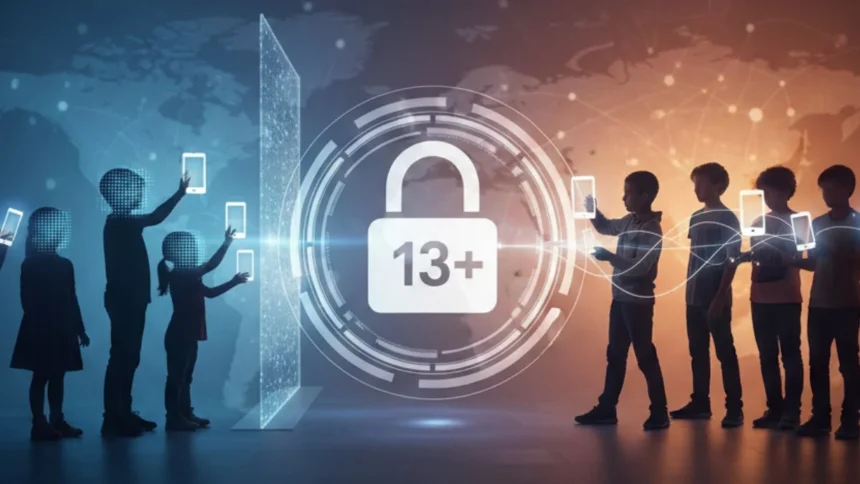
In the United States, federal law under COPPA (Children’s Online Privacy Protection Act) prevents companies from collecting personal data from children under 13 unless parents give permission. Because of this, most major platforms like TikTok, Instagram, and Snapchat set their minimum age at 13. In reality, though, this rule is often ignored, mainly because there is no consistent system to verify a user’s real age.
Across Asia, some countries are taking a tougher stance. China requires minors to go through mandatory identity verification. Since 2021, the government has also introduced limits on screen time, especially through “anti-addiction” systems on video apps. In South Korea, children under 14 must have parental consent before signing up for online services.
Europe’s mix of shared rules and national choices
Since 2018, the General Data Protection Regulation (GDPR) has allowed European Union countries to choose a minimum age for digital services anywhere between 13 and 16.
- Germany, Ireland, Netherlands: 16 years.
- Italy, Spain: 14 years.
- France: 15 years old. French law requires parental consent for those under 15, but a recent legislative proposal aims to completely prohibit access to social networks below this age.
- United Kingdom: 13 years old, in line with the standard used by most platforms. At the same time, the country has introduced the Age Appropriate Design Code, which requires platforms to design their services with children’s safety in mind.
This variety within Europe shows how difficult it is to fully harmonize digital rules, even with a shared legal framework.
Australia considers stricter age checks up to 16
In Australia, the official minimum age for social media remains 13, following the terms set by platforms such as TikTok, Meta, and Snapchat. However, in 2023, the government launched a public consultation to explore mandatory age verification for social media access, with the goal of raising the minimum age to 16.
This proposal is part of a broader effort to improve online safety for young people and is based on research highlighting the negative effects of early and excessive social media use.
Mental health concerns fuel a global discussion
A growing number of scientific studies link heavy social media use among teenagers to higher levels of anxiety, depression, and low self-esteem. These findings have sparked concern worldwide and pushed governments to consider stronger regulations. Some are looking at stricter age verification, while others want more transparency around how algorithms work.
At the same time, social media companies are rolling out features like parental controls, screen time limits, and teen modes. Still, these tools often fall short, as many users find ways around them.
A shared goal with different solutions
For teenagers aged 13 to 16, access to social media depends heavily on where they live. Even so, one clear trend is emerging worldwide: stronger protection for minors is becoming a priority. France’s consideration of a full ban for children under 15 reflects a broader international movement focused on mental health and online safety.
The big question going forward is whether future laws can truly protect young users while still respecting digital rights and remaining realistic to enforce.
ALSO READ: Facebook, Instagram And WhatsApp To Test Paid Access To Premium AI Tools