



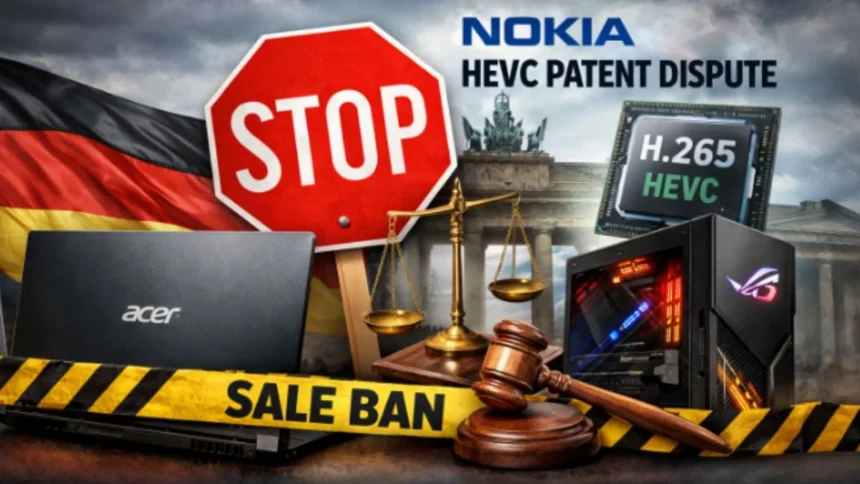
Acer and ASUS have temporarily stopped selling their desktop and laptop PCs in Germany after a German court ruled in favour of Nokia in a patent dispute linked to video technology.
The court has granted Nokia an injunction that blocks Acer and ASUS from offering, selling, importing, or even storing affected devices in Germany. The decision is tied to the use of HEVC (also known as H.265), a widely used video compression standard found in most modern computers.
What exactly happened?
Nokia accused Acer and ASUS of infringing three of its patents related to HEVC technology. HEVC is essential for playing and streaming high-quality video efficiently and is supported by nearly all GPUs, processors, and operating systems today.
Because HEVC is considered a standard-essential patent, companies using it must obtain a licence. Nokia claims Acer and ASUS did not do so correctly, leading to the lawsuit.
A German court agreed with Nokia and issued an injunction, forcing both PC makers to pause sales in the country while the case continues.
Will products disappear from stores?
Not immediately. The ruling does not affect German retailers, only Acer and ASUS themselves. This means stores can continue selling existing stock. For now, most buyers in Germany won’t notice any sudden changes.
However, there’s a catch: Acer and ASUS are not allowed to import new units into Germany. Once the current inventory runs out, shortages are likely unless the companies resolve the dispute or the court lifts the ban.
Why is HEVC such a big deal?
HEVC is everywhere. It’s used in streaming platforms, video calls, operating systems, and media playback. Without it, video quality drops and efficiency takes a hit. While newer formats like AV1 exist, HEVC is still a must-have feature for most PCs.
In the past, PC brands didn’t worry much about this because chipmakers usually handled licensing. But in this case, the court found issues with how Acer and ASUS implemented HEVC.
Germany also applies stricter rules when it comes to FRAND licensing (Fair, Reasonable, and Non-Discriminatory terms), which worked in Nokia’s favour.
What about other brands?
TV maker Hisense was also named in the case, but it chose to buy a licence from Nokia in January, allowing it to continue sales without disruption. Acer and ASUS, however, are still contesting the claims.
Both companies say they respect intellectual property rights, but until a settlement is reached or the court changes its decision, sales in Germany will remain on hold.
For more such tech news, tips, and updates, keep coming back to Devicology and share this information with your friends.
Also Read: Telegram Faces More Curbs In Russia: All You Need To Know