



Google is introducing a new feature to its Phone app on Android that will allow users to record calls directly within the app. The feature is currently available in the beta version for supported devices and is expected to roll out more widely in the coming months.
This update adds a built-in call recording option, removing the need for third-party apps. However, while the feature may be useful, it also raises important legal and privacy questions.
How the New Google Call Recording Feature Works
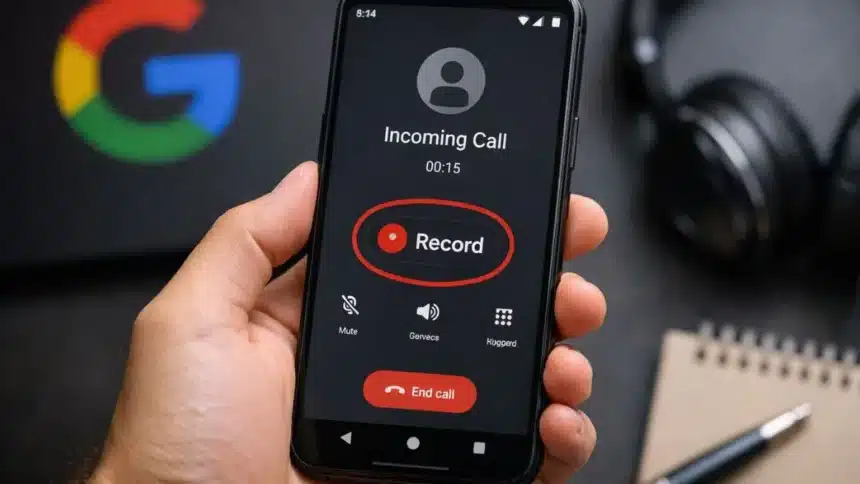
With this new feature, a record button is displayed on the active call screen; when tapped, it will begin recording the call in progress.
Users will also have the option of setting a specific number on the Auto-Call Record. This setting will be found in particular apps’ settings.
All recordings are located in the Home Tab of the phone’s application and can be played back at any time the user wants. Google mentioned that all recordings are stored locally on the user’s phone only, and none will be stored via their cloud.
Users can also set their recording storage location for their recordings; this is particularly useful for those who make a lot of calls, as it helps save space.
Device and Software Requirements
The beta version of the Phone app is available for Android users with compatible devices. On Google Pixel phones, which usually receive new features first, the device must be running at least Android 14. For phones from other manufacturers, Android 9 or newer is required.
It is not yet clear when the feature will be available to all users in the stable version of the app.
What About iPhones?
Google’s Phone app is not available on the iPhone. Apple has taken a more cautious approach to call recording due to legal concerns. While it is possible to record calls on some iPhones, the feature is restricted or unavailable in many countries, including those in the European Union.
So, built-in call recording can be helpful in certain situations, such as keeping a record of business conversations, interviews, or important instructions. At the same time, it comes with legal and ethical responsibilities.
Also Read: Google Pushes Emergency Chrome Update After First Zero-Day Exploit Of 2026 Surfaces