



OpenAI’s Sora App Finally Lands on Android: Good news for Android users who love creating AI images – OpenAI’s Sora tool is now available to download for free from the Google Play Store. The app can now be accessed by users in the US, Canada, Japan, Korea, Taiwan, Thailand, and Vietnam.
The official announcement came from the Sora X account, which shared a short Sora-generated video featuring an alien chatting with a newscaster to reveal that the app is now live on Android.
“The Sora app is now available on Android in: Canada, Japan, Korea, Taiwan, Thailand, US, Vietnam”
From iOS to Android- OpenAI’s Sora App Is Finally on Android Devices
Sora has had quite a journey since its first launch in 2024. While it grabbed plenty of attention back then, it was the September 2025 update that truly put it in the spotlight.
On September 30, OpenAI unveiled Sora 2, along with a brand-new social app designed for sharing AI-generated content – something like a TikTok for AI videos. The only downside? Until now, it was exclusive to iOS.
That’s finally changed. With the Android release, OpenAI has opened the doors to a much larger audience. Considering Android devices make up around 70% of the global smartphone market, this is a big deal for users who’ve been waiting to try Sora firsthand.
What Makes Sora 2 Special
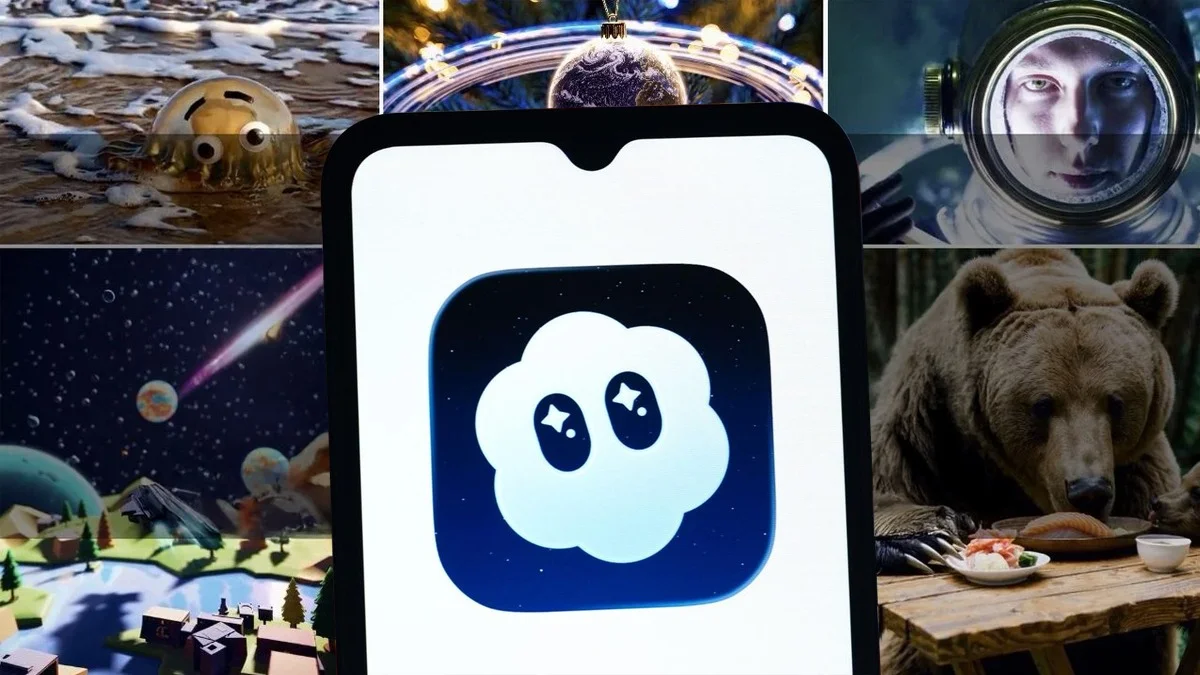
Some people might still dismiss AI-generated visuals as “AI slop,” but a quick look at Sora 2’s creations makes it clear that the tech has come a long way. The app can now generate incredibly realistic videos and follow detailed text prompts with surprising precision.
At launch, OpenAI described Sora 2 as the “GPT 3.5 moment for videos,” comparing it to the breakthrough ChatGPT update from March 2022.
A Social Platform Built for AI Creations
Sora’s design centers on a social experience where users scroll through a feed of endless AI-generated clips – up to 10 seconds long each. Interestingly, users can’t upload their own videos or photos; everything you see is AI-created.
But there’s a fun twist. If you want to appear in your own or your friends’ AI videos, Sora lets you do that too. What were once called “deepfakes” are now referred to as “cameos.” To take part, users simply confirm their identity within the app and choose whether or not they want their likeness to be available to friends.
Sora 2 Expands Access
Previously, access to Sora 2 – whether through the web or the mobile app – was invite-only. That changed just recently when ChatGPT opened the doors to users in the US, Canada, South Korea, and Japan. These users now have limited-time access, offering a chance to explore what Sora 2 can really do.
The Controversy Behind Sora
OpenAI launched the original Sora tool in early 2024 after CEO Sam Altman revealed in an interview with Bill Gates that it was one of the most requested features from ChatGPT users.
Even though the first version wasn’t as powerful as Sora 2, it still made waves across the creative industry. Many were impressed, but others were alarmed – mainly because OpenAI didn’t disclose exactly what kind of material it used to train Sora. Reports soon surfaced suggesting that game content from titles like Minecraft, Counter-Strike, and Call of Duty might have been part of its training data.
Legal Pushback from Japan
More recently, Japanese IP holders represented by the Content Overseas Distribution Association (CODA) have demanded that OpenAI stop using their content to train its AI models. CODA’s members include major names such as Studio Ghibli – creators of Princess Mononoke, Spirited Away, and Howl’s Moving Castle – along with gaming giants Bandai Namco and Square Enix.
As these concerns grow, it’s becoming clear that the legal battles between content creators and AI companies are just beginning. With tools like Sora rapidly improving, the line between human-made and AI-generated content is getting thinner every day.
The Bigger AI Picture
It’s already possible to create short AI clips that are nearly indistinguishable from real human-made videos, and it’s not hard to imagine that capability expanding into full-length films in the near future.
Meanwhile, elsewhere in the AI world, Microsoft has entered the scene with its first custom AI image model called MAI-Image-1. It’s currently available through the Bing Image Creator and Copilot Audio Expressions, though not yet in the EU. Microsoft has confirmed it will launch there soon.
ALSO READ: Google Maps Gets Smarter: Real-Time Lane Change Alerts Coming Soon