




Comparison of Smartphones Display Types on Phones: LCD, OLED and AMOLED
Are you purchasing a new smartphone and confused about its display type? As there are phones on the market with LCD, OLED and AMOLED displays, It can be difficult to pick the best display smartphone for you. All of these have their advantages and disadvantages. In this article, we will explain the differences between these display technologies and their benefits in an easiest and simple way.
What is LCD Display and how does it work?
Displays with LCD (Liquid Crystal Display) technology are usually affordable and are used in many low-budget smartphones. It uses a backlight to illuminate the pixels which form images on the screen by passing through the liquid crystals. However one of its limitations is that it cannot produce true black as the backlight is always on. This means that the screen does not turn completely black even during dark scenes. Also, LCD screens are a bit limited in terms of viewing angles.
What is OLED Display and how does it work?
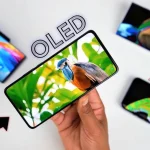
OLED (Organic Light Emitting Diode) technology is a step up from LCD. In an OLED display each pixel generates its own light to eliminate the need for a backlight. When a pixel is off it appears completely black and gives you deeper blacks and better contrast. OLED displays offer better colour accuracy and power efficiency in smartphones. This technology is thin and flexible but also more expensive.
What is AMOLED Display and how does it work?
AMOLED (Active Matrix OLED) displays are an improved version of OLED technology. It uses an active matrix to control each pixel to allow precise and faster control over the display. AMOLED displays come with power-saving capabilities as it can turn off individual pixels when displaying dark content. It offers higher quality images and better battery performance than OLED.
-
What is pOLED Display and how does it work?
pOLED This is a type of OLED display that uses a plastic substrate instead of a glass substrate. This makes the display more flexible, which is useful in foldable phones. However, its image quality may be slightly lower than other OLED technologies.
-
What is Super AMOLED Display and how does it work?
Super AMOLED Plus is a technology developed by Samsung in which the touch sensor in AMOLED displays is integrated directly into the screen. This reduces the thickness of the screen and increases the clarity of the display.
Which Smartphone Display is Better?
If you need color accuracy, such as a dark black screen and better power efficiency, OLED or AMOLED displays are the better choice. AMOLED displays are technologically more advanced than OLED, so they offer even better image quality and power savings. On the other hand, LCD displays are cheaper in price but do not offer the same image quality as OLED or AMOLED.
ALSO READ: Stop Using Sanitizer on Your Phone! Here’s the Right Way to Clean It