




Huawei’s HarmonyOS Crosses Survival Line as User Base Reaches 27 Million
Huawei’s long-term bet on building its own operating system has reached a critical milestone. HarmonyOS, the self-developed platform created to reduce dependence on foreign software ecosystems, has officially crossed 27 million users, a figure the company itself describes as a “survival line”.
- Huawei’s HarmonyOS Crosses Survival Line as User Base Reaches 27 Million
- HarmonyOS User Base Reaches 27 Million
- Strong Developer and App Ecosystem Growth
- Born Out of US Sanctions and Android Restrictions
- Huawei’s Transition to HarmonyOS Since 2021
- HarmonyOS 6 Launch Timeline
- New Features Bring HarmonyOS Closer to Rivals
- HarmonyOS Gains Ground in China’s OS Market
- Beating Apple iOS for Six Straight Quarters
- Huawei’s Smartphone Rebound Drives Adoption
- Mate 80 Series Fuels Market Comeback
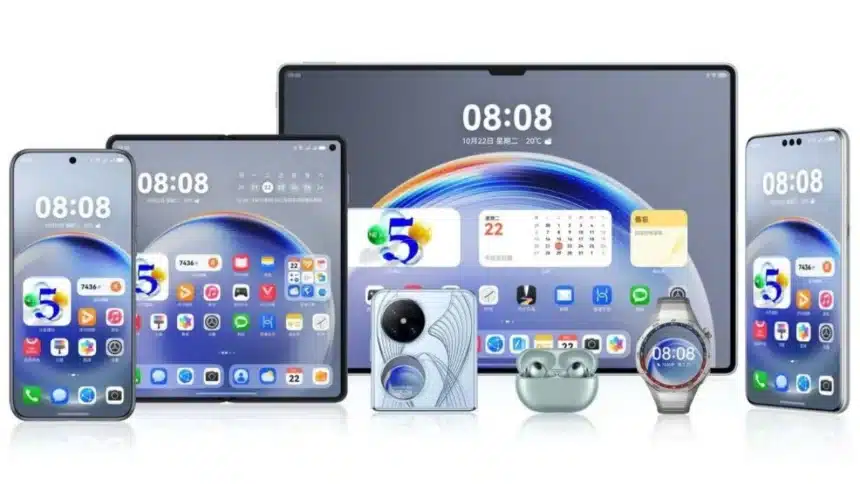
- Expanding Beyond Smartphones and Tablets
- Why the “Survival Line” Matters
- Competition With Android and iOS Continues
- What HarmonyOS Growth Means for Huawei’s Future
- Looking Ahead for HarmonyOS
The achievement signals that Huawei’s efforts to compete with Apple’s iOS and Google’s Android are beginning to show results. Six years after HarmonyOS was first launched in response to US sanctions, the operating system is no longer an experiment but a growing platform supported by millions of users, developers, and devices across China.
HarmonyOS User Base Reaches 27 Million
Huawei Technologies confirmed that HarmonyOS has surpassed 27 million users across its latest versions, HarmonyOS 5 and HarmonyOS 6. The company described this number as a critical threshold, calling it a “survival line” that validates the platform’s long-term viability.
Reaching this level of adoption is significant in the operating system market, where scale is essential. A large user base encourages developers to build apps, attracts hardware partners, and improves overall user experience through frequent updates and optimisations.
Huawei’s announcement suggests that HarmonyOS has moved beyond early adoption and into a phase of sustainable growth, especially within its home market of China.
Strong Developer and App Ecosystem Growth
Alongside user growth, Huawei highlighted the rapid expansion of HarmonyOS’s ecosystem. The platform now supports more than 10 million developers, underlining strong interest from the software community.
User engagement figures also point to rising momentum. According to Huawei, more than 100,000 new devices running HarmonyOS are activated every day. In addition, the platform records over 88 million daily downloads and application updates.
These numbers show that HarmonyOS is not only being installed on devices but is also actively used. High download and update activity indicates that users are engaging with apps regularly, which is crucial for the health of any operating system.
Born Out of US Sanctions and Android Restrictions
HarmonyOS was first launched six years ago as a direct response to restrictions placed on Huawei’s access to Google’s Android operating system. In 2019, the United States added Huawei to its Entity List over national security concerns, limiting its ability to work with American companies.
As a result, Huawei faced the risk of losing access to key software services that powered its smartphones globally. HarmonyOS emerged as a strategic response to this challenge, allowing Huawei to regain control over its software roadmap.
Initially seen as a defensive move, HarmonyOS has gradually evolved into a central pillar of Huawei’s technology strategy.
Huawei’s Transition to HarmonyOS Since 2021
Huawei began transitioning its own devices to HarmonyOS in 2021. The shift accelerated as the company sought to reduce reliance on external platforms and strengthen its domestic ecosystem.
Since then, HarmonyOS has expanded beyond smartphones and tablets. The operating system is now used across a wide range of Huawei devices, supporting the company’s broader vision of a connected ecosystem.
This gradual but steady transition helped Huawei avoid sudden disruption while giving developers and users time to adapt to the new platform.
HarmonyOS 6 Launch Timeline
HarmonyOS 6 is the latest iteration of Huawei’s operating system. It was first made available to developers in June, giving them time to test and optimise their applications.
The public release followed in October, when HarmonyOS 6 was rolled out to Chinese consumers. This came roughly a year after Huawei launched HarmonyOS 5 in late 2024.
The regular update cycle shows that Huawei is maintaining a structured development roadmap, similar to the approach followed by established platforms like Android and iOS.
New Features Bring HarmonyOS Closer to Rivals
One of the most notable features in HarmonyOS 6 is a new file-sharing function similar to Apple’s AirDrop. For the first time, this feature allows direct file transfers between Huawei and Apple devices.
This development is important because it improves compatibility between different ecosystems. Cross-platform features reduce friction for users who own devices from multiple brands.
By adding such functionality, Huawei is addressing one of the key barriers to adoption and making HarmonyOS more practical for everyday use.
HarmonyOS Gains Ground in China’s OS Market
HarmonyOS continues to strengthen its position in China’s smartphone operating system market. According to data from Counterpoint Research released in September, HarmonyOS accounted for 17 per cent of China’s smartphone operating systems in the second quarter of the year.
This placed it ahead of Apple’s iOS, which held a 16 per cent share during the same period. HarmonyOS has now maintained its lead over iOS for six consecutive quarters.
Android remains the dominant platform in China, with a 66 per cent share. However, HarmonyOS has firmly established itself as the second-largest mobile operating system in the country.
Beating Apple iOS for Six Straight Quarters
Maintaining a higher market share than iOS for six consecutive quarters is a major achievement for Huawei. Apple has traditionally been strong in China’s premium smartphone segment.
HarmonyOS’s performance shows that Huawei has been successful in retaining users within its ecosystem, even as competition remains intense. This consistency suggests that users are not only trying HarmonyOS but are also sticking with it over time.
Such stability is essential for long-term platform success and strengthens Huawei’s negotiating position with developers and partners.
Huawei’s Smartphone Rebound Drives Adoption
The growing adoption of HarmonyOS has been closely linked to Huawei’s recovery in the domestic smartphone market. After facing years of pressure due to sanctions and supply chain challenges, Huawei has recently regained momentum in China.
According to research firm BCI, Huawei reclaimed its position as China’s top smartphone vendor in the last week of November and the first week of December. The company overtook Apple during this period.
This resurgence has directly supported HarmonyOS adoption, as more Huawei devices sold means more users entering the HarmonyOS ecosystem.
Mate 80 Series Fuels Market Comeback
A major driver behind Huawei’s recent success has been the launch of its flagship Mate 80 series. The lineup was released in late November and includes multiple models targeting different segments.
The Mate 80 series consists of the Mate 80, Mate 80 Pro, Mate 80 Pro Max, and Mate 80 RS. Huawei also released the foldable Mate X7 alongside the series.
These devices have helped Huawei regain consumer interest in the premium smartphone segment, boosting both hardware sales and HarmonyOS installations.
Expanding Beyond Smartphones and Tablets
HarmonyOS is no longer limited to mobile phones and tablets. Huawei has been expanding the platform across multiple device categories, reinforcing its broader ecosystem strategy.
By supporting different types of hardware under a unified operating system, Huawei aims to create a seamless user experience across devices. This approach mirrors trends seen in other major ecosystems but is tailored to Huawei’s strengths.
The expansion increases HarmonyOS’s relevance and opens up new opportunities for developers to build cross-device applications.
Why the “Survival Line” Matters
Referring to 27 million users as a “survival line” highlights how challenging it is to build a new operating system from scratch. Without sufficient scale, platforms struggle to attract developers, content, and long-term users.
Crossing this threshold suggests that HarmonyOS has achieved enough momentum to sustain itself. It reassures developers that investing time and resources into the platform is worthwhile.
For Huawei, it also represents a psychological milestone, proving that its strategy can work despite external pressures.
Competition With Android and iOS Continues
Despite its progress, HarmonyOS still faces intense competition. Android remains the dominant operating system in China and globally, while Apple’s iOS continues to hold strong appeal in the premium segment.
Huawei’s challenge will be to keep improving HarmonyOS while maintaining hardware innovation. Continued growth will depend on software stability, app availability, and user experience.
The company’s recent gains suggest it is moving in the right direction, but long-term success will require consistent execution.
What HarmonyOS Growth Means for Huawei’s Future
The success of HarmonyOS strengthens Huawei’s independence and reduces its vulnerability to external restrictions. Control over both hardware and software allows the company to innovate more freely.
A growing operating system also opens up new revenue opportunities, from app services to ecosystem partnerships. It gives Huawei a stronger foundation as it expands into other technology areas.
As HarmonyOS continues to mature, it could become one of the defining elements of Huawei’s comeback story.
Looking Ahead for HarmonyOS
With HarmonyOS 6 now in the hands of consumers and developers, the focus will shift to further adoption and ecosystem expansion. Huawei is likely to continue refining features, improving compatibility, and attracting more developers.
The operating system’s performance in China will remain critical, as domestic success underpins its broader ambitions. Continued strong smartphone sales will play a key role.
If current trends continue, HarmonyOS could become an even more significant force in the global technology landscape over the coming years.
Also Read- Cleer Audio Arc 4 Earbuds Bring Dolby Atmos Sound Without The High Price