


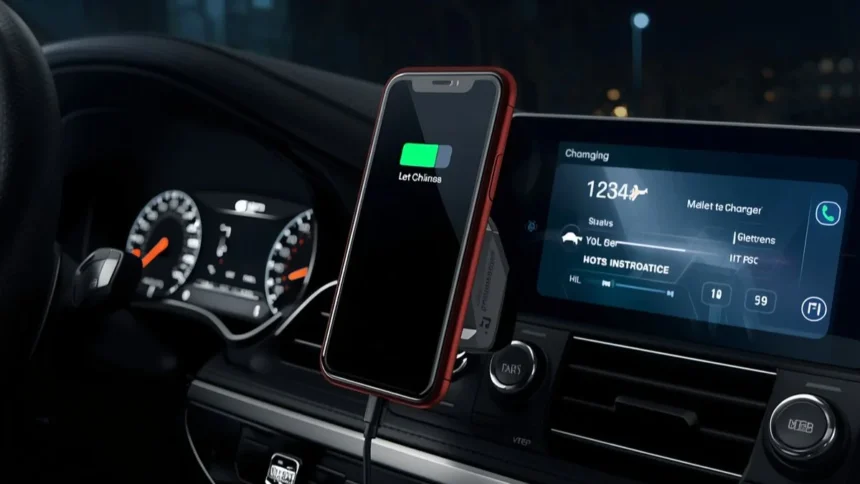
You haven’t ever thought that plugging your device into your car’s built-in USB port is problematic. Most people do not know that plugging your phone into the USB port of your vehicle can lead to serious risks.
Data could potentially be accessed by hackers, and you may not be charging your phone efficiently.
Plugging your phone into a car’s USB port does not entail all of the same benefits you experience when plugging your phone in at home!
Data Breach
Most car USB ports are designed for both power and data transfer. The moment you connect your phone, the system may attempt to access information for features like media playback or navigation.
In cars with systems like Apple CarPlay and Android Auto, this connection can extend to contacts, messages, call logs, and location data. While this is meant to improve usability, it also means your data is being shared with the car’s system.
In private vehicles, this may not be a major concern. But in rental or shared cars, the risks increase, especially if previous data hasn’t been cleared.
Security risks
Juice jacking has been a great concern among cybersecurity experts for quite some time.
It refers to the ability to gain access to those USB ports that are compromised and can cause damage or steal data.
This type of incident usually occurs at public charging stations; however, it’s important to remember that you can also experience this type of attack at the data-enabled USB port in your automobile’s infotainment system.
Charging is slower than you think
Beyond security, performance is another issue. Most car USB ports deliver limited power, often between 5W and 12W. That’s significantly lower than what modern smartphones are designed to handle. In real-world use, this means your phone may charge very slowly or barely at all during short drives.
Long-term battery impact
Slow, inconsistent charging can also affect battery health over time. Repeated low-power charging cycles may contribute to gradual battery wear, reducing overall capacity in the long run.
So, car USB ports are built for convenience, but they’re not always the safest or most efficient option.
Also Read: OneDrive’s New AI Upgrade Could Change How You Edit Photos