




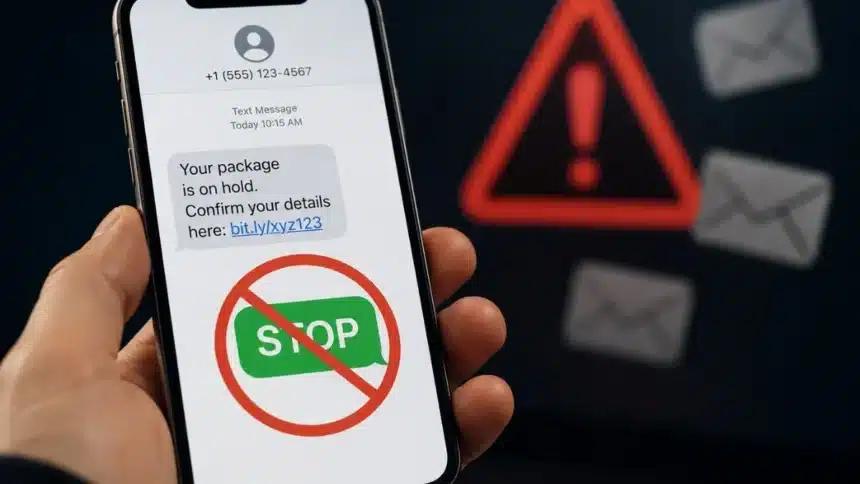
Spam texts have become a daily headache for millions of smartphone users. From fake delivery updates to suspicious banking alerts and tax refund scams, these messages are designed to create panic and trick people into reacting quickly.
And while many users instantly reply with “STOP”, hoping the spam will finally end, cybersecurity experts say that response can sometimes do more harm than good.
- Why Experts Say You Should Avoid Texting ‘STOP’ to Spam Messages
- Why experts say ignoring spam is often safer
- Smartphone spam filters are now more useful than ever
- Reporting spam helps carriers block larger scam networks
- The biggest danger is usually the link inside the message
- Scammers rely heavily on panic and urgency
- Protecting your number can reduce future spam
- Never share sensitive information through text messages
Why Experts Say You Should Avoid Texting ‘STOP’ to Spam Messages
According to the Federal Communications Commission, replying to suspicious spam texts may actually confirm that your number is active and being used by a real person. Once scammers know that, your number can become an even bigger target for spam campaigns, phishing attempts and scam calls.
While legitimate companies usually respect unsubscribe requests, fraudulent networks do not operate under the same rules. In many cases, they simply use your reply as proof that they’ve successfully reached someone.
Why experts say ignoring spam is often safer
The majority of current spam businesses rely on automation to conduct their business. For example, if a user responds to an email by typing “STOP”, the spammers could mark that user’s email as valid and then sell that information to other spammers.
Due to the high level of automation used in today’s spam operations, users who do respond to a spam email can expect to receive many more spam emails in the near future (fake parcel notifications, fake bank statements, etc).
If the spam is already “fishy,” experts recommend not responding at all since you will typically receive less spam if you do not respond.
Smartphone spam filters are now more useful than ever
Modern smartphones already include several tools designed to deal with spam quietly in the background.
Both iPhone and Android devices allow users to filter unknown senders, silence suspicious messages and reduce spam notifications without needing third-party apps. Turning on these features can make a noticeable difference, especially for people constantly receiving scam texts during the day.
Instead of manually replying to every suspicious message, users can let the phone automatically separate junk from legitimate conversations.
Reporting spam helps carriers block larger scam networks
Sending spam to the number “7726” (the number that spells out “SPAM” on most mobile devices) is another way for users to report spam messages or other suspicious texts they receive.
Many national and regional carriers use this information to investigate suspected fraudulent numbers and to monitor and identify the operation of large-scale spam campaigns throughout their networks.
Reporting spam via the text messaging system makes carriers’ filtering capabilities stronger for millions of customers, and the process only takes a few seconds.
Furthermore, most devices now also provide an option to “Report Junk” directly through the device’s messaging application to allow users to report suspected suspicious text messages immediately.
The biggest danger is usually the link inside the message
According to the Cybersecurity and Infrastructure Security Agency, links included in spam texts are often designed to redirect users to fake websites built for stealing passwords, banking details and personal information.
These scam pages are becoming increasingly sophisticated and can sometimes closely resemble official banking sites, delivery services or government portals.
That’s why experts repeatedly warn users not to click links simply because a message sounds urgent or realistic.
Scammers rely heavily on panic and urgency
Most spam texts are written to create emotional pressure.
Messages claiming a package could not be delivered, a bank account has been locked, or a tax refund is pending are specifically designed to force quick reactions before users stop and think carefully.
Experts say taking even a few extra seconds to verify the message independently can prevent serious mistakes. If something feels suspicious, users should contact the company directly through its official website or customer support channels instead of replying to the text itself.
Protecting your number can reduce future spam
Another growing recommendation is to be more selective in where you share your personal phone number online. Entering your phone number on random sign-up forms, social media pages, giveaways, or unknown shopping sites could potentially expose you to marketing databases and scam operations.
Many users now turn to a second (or temporary) phone number for signing up for temporary accounts and for receiving promotions to limit the amount of spam sent to their primary phone.
Similarly, it is essential to keep your mobile device updated, as software updates tend to also include new security measures against the changing tactics of scams and the ever-increasing amounts of spam messages received.
Never share sensitive information through text messages
Security experts continue to stress one simple rule above everything else: never share passwords, OTPs, banking details or Social Security numbers through unsolicited text messages.
Legitimate companies and government agencies rarely ask for sensitive information through SMS links. If a message requests personal data urgently, it should immediately raise suspicion.
For most spam texts, the safest response is usually the simplest one: don’t engage, don’t click and report the message instead.
Also Read: What Happens When You Leave Chargers Plugged In All The Time?