



Google Search has defined how people use the internet for more than two decades. From quick questions and news updates to shopping and travel planning, billions of users rely on it every day.
But at Google I/O 2026, the company unveiled what could be the biggest transformation of Search since its launch, and artificial intelligence is at the center of it.
Powered by Gemini AI, Google is redesigning how Search works, how users interact with it, and even what it can do on your behalf.
Instead of simply showing links, Search is now evolving into a more conversational, assistant-like experience capable of monitoring tasks, booking activities, helping you shop, and even building mini apps.
5 New Google Search Features
Here are the five biggest new Google Search features announced at Google I/O 2026.
1. Google is redesigning the Search bar after 25 years
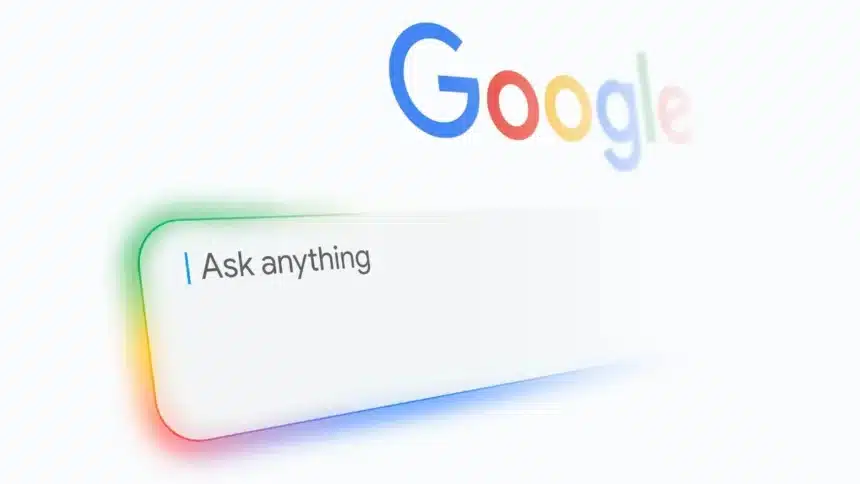
Google is about to change the very first part of the Google search experience: the search bar.
It’s been 25 years since they’ve done anything like this, as they now want to create a conversational experience with the new Gemini instead of just being another traditional search engine.
The new search bar allows for easier follow-ups, more in-depth interactions and will allow the integration of all the A.I. actions into the search bar as well.
Behind the scenes, Google tells us that the new all-conversational response system and the many powerful AI tools that were integrated into Search were all created in part using the new Gemini 3.5 Flash.
Although the new rollout has begun, the redesign will likely not be seen by users immediately, as it will take time for the updates to spread across the entire platform.
2. AI agents will search the internet for you
One of the most futuristic additions coming to Google Search is something called “information agents.”
These AI agents continuously monitor the internet based on instructions you give them and alert you when your criteria are met.
For example, Google says users could ask an agent to track apartment listings matching specific requirements. Instead of repeatedly searching manually, the AI will keep monitoring listings and notify users when a suitable option appears.
Google also demonstrated sports-related examples, like tracking sneaker collaborations linked to professional athletes and instantly notifying users once announcements are made.
The feature essentially turns Search into an active assistant instead of a passive tool.
Information agents are expected to launch later this summer for Google AI Pro and Ultra subscribers.
3. You’ll soon be able to book activities directly in Search
Google is also pushing deeper into online bookings and local services.
Soon, users in the United States will be able to book activities directly through Search results without leaving Google.
The company demonstrated examples like searching for a karaoke room that stays open late and serves food. Search would then provide booking options instantly.
For some categories, including beauty, home repair, and pet care, Google may even call businesses on the user’s behalf.
The booking tools are expected to roll out this summer to all U.S. Search users.
This move puts Google in more direct competition with booking platforms and local service marketplaces while making Search increasingly action-oriented instead of link-focused.
4. Google’s new Universal Cart will track deals and check compatibility
Shopping inside Google’s ecosystem is also getting a major upgrade.
Google announced a new “Universal Cart” that works across Search, YouTube, Gmail, and the Gemini app.
The idea is simple: users can add products from different websites and retailers into one shared AI-powered cart.
The system will then monitor stock updates, price drops, and deals while also helping users avoid compatibility mistakes.
Google gave the example of someone building a PC using components from multiple retailers. The AI could automatically warn users if a motherboard is incompatible with a processor.
Universal Cart will first launch in Search and the Gemini app this summer before expanding to YouTube and Gmail.
5. Google Search will soon help users create mini apps
One of the most interesting announcements that Google made was the introduction of an “agentic coding” capability directly into the Search experience.
Users can now reportedly use Search queries to create mini-apps, simulations, charts and interactive tools using the power of Gemini 3.5 Flash.
Google demonstrated how an AI-designed fitness tracker could put together data from Gmail, location, calendars, grocery lists, and schedules into an individualised workout and meal plan.
Users will also be able to record their workouts and vitamin consumption, and monitor their day-to-day activities with no need to download a separate fitness application.
Google also showed how the Search can create simulations and scientific visualizations beyond productivity.
For example, search results about black holes and space-time will generate an interactive model without user intervention.
The release of this feature will occur in the U.S. in the coming months for both Google AI Pro and Ultra subscribers.
Alongside the new features, Google also announced a major expansion of Personal Intelligence in Search.
Originally launched in the United States earlier this year, the feature allows users to connect services like Gmail, Google Photos, and Calendar to Search so AI can deliver more personalised responses.
Google says the feature is now expanding to nearly 200 countries and 98 languages.
Also Read: 9 Windows Settings That Need Modification For Seamless Working