




Wireless earbuds and headphones have become a part of everyday life, whether people are commuting, working remotely, travelling, gaming, or watching content on their phones and laptops. Along with better sound quality, one feature now dominates the audio market also know as Active Noise Cancellation or ANC in short.
From premium headphones by Sony and Apple to affordable earbuds from newer brands, Active Noise Cancellation has quickly become one of the most advertised audio technologies today.
Whether you are travelling on a noisy flight, sitting in a crowded café, or trying to focus in a busy office, chances are that you have heard people recommend headphones with Active Noise Cancellation. The feature has become one of the biggest selling points in modern earbuds and headphones.
But what exactly is ANC, and how does it actually remove noise around you?
The answer is surprisingly scientific and honestly pretty cool.
What is ANC?
ANC stands for Active Noise Cancellation.
It is a technology used in headphones and earbuds to reduce or block unwanted outside sounds using electronic processing instead of just physical padding or ear tips.
Regular headphones already block some surrounding sound naturally because they cover or plug your ears. This is called passive noise isolation. ANC takes things much further by actively cancelling sound electronically.
The feature is especially useful for reducing constant low-frequency noises like:
- Airplane engines
- Train and metro noise
- Air conditioners
- Traffic sounds
- Office background chatter
That is why ANC headphones are popular among travellers, students, office workers, and even gamers.
How does ANC actually work?
The basic idea behind Active Noise Cancellation sounds almost impossible at first: it uses sound to cancel sound.
Here is how it works in simple terms. ANC headphones contain tiny microphones that constantly listen to the outside environment. These microphones detect surrounding noise before it reaches your ears.
The headphones then use built-in processors to analyse those sound waves in real time.
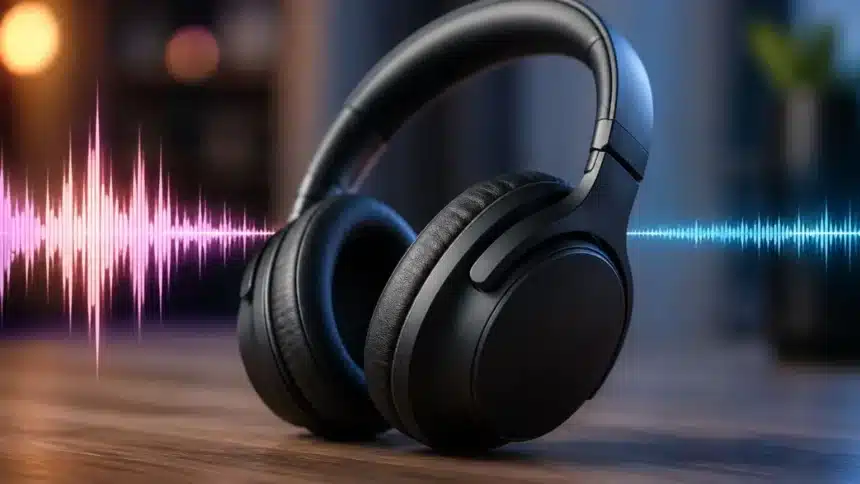
Once the sound is analysed, the headphones instantly generate a second sound wave that is the exact opposite of the outside noise.
This is called an “anti-noise” wave.
When the original sound wave and the opposite wave meet, they cancel each other out through something called destructive interference.
In simple maths:
- A sound wave of +5
- Combined with a reverse wave of -5
- Results in 0
That “zero” is why the unwanted noise suddenly becomes dramatically quieter or nearly silent.
Why Active Noise Cancellation works best with constant noises
ANC is most effective against steady, predictable sounds.
For example, plane engines, Fan noise, AC humming and Traffic rumble.
These sounds are continuous, making them easier for the headphones to analyse and cancel quickly.
Sudden sounds like people shouting, crying babies, or loud conversations are harder to eliminate because they change too rapidly.
That is why even expensive ANC headphones may still let some voices or sharp sounds through.
Why do some people hear humming or feel discomfort
ANC does not feel the same for everyone. Some users notice a faint humming sound or slight pressure sensation when ANC is turned on. Others may even experience headaches or dizziness.
This usually happens because the anti-noise frequencies interact differently with individual hearing sensitivity.
The effect is harmless for most people, but certain users are more sensitive to electronic noise cancellation systems.
That is also why many headphones now include adjustable ANC levels or transparency modes.
What is Transparency or Passthrough mode?
Many modern Active Noise Cancellation earbuds and headphones also include a feature called Transparency Mode or Passthrough.
Instead of blocking outside sound, this mode uses the same microphones to intentionally let the surrounding audio back into your ears.
This allows users to:
- Hear announcements at airports
- Talk to people without removing headphones
- Stay aware of traffic while walking outdoors
In short, the microphones can either cancel outside noise or amplify it, depending on the mode selected.
Over the last few years, Active Noise Cancellation has evolved from a luxury feature into a standard expectation in premium audio devices.
Remote work, frequent travel, open-office environments, and long screen hours have made people value quieter personal spaces more than ever.
At the same time, improvements in processors and battery efficiency have made ANC faster, smarter, and more effective even in compact wireless earbuds.
So the next time your headphones magically silence an aircraft engine or noisy metro ride, it is not magic; it is carefully engineered sound waves working against each other in real time.
Also Read: Sony WF-1000XM6 Drops Globally With Enhanced Noise Cancellation: Specs, Prices, Full Details