



Framework is trying to fix its biggest criticisms in one go. Better build, better battery, and a more premium feel. That’s exactly what the new Laptop 13 Pro is aiming for.
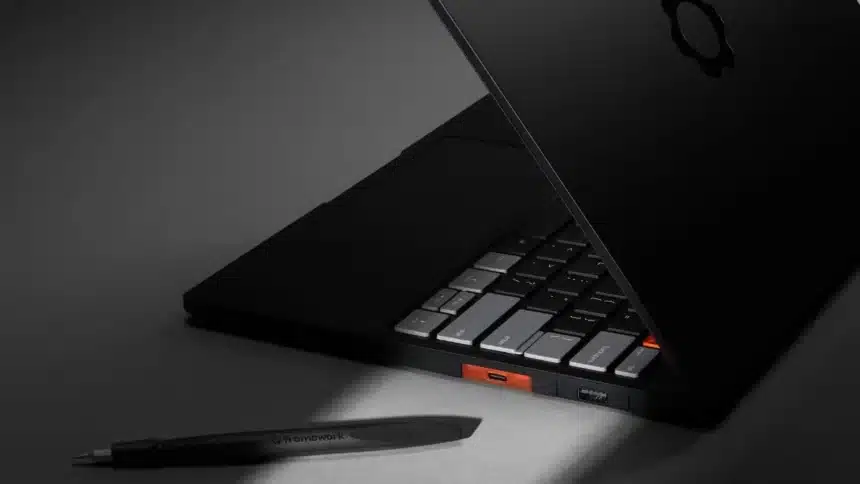
At first glance, this isn’t the same modular machine people are used to. The company has moved to a fully CNC-machined aluminium chassis, ditching the slightly patchwork feel of older models. The result is a cleaner, sturdier laptop that finally looks and feels like a high-end device, not just a repair-friendly one.
Display
This is Framework’s first laptop made entirely from 6000-series aluminium blocks, and it shows. The chassis is tighter, the keyboard has less flex, and the new haptic trackpad feels far more refined.
There’s also a new 13.5-inch display with a 3:2 aspect ratio, 2.8K resolution, and a variable refresh rate between 30Hz and 120Hz. It comes colour-calibrated out of the box, although it sticks to sRGB instead of wider colour gamuts. That choice is clearly about balancing visuals with battery life.
Performance
The Framework Laptop 13 Pro features Intel Core Ultra Series 3 microprocessors and LPCAMM2 memory, a new memory format which uses compression to significantly reduce the physical size of each bank of RAM.
This is also the first laptop from Framework to provide native support for PCIe 5.0 storage devices, allowing for a maximum capacity of up to 8 TB.
According to Framework’s CEO, Nirav Patel, this device is explicitly intended as an alternative to a MacBook Pro for developers, especially those who code for long periods of time on Linux and would like to have their machine preloaded with Ubuntu.
Battery
Framework’s weak point has always been battery life, but now they have made it better. Framework offers a 22% larger (74Wh) battery that is claimed to outperform the 14″ MacBook Pro in some cases, including two hours of streaming 4K video (20 hours total).
While Framework has gone premium with their new model, the Laptop 13 Pro, they have not changed what makes them unique. They continue to allow full upgradeability and compatibility with existing Laptop 13 parts.
You can switch motherboards and upgrade storage/RAM in addition to retrofitting items such as displays/batteries from older models into newer ones. Given that almost all laptops are sealed shut, this continues to be a significant distinction from their competition.
MLG supplies major component manufacturers (e.g., Micron for RAM) and ongoing supplier support from the ecosystem.
Pricing
The upgrades come at a cost. The Laptop 13 Pro starts at $1,499 for a prebuilt model, with DIY options starting lower. Higher-end configurations quickly climb past $2,000, putting it directly against premium laptops.
That’s a shift for Framework, which has so far been seen as a niche, enthusiast-first brand.
This is not just another modular refresh. Its framework is trying to prove it can build a laptop that competes on performance, design, and battery, not just repairability.
Also Read: iOS 27 Could Drop Support for Multiple iPhones: Reports