




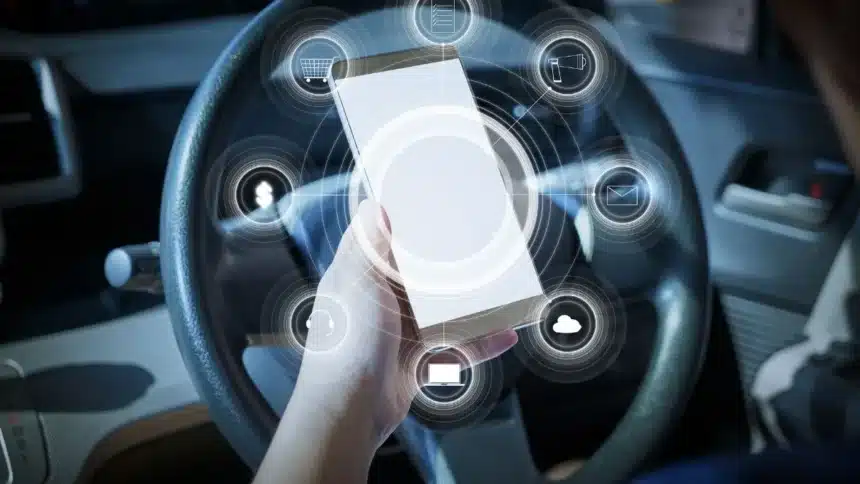
In the past few years, Apple CarPlay and Android Auto have changed how people drive. They have transformed poorly designed car infotainment systems into systems that are easy to use by downloading your favourite apps, navigation, music and messaging to your car’s dashboard with a smartphone.
However, an increasing number of manufacturers are opting out of CarPlay and Android Auto, and the reasons for doing so are about control, not technology.
Automakers like Tesla and Rivian have never used CarPlay or Android Auto in their vehicles, and now other automakers such as General Motors are phasing out for newer vehicles in favour of using their software.
So why is this happening?
What’s The Reason?
The biggest reason automakers are distancing themselves from Apple CarPlay and Android Auto is data ownership.
When drivers use CarPlay or Android Auto for navigation, music, messaging, or voice commands, much of that user data flows directly to Apple and Google instead of the car companies themselves.
That creates a huge problem for automakers trying to build smarter software systems and connected-car experiences.
According to industry analysts, car companies lose valuable insights into how drivers actually use their infotainment systems when Apple and Google sit between the driver and the car’s software ecosystem.
Automakers now see software and user data as one of the most important parts of the future car business, especially in EVs.
Brands like Tesla and Rivian built their vehicles around fully integrated software experiences from day one.
Instead of relying on smartphone projection systems, these companies developed their own operating systems for everything from navigation and charging management to driver assistance and entertainment.
That gives them tighter control over updates, features, performance improvements, and customer data.
Now, traditional automakers are trying to follow the same model.
General Motors Is Getting Its Own System
Several of General Motors’ newest electric vehicle models will come without Apple CarPlay or Android Auto, as the automaker transitions to a new built-in infotainment system based on Google’s Android Automotive operating system.
Unlike Android Auto, which only mirrors mobile application interfaces from supported smartphones onto the vehicle dashboard, Android Automotive is a complete operating system that runs within the vehicle on its own without requiring any connection to a mobile device.
As a result of this movement toward an integrated approach to both the software and hardware components related to the vehicle, GM will be able to provide EV-specific user experiences that were previously unattainable through smartphone-based projection alone, such as:
- EV Charging Route Planning
- Navigation Capabilities Based on Battery Level
- Super Cruise (Hands-Free Driving)
- Native Google Maps Usage
- Access to Built-In Apps and Solutions
GM therefore believes that its commitment to fully integrating the hardware of an electric vehicle with its software will pave the way for greater features and improved user experiences than those delivered through mirroring a smartphone screen.
Apple CarPlay Ultra
As Apple launched CarPlay Ultra, the relationship between automakers and tech companies continues to deteriorate.
In contrast to standard versions of CarPlay, where you only see the media, CarPlay Ultra takes over almost all elements of your dashboard experience, such as the instrument cluster, vehicle control, speedometer, climate system, media, etc.
This level of control by a third party creates concern for automakers in that they will be giving up complete ownership.
Many companies are not okay with having Apple or Google be “the face” of their vehicle, with the actual brand fading away.
The Subscription Future of Cars
Another reason automakers want tighter software control is subscriptions.
Modern vehicles increasingly rely on software-based features, including driver assistance systems, navigation service, premium audio, performance upgrades and connectivity packages.
Owning the infotainment ecosystem allows automakers to directly manage those services instead of depending on Apple or Google.
And this can become a major revenue stream for them in the near future.
Biggest Risk
The biggest risk for automakers involves consumer backlash. Many users love Apple CarPlay and Android Auto because they are simple, familiar, and update automatically through smartphones.
Car company software, on the other hand, has historically been criticized for being slow, buggy, and outdated.
That’s why brands like Tesla and Rivian are still exceptions rather than the norm; they actually built software experiences people enjoy using.
Overall, cars these days are increasingly becoming software platforms on wheels.
That means the battle between automakers, Apple, and Google is no longer just about navigation apps or music controls; it’s about who controls the future digital experience inside vehicles.
Also Read: CarPlay Gets 4 Free Features Update That Make Driving Smarter