




An ‘AI smartphone’ or Artificial Intelligence enabled mobile phone is just a regular smartphone with an advanced in-built aide. That aide is usually called an AI assistant, with the ability to listen to what you say, look at what’s on your screen, read your photos, and even finish sentences for you.
It runs on a transformative technology called Large Language Models, also known as LLMs in short. Cloudflare, the technology company, defines an LLM as a type of AI model trained on enormous datasets of text. LLMs learn patterns in language and can generate coherent, contextually appropriate text, answer questions, summarize documents, translate languages, and write code. In simple language, a technology that can take inputs and interpret outcomes in a human-like way, through machines.
By now, every major phone company has built its own version of this AI Assistant: Google calls its assistant Gemini, Apple calls its system Apple Intelligence, and Samsung calls it Galaxy AI.
All such AI assistants perform similar jobs, but each company has focused on doing certain tasks better than the others.A
A select list of top 5 best AI smartphones of the year 2026 is as under.
Overview
| Phone | Best Known For | Chip | Main Screen Size |
| Google Pixel 10 | Deepest, most natural AI assistant | Google Tensor G5 | 6.3 inches |
| Samsung Galaxy S26 Ultra | Most feature-packed Android phone | Snapdragon 8 Elite Gen 5 for Galaxy | 6.9 inches |
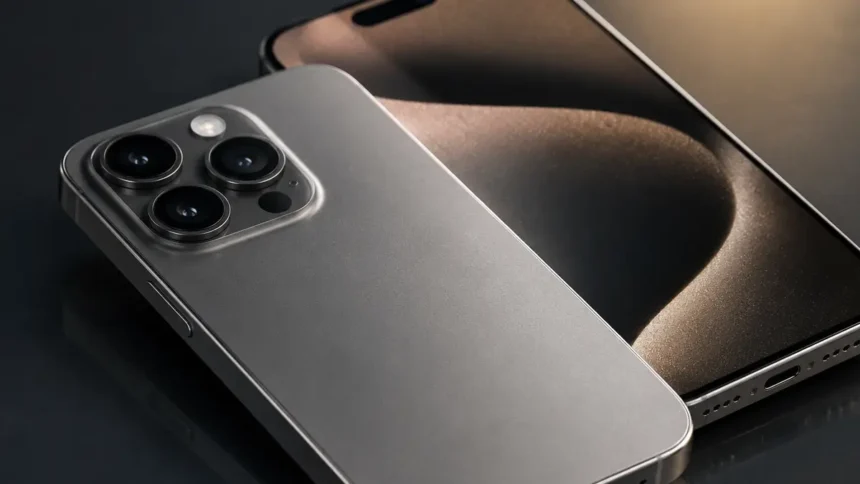
| Apple iPhone 17 Pro Max | Most polished, most private AI | Apple A19 Pro | 6.9 inches |
| Motorola Razr 70 Ultra | Best AI on a flip phone | Snapdragon 8 Elite | 6.96 inches (unfolded) |
| Nothing Phone 4a Pro | Best AI on a budget | Snapdragon 7 Gen 4 | 6.83 inches |
1. Google Pixel 10
Google builds the Pixel around its Gemini AI, and on the Pixel 10, that assistant runs on a new chip called Tensor G5, made specially by Google to handle AI tasks quickly and privately, right on the phone itself.
The standout feature is called ‘Magic Cue’. Through this feature, instead of you having to ask Gemini for help, it quietly watches for moments to help itself. For example, if a friend texts you asking for a restaurant address, Magic Cue can pull that address from your email and offer to send it, without you having to search for it yourself.
The Pixel 10 also has a ‘Circle to Search’ tool, where you can draw a circle around anything on your screen, and Google will look it up for you instantly.
2. Samsung Galaxy S26 Ultra
Samsung’s Galaxy AI toolkit covers almost everything; it can rewrite your messages to sound more professional, translate phone calls in real time in 13 different languages, transcribe voice recordings into short summaries and even edit photos by simply describing what you want removed or changed.
But the feature everyone is actually talking about is Privacy Display.
So, the S26 Ultra’s screen is built with two separate sets of pixels, ‘narrow’ and ‘wide.’ When you turn Privacy Display on, the phone switches off the wide pixels, which are the ones responsible for sending light out sideways.
The result is a screen that looks completely normal when you are looking straight at it, but turns almost unreadable the moment someone tries to peek from the side.
It is genuinely a new piece of hardware, not a filter or an algorithm, and Samsung says it’s the first phone in the world to build this directly into the display itself.
3. Apple iPhone 17 Pro Max
Apple took a more cautious approach when it first introduced Apple Intelligence, and it still shows that rather than doing everything with flashy on-screen animations, Apple’s AI tends to work quietly in the background across apps you already use, like Messages, Mail, and Notes.
By 2026, Apple Intelligence can translate conversations live during phone calls and video chats, rewrite or proofread text that you have written, turn a voice recording into a short written summary and even search your photo library using plain, everyday sentences instead of exact keywords.
For harder questions, Siri can now also hand things over to ChatGPT if it does not have a confident answer itself.
Hardware-wise, the iPhone 17 Pro Max switched from titanium back to a lightweight aluminium frame this year, built around a ‘vapour chamber.’
4. Motorola Razr 70 Ultra
Most phones lock you into one AI assistant, but the Razr 70 Ultra does something different: it comes with Google Gemini, Microsoft Copilot, and Perplexity AI all installed from the start, so you can pick whichever one answers your questions best.
A dedicated button on the side of the phone opens a shortcut menu with two especially handy tools, one that instantly records and transcribes a conversation, and another called ‘Remember This,’ which saves a screenshot into the phone’s memory so you can search for it and ask questions about it later.
Because it is a flip phone, the outer screen is unusually large and fully functional on its own, meaning many of these AI tools work even while the phone is folded shut.
5. Nothing Phone 4a Pro
The Nothing Phone 4a Pro shows that you don’t need any special chip to get a genuinely useful AI phone.
Its standout feature is called ‘Essential Space’: press a dedicated button once to save a screenshot, or hold it down to record a short voice note, and the phone’s AI automatically reads, sorts, and makes all of it searchable later.
It also includes Google’s Gemini and Circle to Search, which are the same AI tools found in much pricier Android phones.
Also Read: 7 Everyday Essential Gadgets Before Smartphones Landed