




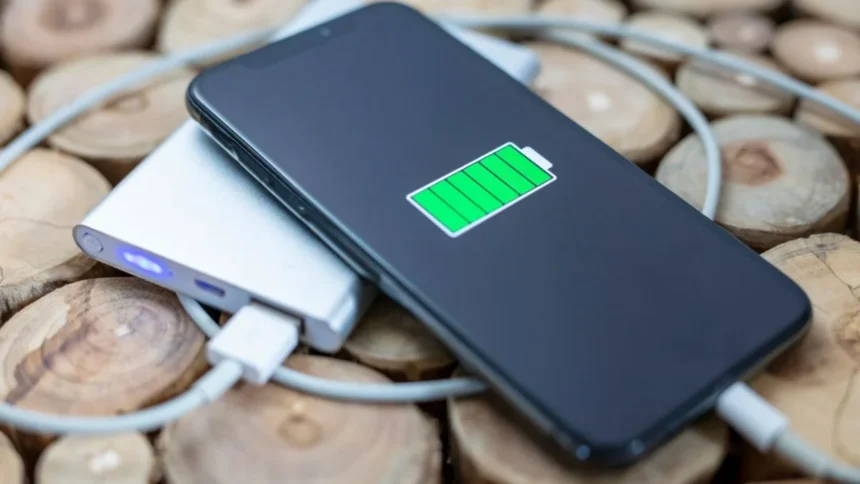
For years, smartphone users have heard conflicting advice about battery health. Some say charging your phone to 100% destroys the battery, while others believe modern phones are smart enough to prevent any damage.
The reality is more nuanced.
Charging your phone to 100% occasionally is completely normal and safe. But doing it every single day, especially overnight and in hot conditions, can gradually speed up battery wear over time.
That’s because most modern smartphones use lithium-ion batteries, and these batteries naturally degrade faster when they remain at very high charge levels for extended periods.
Why Lithium-Ion Batteries Dislike Full Charge
Lithium-ion batteries work best when they operate within a moderate charge range instead of constantly sitting at maximum voltage.
When a battery reaches 100%, the voltage inside the cell increases significantly. According to battery researchers and data from sources like Battery University, keeping batteries at this high-voltage state for long periods creates additional chemical stress inside the cell.
Over time, this stress reduces the battery’s ability to hold a charge efficiently.
In simple terms, your battery won’t suddenly break from charging to 100%, but its long-term lifespan may shorten faster.
Overnight Charging Can Increase Battery Stress
Charging a smartphone overnight is an extremely common habit that can negatively impact the battery’s overall health.
Even though modern batteries stop actively charging once they reach 100%, many still do small “top-up” charges overnight as the battery discharges by an average of 1%-2% during the night.
“Trickle charging” is the process of replenishing the battery with these repeated “top-up” charges during the night, keeping the battery sitting at close to maximum charged voltage for prolonged periods of time.
In addition to prolonging the time spent at maximum voltage, heat created from pillows, blankets, or warm environments contributes to accelerated battery ageing that many users do not realize can occur due to overnight charging habits.
Why the “20% to 80% Rule” Exists
Many tech enthusiasts and battery experts recommend keeping your phone between 20% and 80% for everyday use.
The reason is simple: lithium-ion batteries experience less chemical strain in this middle range.
Some studies suggest that consistently avoiding full charges and deep discharges can significantly increase the total number of charging cycles a battery survives before noticeable degradation begins.
That doesn’t mean you must obsessively unplug your phone at exactly 80%, but staying closer to the middle range may help preserve battery health longer.
Fast Charging Adds Heat
The fast-charging capability is one of the key features of a new smartphone, and some devices take as little as 30 minutes or less to fully charge their batteries.
Unfortunately, in addition to producing more heat and increasing the internal resistance of batteries (especially during the last few minutes of charging), fast charging has also created an increased threat of failure to lithium-ion batteries.
Fast-charging solutions are generally designed to be safe; however, when they are used in combination with high temperatures (due to the environment) regularly, the risk of degradation of the battery over time is also increased.
Phone Makers Now Offer Battery Protection Tools
Companies like Apple and Samsung have already started addressing the issue with built-in battery protection features.
Some smartphones now offer settings that limit charging to 80% or delay the final stage of charging until just before you wake up.
For example, iPhones use “Optimized Battery Charging,” which learns user habits and reduces the time the battery spends sitting at 100%.
These tools are designed specifically to reduce long-term battery stress without affecting daily usability.
Temperature Matters More Than Most People Think
Charging habits are important, but temperature often matters even more.
Charging a phone in extremely hot conditions, such as inside a parked car or under direct sunlight, can damage battery health much faster than charging to 100% alone.
Cold temperatures can also temporarily affect charging performance and battery chemistry.
Experts generally recommend charging smartphones at room temperature whenever possible for the healthiest long-term performance.
So, Should You Stop Charging to 100%?
Not necessarily. If you occasionally charge your phone fully before travelling, long workdays, or emergencies, there’s little reason to worry. Smartphone batteries are designed to handle regular use.
But if your goal is maximising battery lifespan over several years, avoiding constant overnight charging and keeping your battery closer to the 20-80% range can help slow long-term degradation.
In the end, charging to 100% is not dangerous. It’s simply one of several habits that can gradually affect how well your battery ages over time.
Also Read: Stopped Updating Your Apple iPhone? Here’s What Could Go Wrong