



Google may have just given the clearest sign yet that AI-powered smart glasses are about to go mainstream.
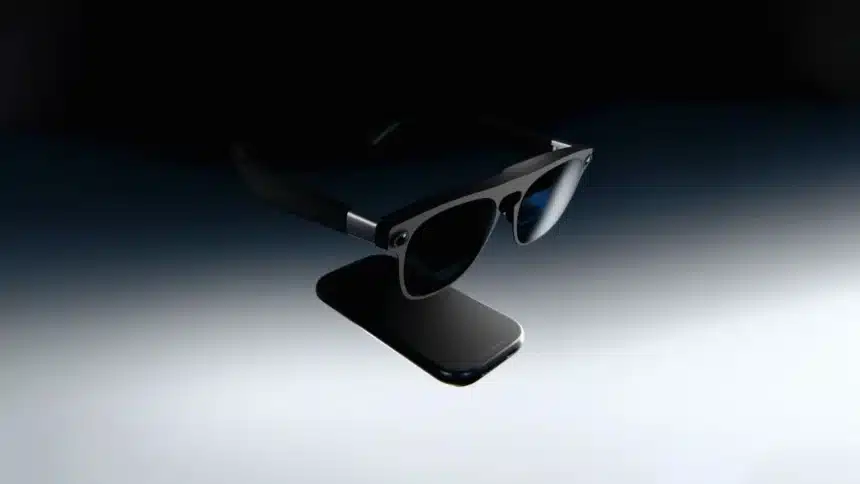
During its Google I/O 2026 event, the company showcased Project Aura, a new pair of XR smart glasses developed in partnership with XREAL and Qualcomm. While Google spent much of the event talking about AI upgrades across its ecosystem, Project Aura quietly became one of the most interesting hardware reveals of the night.
And unlike many futuristic tech demos that disappear for years, Google says these glasses are actually launching globally in 2026.
What Is Project Aura?
Project Aura is Google’s latest smart glasses project focused on mixed reality and AI-powered experiences.
The wired XR glasses were demonstrated live at Google I/O, where attendees got hands-on access to several features powered by Google’s AI tools and immersive display technology.
The glasses are designed to blend entertainment, productivity, navigation, and AI assistance into a wearable device that connects directly with other hardware like laptops and smartphones.
Google appears to be positioning Project Aura as a more practical and lightweight alternative to bulky mixed-reality headsets currently on the market.
What Can Google’s Smart Glasses Do?
The experience of testing features of the glasses during the demonstrations at the event proved very successful for users.
Immersive Google Maps was a standout feature; it enables users to explore the world in a new and much more interactive mixed reality way.
Additionally, Google is showing how to watch videos on YouTube by providing users with the ability to watch videos in both 180-degree and 360-degree views on the glasses, thus making them a portable entertainment device.
Another standout feature of the glasses was the ability to create three-dimensional digital art in a spatial environment by using the Gemini AI-powered painting app.
Additionally, some users were able to see how the glasses could work as an extended display for laptops via DisplayPort connectivity; this could be a key component of working while travelling.
Based on these outstanding features and functionality, it can be predicted that Project Aura will quickly become a staple for many as a device providing a unique work style while providing exciting entertainment opportunities.
Google Seems Serious About Smart Glasses This Time
Smart glasses have been promoted for years, mostly to a very small tech public.
Google itself went through this with its Glare-based product, which got a lot of publicity but in the end did not become a consumer hit.
But it sure does feel different this time.
One, on the verge, has progressed much in terms of AI tools, wearable tech, and companies developing devices beyond smartphones. Today’s tech giants like, like Meta, Apple, Samsung, among others, are putting massive investment into AR and mixed-reality hardware.
Project Aura looks like Google’s attempt to re-enter that race, supported this time by a much more powerful AI ecosystem behind it.
When Will Project Aura Launch?
Google confirmed during I/O that Project Aura will officially launch and ship globally sometime in 2026.
That means the glasses could arrive in just over six months, making them much closer to release than many people expected.
The company has not revealed official pricing yet, which could end up being a crucial factor in determining whether the device succeeds commercially.
Pricing has become a major issue in the mixed-reality market after products like Apple Vision Pro launched with extremely high price tags that limited mainstream adoption.
If Google can keep Project Aura relatively affordable while delivering strong AI features, the device could attract significant interest from both tech enthusiasts and everyday users.
The smart glasses industry has long searched for its “iPhone moment”- the product that finally pushes wearable computing into the mainstream.
Google clearly believes AI could be the missing piece.
Features like voice assistance, immersive navigation, live AI interaction, spatial computing, and portable virtual workspaces are becoming increasingly useful as generative AI tools improve rapidly.
Instead of treating smart glasses purely as entertainment gadgets, Google seems to be focusing heavily on real-world usefulness, especially around productivity and travel.
Also Read: What Is WhatsApp’s ‘Incognito’ AI Chat Feature? Here’s How It Keeps Conversations Private