

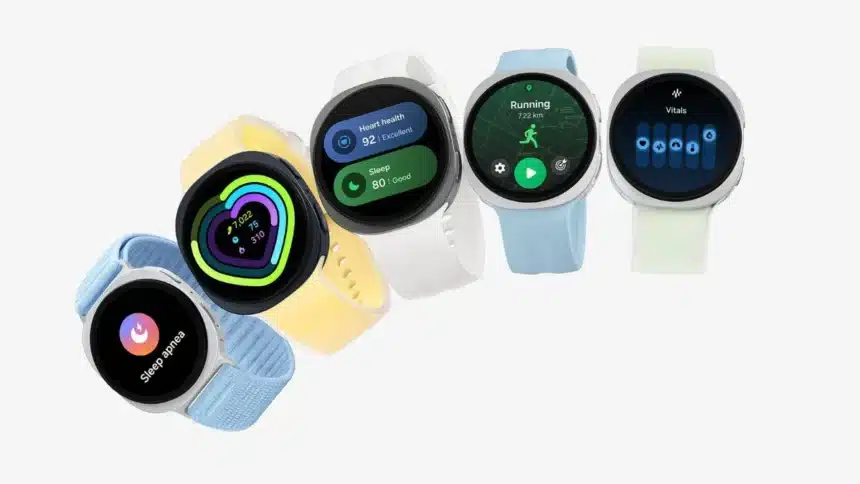
Samsung has officially unveiled the Galaxy Watch 9, and if you have been holding on to your old smartwatch waiting for the right moment to upgrade, this article will help you decide if now is that moment or not.
The watch was announced on July 22, 2026, at Samsung’s Galaxy Unpacked event in London, alongside the Galaxy Watch Ultra 2, the Galaxy Z Fold 8, and the Galaxy Z Flip 8. Pre-orders opened the same day, and the watch officially goes on sale on August 7, 2026.
This year, Samsung has kept things simple. There is no Galaxy Watch 9 Classic with the rotating bezel that some fans were hoping for, so the lineup sticks to just two versions of the standard watch, including a 40mm model and a 44mm model, each available with or without LTE support.
In this article, we will discuss the Galaxy Watch 9’s design, the new chip, the software features, the price, and, most importantly, whether it’s actually worth buying or not.
Samsung Galaxy Watch 9 Details
| Specs | 40mm | 44mm |
| Price (BT / LTE) | $379 / $429 | $409 / $459 |
| UK Price | GBP349 | GBP379 |
| Display | 1.34″ Super AMOLED, 438×438 | 1.47″ Super AMOLED, 480×480 |
| Brightness | 3,000 nits (both) | 3,000 nits (both) |
| Chip | Snapdragon Wear Elite (SDW6100), 5-core, 3nm | Same |
| RAM / Storage | 2GB / 32GB | Same |
| Battery | 390mAh (up from 325mAh) | 445mAh (up from 435mAh) |
| Charging Time | Up to 90 min for a full charge | Up to 90 min for a full charge |
| Connectivity | Bluetooth 6.0, Wi-Fi 6 | Bluetooth 6.0, Wi-Fi 6 |
| Build | Aluminium case, sapphire crystal | Aluminium case, sapphire crystal |
| Durability | IP68, 5ATM, MIL-STD-810H | IP68, 5ATM, MIL-STD-810H |
| Colors | Cream, Graphite | Graphite, Silver |
| OS | Wear OS 7 + One UI 9 Watch | Wear OS 7 + One UI 9 Watch |
| Announced | July 22, 2026 | July 22, 2026 |
| Release Date | August 7, 2026 | August 7, 2026 |
Design
Samsung has kept the overall look and shape the same as Watch 8, including the aluminium case and the sapphire crystal glass on top of the screen, because Watch 8 already had a clean, comfortable design, and Samsung clearly felt there was no need to transform it.
The watch still comes in two sizes:
- 40mm– a smaller, lighter option, better suited to smaller wrists
- 44mm – a slightly bigger case with a larger screen and battery
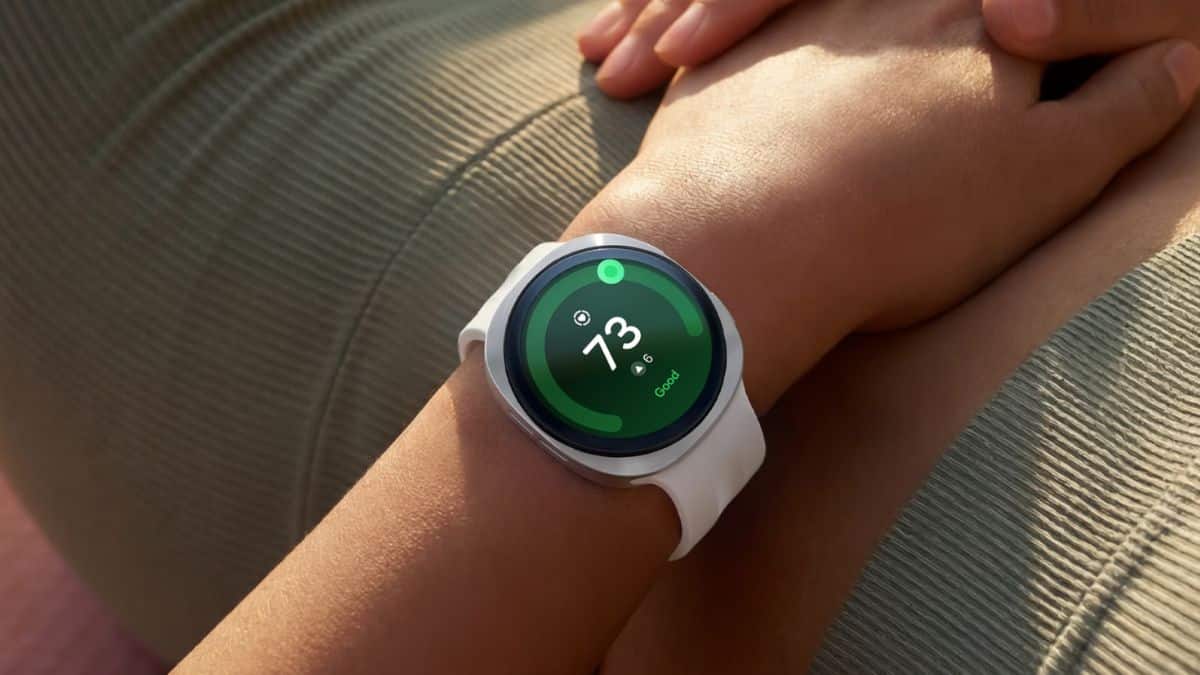
Image Courtesy: Samsung.com
One small but genuinely useful change this year is the wristband. Samsung says the included band is about 17% lighter than before, which should make it more comfortable for all-day wear and give a better seal against sweat and water during workouts.
In terms of colours, the 40mm model is available in Cream and Graphite, while the 44mm version comes in Graphite and Silver.
On durability, nothing has changed from last year; you will get an IP68 rating for dust and water resistance, 5ATM water resistance (safe for swimming), and MIL-STD-810H certification, meaning it has passed US military-grade durability testing for drops, extreme temperatures, and rough handling
Display
The screens haven’t changed in size or resolution compared to the Galaxy Watch 8:
| Model | Screen Size | Resolution |
| 40mm | 1.34-inch Super AMOLED | 438 x 438 pixels |
| 44mm | 1.47-inch Super AMOLED | 480 x 480 pixels |
Peak brightness stays at 3,000 nits, which is plenty for reading the screen in direct sunlight during a run or a hike. For comparison, the pricier Galaxy Watch Ultra 2 goes up to 5,000 nits, so if outdoor visibility in extreme sunlight is your top priority, that model has the edge. For everyday use, though, 3,000 nits is more than enough, and most people won’t notice a difference.
Processor
For years, Samsung’s Galaxy Watches ran on the company’s own Exynos chips. That changes with the Galaxy Watch 9. Samsung has now switched to the Qualcomm Snapdragon Wear Elite platform, specifically the SDW6100 chip, a 5-core, 3-nanometer processor that is currently the most advanced chipset available for Wear OS smartwatches.
In simple terms, the watch will look snappier with quicker app switching, faster responses when you reply to messages, and generally smoother day-to-day use. It should also help with battery efficiency, since newer, smaller chips typically use less power for the same amount of work.
Alongside the new chip, you get 2GB of RAM and 32GB of internal storage, the same as last year.
Battery
Battery life has always been the biggest complaint about Wear OS smartwatches compared to rivals like Apple Watch or Google’s Pixel Watch, and Samsung has responded with genuinely larger batteries this year:
| Model | Galaxy Watch 8 Battery | Galaxy Watch 9 Battery | Increase |
| 40mm | 325 mAh | 390 mAh | Up to 20% |
| 44mm | 435 mAh | 445 mAh | Up to 2.3% |
The smaller 40mm model gets the bigger jump in battery, which is a welcome fix since the 40mm Watch 8 struggled to comfortably last a full day and a half for many users. Combined with the more power-efficient Snapdragon chip, the hope is that both sizes will now comfortably get you through a full day and into the next. Both sizes also charge quickly, with Samsung saying a full charge takes around 90 minutes.
Connectivity has also had a quiet upgrade, as now you can get Bluetooth 6.0 (up from 5.3) and Wi-Fi 6 (up from Wi-Fi 4).
Software
The Galaxy Watch 9 runs Wear OS 7 with Samsung’s One UI 9 Watch layered on top, and this is what has got the most upgrades.
Samsung has added a set of new health and fitness tools:
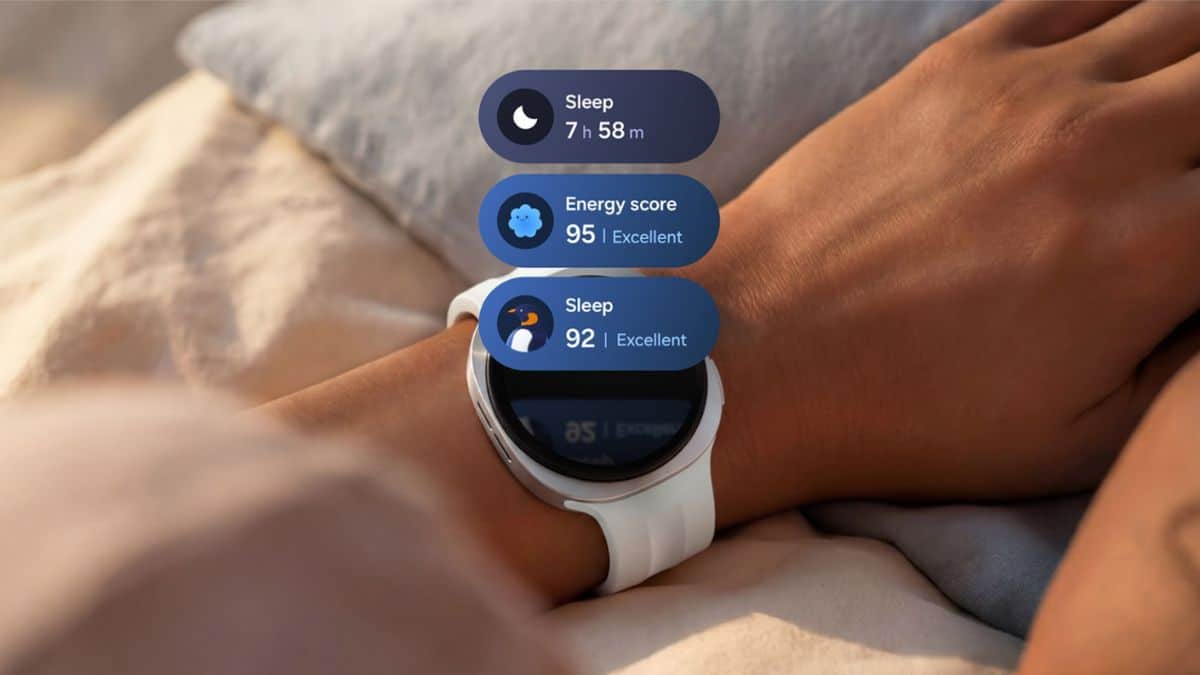
Image Courtesy: Samsung.com
- Vitals dashboard– It brings together your resting heart rate, heart rate variability (HRV), blood oxygen (SpO2), body temperature, and breathing rate into one simple view, and flags anything that looks ordinary for you.
- Heart Health Score – Heart Health Score looks at your recent sleep quality and physical activity over the past week to give you a sense of how much strain your heart is currently under.
- Daily Cardio Load– This works similarly to Whoop’s strain score, tracking your total daily exertion so you know how much rest and recovery you actually need.
- Fitness Index – It is a score out of 100 based on factors like your average daily steps, VO2 Max, average heart rate, body composition (BIA), and typical recovery time after workouts, so you can see how you compare to others in your age group.
- Trail Run mode– This is a new workout type built specifically for uneven, off-road running routes.
- Improved hydration tracking and an overall daily energy score to help you plan your day around how rested or tired you actually are.
Price and Availability
Here is the official pricing Samsung has confirmed for the US market:
| Model | Bluetooth only | With LTE |
| 40mm | $379 | $429 |
| 44mm | $409 | $459 |
This is a genuine price increase over the Galaxy Watch 8, which started at $349 for the base 40mm Bluetooth model. Samsung has pointed to rising memory and storage costs as the reason behind the roughly $30 jump.
In the UK, the 40mm model starts at £349 and the 44mm at £379.
Pre-orders are open now through Samsung’s website and other major retailers, and the watch becomes widely available on August 7, 2026.
Should You Buy the Galaxy Watch 9?
You can upgrade your watch if you are coming from a Galaxy Watch 6 or older, since the jump in chip, battery, and health features will feel substantial. But if you already own a Galaxy Watch 8, you don’t really need to go for Watch 9, as it’s very similar to that.
Also Read: Vivo X300 FE: Full Specs, Design And Key Features Explained