




WELLINGTON — New Zealand has taken its boldest step yet to rein in Big Tech, introducing legislation that seeks to bar children under the age of 16 from high-risk social media platforms. Under the proposed bill, technology companies that fail to comply with the requirements could face significant financial penalties of up to 10% of their global revenue.
Following in the footsteps of neighbouring Australia, which has already introduced a similar under-16 restriction, the proposed New Zealand social media ban places the country among a growing number of nations trying to protect children from potential online harms. Although the government presents the proposal as an important child-safety measure, the bill has already sparked a political divide in Wellington, with two of the National Party’s coalition partners opposing it.
Placing Responsibility on Silicon Valley
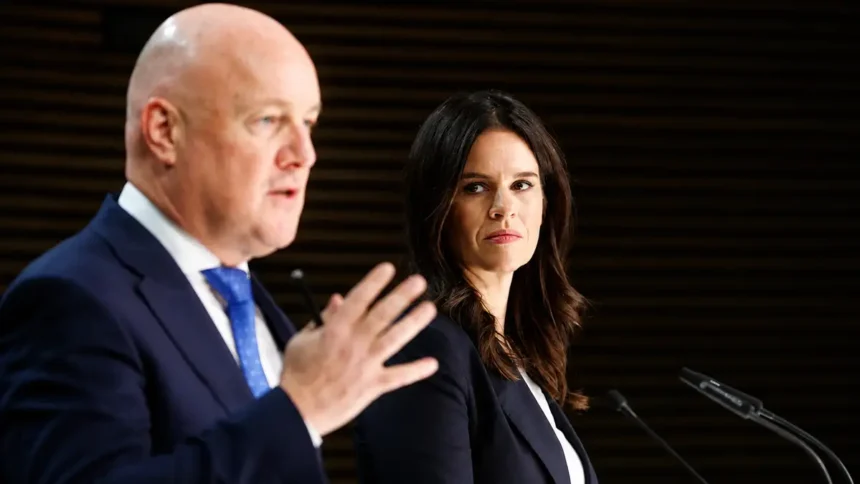
While introducing the legislation, Prime Minister Christopher Luxon argued that children’s wellbeing is being affected by social media, including their mental health, sleep, education, and family life.
Government data highlights the scale of social media use among young people:
- High Exposure: One in three children in New Zealand between the ages of 13 and 17 spend at least five hours a day on social media.
- Core Concerns: Harmful content, addictive technology, and pressures that young people may not be equipped to deal with.
- Impact Areas: Family life, mental health, sleep, and education.
“We simply cannot accept the harm being done to a generation of New Zealand children,” Luxon said.
Education Minister Erica Stanford emphasised that the burden of compliance will fall on technology companies rather than children or their parents. Neither minors nor caregivers will face fines or legal penalties under the proposed bill.
“Right now, too many of the risks children face online are going unchecked,” Stanford said. “Parents are doing their best, but they shouldn’t be expected to take on the world’s biggest technology companies alone.”
Key Breakdown: Restricted Platforms vs Excluded Services
The proposed law does not treat every online service in the same way. High-risk social media platforms would face the under-16 restriction, while several types of communication, gaming, productivity, and information services are excluded.
| Category | Examples | Status Under Proposed Bill |
| High-Risk Social Media | Instagram, TikTok, Snapchat, Facebook | Under-16 restriction applies |
| Messaging and Communication | WhatsApp, email, voice and video calling services | Excluded |
| Online Gaming | Online multiplayer games, including Roblox | Excluded |
| Music and Professional Services | Spotify, LinkedIn | Excluded |
| AI Productivity and Information Tools | ChatGPT, Gemini, Copilot | Excluded when primarily used for information queries or productivity |
| AI Companion Platforms | Services designed to simulate emotional connections or personal relationships | Covered by the regulatory framework |
The distinction around artificial intelligence is particularly important. Productivity and information-query chatbots such as ChatGPT, Gemini, and Copilot are excluded, but AI companion platforms designed to simulate emotional connections or personal relationships are covered by the proposed regulatory framework.
The distinction also shows why parental controls and age-based protections are becoming increasingly important as governments and technology companies look for different ways to manage children’s access to online services.
Technical Enforcement and Compliance Mandates
Instead of relying only on self-reported dates of birth, social media platforms covered by the legislation would have to take reasonable steps to verify users’ ages. The proposed age-checking methods include:
- Checking existing account information
- Using facial age-estimation technology
- Using digital ID services or formal identification
- Regularly assessing risks to children and reporting how those risks are being identified and reduced
A self-declared date of birth would not be enough on its own to satisfy the age-check requirement.
The legislation would also establish an online safety regulator within New Zealand’s Department of Internal Affairs. The regulator would oversee compliance and enforcement under the proposed framework.
Age verification has become a much wider issue across digital platforms as regulators try to balance online safety and user privacy. Facial age estimation, formal identification, and digital ID services may help determine whether a user meets an age requirement, but they also raise questions about how personal information is handled.
By imposing penalties based on global revenue instead of relying on a fixed monetary fine, New Zealand is proposing potentially significant financial consequences for major technology companies. Platforms that fail to meet their obligations could face penalties of up to 10% of global revenue.
Luxon acknowledged that tech-savvy youngsters would inevitably look for ways around the restrictions and that regulating access would not be simple.
“I won’t pretend that it will be simple or that it will be perfect,” he said. “We won’t get every single child off social media, but frankly, it’s just way too important not to at least try.”
How the New Zealand Social Media Ban Compares Globally
The legislative landscape shows both international momentum and significant political disagreement within New Zealand.
| Stakeholder / Region | Position / Standpoint | Key Concerns or Rationale |
| National Party | Supports the bill | Protect children online, reduce the impact of harmful content and addictive technology, and increase accountability for tech companies |
| NZ First | Opposed | Concerns over government overreach, privacy, digital ID, and parental responsibility |
| ACT Party | Opposed | Questions whether the ban will work and raises concerns about its wider effects |
| Labour Party | Supports first reading | Supports an under-16 social media ban but wants the legislation substantially improved |
| Australia | Under-16 minimum-age regime implemented | Provides an international precedent for age restrictions on social media |
Australia provides the closest comparison. Its under-16 social media rules came into effect in late 2025, making it an important test case for countries considering similar restrictions. New Zealand’s proposal follows the same broad direction, although its regulatory framework and exemptions have been developed separately.
A Divided Parliament Ahead
The political situation changed quickly after the bill was introduced. Both of National’s coalition partners, ACT and NZ First, announced their opposition to the proposal.
NZ First leader Winston Peters warned about what he described as a “slippery slope” and raised concerns about digital ID, government overreach, and the role of parents in deciding how children use social media.
ACT leader David Seymour also confirmed that his party would use the coalition agreement’s “agree to disagree” provision and vote against the legislation. He argued that protecting children online is a serious problem but questioned whether the proposed ban would provide an effective solution.
The biggest development came on August 25, when the opposition Labour Party announced that it would support the legislation. Labour’s backing gives National a path to getting the bill through its first reading despite opposition from ACT and NZ First.
However, that support does not mean the legislation will progress before the upcoming election. The government has said there is not enough parliamentary time for the bill to receive its first-reading vote before Parliament rises.
The bill is therefore unlikely to progress further during the current parliamentary term. If it eventually becomes law, New Zealand would join a growing group of countries placing direct legal obligations on technology companies over children’s access to social media. For now, the debate is likely to continue over how far governments should go to protect children online and how those restrictions can be enforced without creating new privacy concerns.
Disclaimer: This article is based on information available as of August 25, 2026. The legislation discussed is still proposed and may change during the parliamentary process. Platform coverage, requirements, and implementation details may also change before the bill becomes law.