




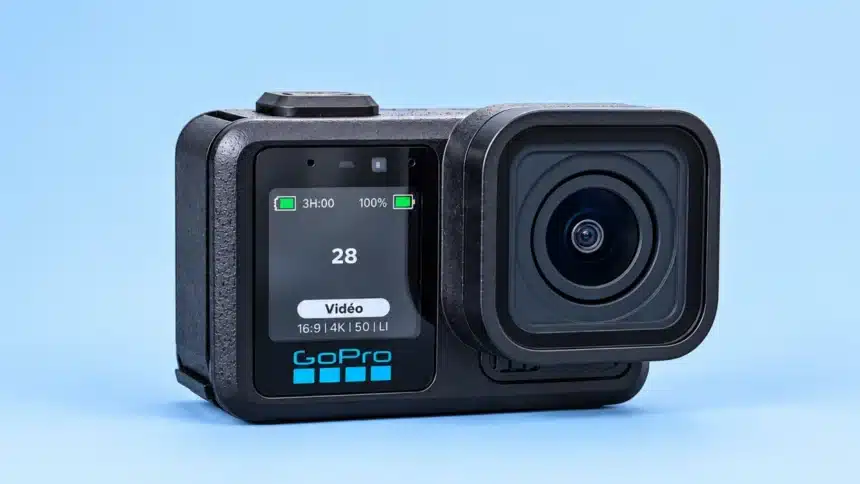
For years, GoPro’s formula barely changed: shrink the camera, bump the frame rate, add a little more stabilization, repeat. The Mission 1 Pro, released on May 28, 2026, breaks that pattern. It’s built around a sensor nearly three times the size of anything GoPro has shipped before.
The question for anyone eyeing their next trip is simple: does that upgrade actually translate into a better travel camera, or is it just a bigger price tag?
GoPro Mission 1 Pro Specs at a Glance
| Specs | Mission 1 Pro |
| Starting price | $699.99 ($599.99 with GoPro subscription) |
| Sensor | 1-inch, 50MP |
| Max video | 8K/60fps |
| Open gate capture | Up to 8K/30fps (4:3) |
| Slow motion | 4K/240fps, 1080p/960fps burst |
| Dynamic range | 14 stops |
| Color/HDR | 10-bit GP-Log2, HLG-HDR |
| Audio | 4 mics, 32-bit float, USB-C mic input |
| Rear screen | 2.59″ OLED touchscreen |
| Front screen | 1.4″ LCD touchscreen |
| Battery | 2,150 mAh (~5+ hrs at 1080p30) |
| Charge time | ~21 min to 80% with Dual Battery Charger |
| Water resistance | 66 ft (20m), no housing needed |
| Weight | ~207g |
| Extras | Pre-recording, loop recording, live streaming |
Other models in the lineup:
- Mission 1: Same body, but open gate capped at 4K and lower max frame rates, at a lower price
- Mission 1 Pro ILS: Interchangeable-lens version with a Micro Four Thirds mount, aimed at professionals
What Makes the GoPro Mission 1 Pro Sensor a Big Deal?
The 1-inch, 50MP sensor is the core of this upgrade, and it’s noticeably larger in surface area than the sensor in DJI’s Osmo Action 6, GoPro’s closest rival. A bigger sensor gathers more light, which shows up in two places travelers care about most:
- Cleaner low-light footage: Less noise in dim environments like evening city walks or dive shots
- Stronger dynamic range: 14 stops means more detail held onto in both shadows and highlights, closer to what you’d expect from a cinema camera than a helmet cam
- The open-gate 8K mode is the other headline feature. It records the full height of the sensor rather than cropping to widescreen, which means:
- Room to reframe or crop shots after filming without losing resolution
- Easy exports for vertical formats like TikTok and Instagram Reels from the same footage
- More flexibility in the edit than a standard widescreen action cam clip allows
- Audio also got a real bump. 32-bit float recording all but eliminates clipped audio from sudden loud noises, and the USB-C mic input lets you plug in an external lav or shotgun mic for interviews or vlogging.
Design and Handling
If you’ve recently used a GoPro Hero, this one will feel familiar. It has the same waterproof door that holds the battery, USB-C port, and microSD slot, plus a tough build that is waterproof up to 66 feet without extra housing.
- Wider and deeper than the Hero 13 Black to fit the bigger sensor and lens housing
- Weighs about 207g vs. the Hero 13’s 159g
- The extra bulk is noticeable on lightweight mounts, like a road bike helmet, where a nimbler camera wobbles less
- The Hero 13 Black’s existing lens attachments (like magnetic ND filters) don’t fit the new sensor size
- GoPro has released an equivalent accessory lineup for the Mission 1 Pro, including M-Series ND filters
- If you’ve built up a kit of Hero-compatible lenses, that’s a real switching cost
GoPro Mission 1 Pro Battery Life and Everyday Use
For a camera pushing this much resolution, battery life holds up well:
- Up to 5+ hours of runtime at 1080p30
- ~21 minutes to charge to 80%
- Pre-recording captures the moment just before you hit the shutter
- Loop recording and live streaming are both supported
- The screens matter more than they might sound. The 2.59-inch rear OLED and 1.4-inch front LCD make framing and vlogging noticeably easier than squinting at a tiny preview. This is a small but meaningful upgrade if you’re filming yourself as much as your surroundings.
Who Is This Camera Actually For?
The honest takeaway from testing and early reviews: the Mission 1 Pro isn’t really aimed at the casual GoPro buyer who wants a rugged clip-machine for surfing videos and ski runs. It’s built for creators a step further along, and GoPro is explicitly chasing that more serious, higher-spending audience rather than competing purely on price with DJI.
Good fit if you:
- Want footage good enough to actually edit and grade, not just post straight to a story
- Shoot in low light often (evenings, indoors, underwater)
- Want the flexibility to reframe or crop shots after filming
- See your action cam as a lightweight B-cam alongside a “real” camera
Skip it if you:
- Mostly mount your GoPro on a helmet or chest rig for quick clips
- Post straight to social media without much editing
- Already own Hero-compatible lens accessories you don’t want to replace
- Want to save weight on lightweight gear like a road bike setup
Also Read: Top 5 Action Cameras To Buy In 2026 For Video And Vlogging
The Verdict
If you’re the kind of traveler who wants footage good enough to use in a final edit, the sensor upgrade alone makes the Mission 1 Pro worth serious consideration. The low-light performance and dynamic range are a genuine leap over anything GoPro has made before, and open-gate 8K capture gives you post flexibility that smaller sensors can’t match.
If you only use your GoPro on a helmet or chest mount for short, uncut videos, the case isn’t as good. You’ll have to pay about $270 more than the Hero 13 Black, carry a bigger camera, and not be able to use your existing lens accessories, all for image quality improvements that you might not notice in a 15-second Instagram video.
Bottom line
Upgrade if you’re a serious content creator who wants your action camera to double as a B-cam. Stick with the Hero 13 Black, or step down to the base Mission 1, if you just want a tough, reliable camera to document your next trip without overthinking it.