



Refresh rates are more than just a number on a spec sheet. This is what ProMotion does, how 240Hz fits in, and who really benefits from each.
What Is a Refresh Rate?
The picture on every screen is redrawn many times every second. The refresh rate is that number, measured in hertz (Hz). A 60Hz display draws again 60 times per second, giving each frame 16.7 ms of screen time. A 120Hz panel refreshes every 8.3ms, while a 240Hz panel refreshes every 4.2ms.
The practical effect is motion clarity. Higher refresh rates reduce the ghosting blur you see when you scroll quickly, make the pointer move more smoothly, and shorten the time between what you do and seeing the result on the screen when you’re gaming. Using a high-refresh display every day makes going back to 60Hz feel like wading through syrup.
What Is ProMotion?
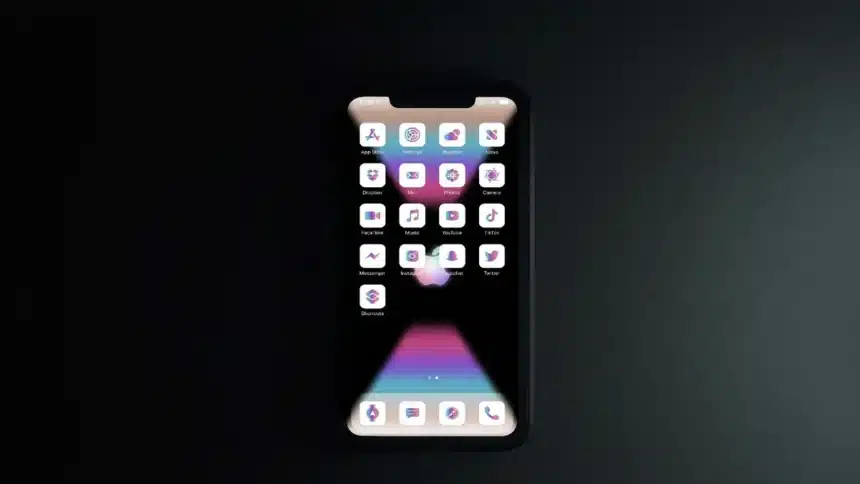
Apple calls its adaptive high-refresh-rate display technology ProMotion. It debuted with the 2017 iPad Pro and has since been added to all iPad Pros, MacBook Pros, and, starting with the iPhone 17 series, all iPhones sold today.
Adaptable is the standout word. The ProMotion panels don’t stay at 120Hz; instead, they change between 1Hz and 120Hz based on what’s on the screen. Reading a file that doesn’t change? The screen slows to 10Hz or less, saving battery life. Scrolling through a long feed? It goes straight up to 120Hz. This is possible thanks to Low-Temperature Polycrystalline Oxide (LTPO) backplanes, which is why Apple calls the behaviour adaptive rather than just fast.
One way Apple does this is with LTPO OLED panels in the iPhones and LTPO-equivalent technology in the Liquid Retina XDR display on the MacBook Pro. This lets the screen adjust the frame rate based on the content: the Always-On lock screen runs at 1Hz, static reading at 10Hz, animated interfaces at 60Hz, and gaming or fluid scrolling at the full 120Hz.
ProMotion vs Standard 120Hz: The Real Difference
Many Android phones and gaming laptops have a 120Hz refresh rate that stays the same no matter what is being shown. Actually, that’s better than 60Hz, but it’s a less refined method. A normal 120Hz panel can’t go below 1Hz while the screen is “Always On.” It uses power at 120Hz whether you’re watching a video or looking at the lock screen.
Because ProMotion is adaptive, Apple’s displays can match the experience and efficiency of 120Hz at the same time, something panels with a fixed rate just can’t do. There’s smart not only in the ceiling, but also in the floor. This is what makes ProMotion different from competitors that market a 120Hz panel as if all high-refresh displays are the same.
Where 240Hz Fits In
A 240Hz screen updates the picture every 4.2 milliseconds instead of 8.3 milliseconds, which is twice as often as a 120Hz screen. This difference is hard to notice for most content. Streaming video runs at 30 or 60 fps, movies are rendered at 24 fps, and no web page or app comes close to 240 fps for animation. 240Hz can’t be seen or heard in any other situation.
In that case, it’s competitive PC gaming. With the best gaming rigs, frame rates can reach 200fps or more in fast-paced first-person shooters like CS2, Valorant, or Apex Legends. This means that a 240Hz monitor can show those frames faster, so there is less time between moving the mouse and seeing the result. This gap matters for a player whose reflexes are tuned to millisecond advantages.
A 240Hz monitor is only as useful as the GPU that powers it. To run demanding games at more than 120 frames per second, a high-end graphics card is needed. Most gaming laptops and mid-range desktops can’t produce the extra frames needed for 240Hz, so the experience often feels the same as 120Hz.
Who Genuinely Needs 240Hz?
The truth is that it’s a pretty small group. The people who genuinely use 240Hz panels are professional and semi-professional esports players, streamers seeking a competitive edge, and dedicated gamers. ProMotion 120Hz already provides a flawless visual experience for anyone using a display for work, making content, editing videos, or playing casual games. People who use high refresh rates every day say they can’t tell the difference between 120Hz and 240Hz.
The difference between 60Hz and 120Hz is huge. The difference between 120Hz and 240Hz is small. That first upgrade will feel like a revelation if you have never used a ProMotion display before. Most people won’t notice the next step up to 240Hz at all.
What Comes Next, ProMotion at 240Hz?
Some people in the industry think that Apple might boost ProMotion above 120Hz, possibly calling it “ProMotion 2” and saving it for a future Ultra or Pro model. The reasoning follows Apple’s usual pattern: new technologies first appear in Pro models, improve over generations, and then move to lower-level models as higher-level models adopt newer technologies. Razer and ASUS already ship laptops with 240Hz panels, which shows that the panel supply chain is fully developed. It remains to be seen if Apple will choose the better input lag of 240Hz over the already great ProMotion experience, but the direction is clear.
The Verdict
ProMotion 120Hz is the most advanced consumer display technology on the market right now. What sets it apart from standard 120Hz is its adaptive intelligence, with both a ceiling and a floor. The endpoint for most users: smooth, quick, and visually finished.
A 240Hz screen is a big deal for one person: competitive gamers who can feed it frames. No difference between 8.3ms and 4.2ms is visible in the tasks other people do. All users would see the same scrolling, video, and everything else. Pick 240Hz as the frame rate. All other things should be done with ProMotion.