




Image Courtesy: Caleb Oquendo via Pexels
Smart glasses have been on the verge of becoming popular for years. Now, in 2026, they actually have. Two clear groups now exist in this category: AI audio glasses, which look like regular glasses and use your voice and camera, and full AR display glasses, which project images into your field of view. Meta, Google, Xreal, and Snap come up most often. Here is how they stack up.
Meta Ray-Ban Gen 2: The Standard Design
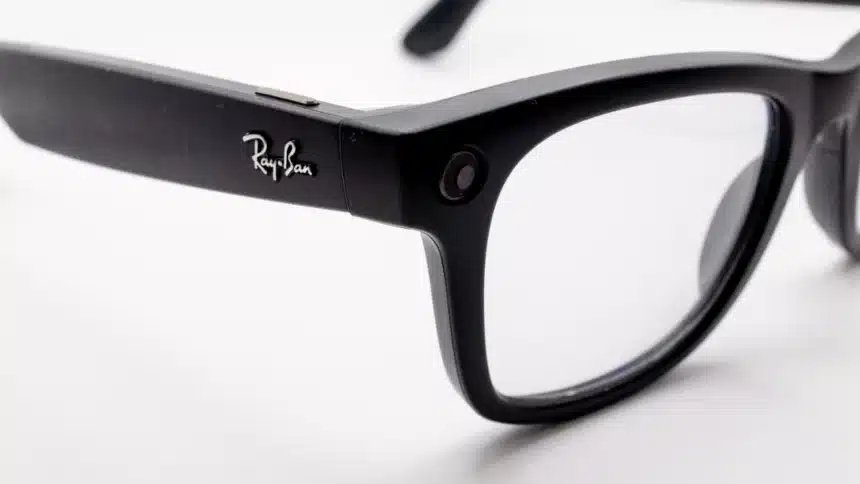
The Ray-Ban Meta Gen 2 has a well-known Ray-Ban frame, a 12MP ultrawide camera that records 3K video, Meta AI, open-ear audio, and up to 8 hours of battery life. It launched at $379 and remains the standard for everything else in this class.
For one thing, they look like regular Ray-Bans. For another, they work like open-ear headphones, let you use Meta AI without using your hands, and let you take first-person photos and videos. Now is the best time for new users to feel comfortable with smart glasses. You can easily find them and choose from different frame styles. They do real-life AI tasks like translation, object recognition, and voice queries without making you look like you’re wearing tech.
The main problem is that the lens doesn’t have a built-in screen. Meta AI talks to you and tells you everything. For AI that can talk to people, that’s fine. This is the ceiling you’ll quickly reach for anything that works better with pictures.
Best for: First-time buyers, everyday AI assistance, social media capture, travel.
Price: From $379
Google Android XR: The Biggest Wildcard
Google has teamed up with Warby Parker, Gentle Monster, and Xreal on Project Aura as part of its push for Android XR. Google is not making its own hardware. Instead, it is putting its Gemini AI and Android XR platform inside frames made by well-known eyewear brands. The business thinks people will believe a name on the bridge of their nose.
Some say that Google’s Android XR glasses are the most unknown thing about 2026. When Gemini is added to Google, deep AI features will be added to your ecosystem. These tools will work with your Search, Calendar, and Maps. So far as I can tell, it’s the smartest AI layer on the market. Android XR glasses are, in fact, a choice for the future. Before you buy something, make sure the exact model is available in your area and that it ships.
These could be the first suggestions Android users see if Google keeps its word. They’re more for watching shows right now than for buying.
Best for: Android ecosystem users willing to wait for wider availability.
Price: Estimated $379 to $499 depending on frame partner.
Xreal One Pro: The Display Specialist
The Xreal is in a completely different lane. The Xreal One Pro costs $649 and is best known for its portable movie and gaming uses. It has 3D conversion, 3DoF tracking, spatial anchoring, and an ultrawide mode, among other features. These glasses are AR display glasses, which means they show you a virtual screen instead of talking to you through open-ear speakers.
Among display glasses, the Xreal One Pro has the most SDK and Unity support. This makes it a favorite among developers and remote workers who want a workstation they can take with them anywhere. The screen is clear, setup is easy, and compared to older models, the hardware feels refined.
Xreal is not mainly an AI assistant, which is a trade-off. You’re buying the display. There are AI features, but they aren’t as important as the visual experience.
Best for: Developers, remote workers, portable gaming, virtual screen use.
Price: $649
Snap Specs: The Most Ambitious Bet
Snap Specs are stand-alone AR glasses that will be available in fall 2026 and cost $2,195. They have a 51-degree field of view, 6DoF tracking, and hand tracking, and they run on dual Snapdragon processors. At this price, no other pair of consumer smart glasses is as technically advanced.
With Lens Studio, Claude Code, OpenAI Codex, and Cursor all built in, Snap Specs has the most open developer toolchain in its class. These glasses are both a product and a platform. They were made for developers and early adopters who want to push the limits of what AR glasses can do.
Because of the price and the small group of people who buy them, most buyers can’t recommend them. If you want to know where smart glasses are really going, check out Snap Specs.
Best for: Developers, AR enthusiasts, early adopters.
Price: $2,195
The Verdict
The Ray-Ban Meta Gen 2 is the best choice for most people. You can get more from Snap Specs, and Xreal One has a better screen. Google is in the middle. It might have the best AI integration on the market, but it’s not yet a clear product that you can confidently recommend. In 2026, smart glasses that help you get what you want will be more widely available. Get Meta if you want an AI friend that you can use every day. If you want a portable screen, buy Xreal. Keep an eye on Google if you live in its world. Spend money on Snap Specs if you want to live a year ahead of everyone else.