




Tencent has launched its press flagship AI, a significant move in the company’s artificial intelligence strategy.
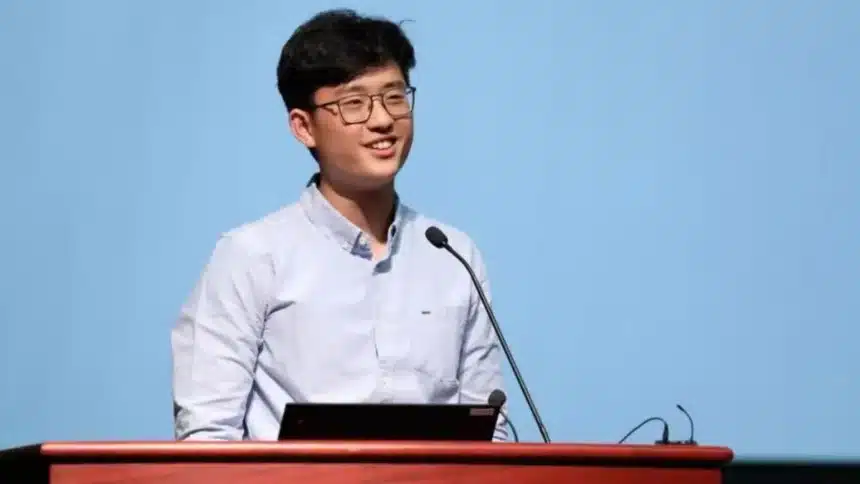
The AI model is a H3 preview and represents the first major creation from Yao Shunyu, who previously worked as an OpenAI scientist before coming to Tencent to lead foundational AI.
This is more than just another model revision; it is positioned as a Hunyuan AI overhaul and an opportunity for Tencent to become competitive with global and domestic rivals in AI.
One thing that stands out immediately is size. Hy3 preview comes with 295 billion parameters, which is actually smaller than it’s previous flagship, HY 2.0, which crossed 400 billion.
That might sound like a downgrade, but it’s intentional. Instead of chasing massive models with trillions of parameters, Tencent is focusing on efficiency and real-world usability. In simple terms, it wants an AI that works better, not just one that’s bigger.
According to Tencent, their model competes with some of the top Chinese systems, but they are still behind leaders such as Google’s DeepMind and OpenAI. This gap is critical given the continued escalation of competition amongst companies globally in the field of AI.
There is also fierce domestic competition. Competitors such as Zhipu AI and Moonshot AI are continuing to advance quickly through their models, GLM and Kimi; therefore, Tencent must reconsider how they approach the market.
Tencent asserts that the Hy3 preview was focused on the true business case for using the model. The model features integration into their ecosystem (the Yuanbao app and their coding assistant).
One area of focus for reference is “agentic AI,” or AIs that can complete tasks more autonomously.
Tencent believes that this capability will represent one of the largest advancements in their next generation release, based on their benchmarking results achieved through their internal assessments of the performance of OpenClaw and other comparative tools.
Tencent AI strategy built around users, not just tech
Under Yao Shunyu’s leadership, Tencent is shifting its thinking. Instead of obsessing over model size, the company wants to leverage its massive user base, especially through WeChat, which has over a billion users.
The idea is simple but powerful. The more context an AI has about a user, the more useful it becomes. Things like chat history, preferences, and behaviour could make responses far more personalized and practical.
Hy3 preview is exactly what the name suggests: a testing phase. Tencent is using this release to gather feedback before rolling out the full version, which doesn’t have a launch date yet.
Hunyuan 1.0 and 2.0
Tencent has dedicated the majority of 2023 and 2024 to developing the Hunyuan 1.0 and 2.0 models prior to the Hy3 Preview. The earliest models were primarily designed to catch up with recent changes in the industry towards using the Mixture of Experts (MoE) architecture.
By using this technical design, a model can have a very large total size, but only the most relevant “experts” are activated for a particular job, thereby reducing the computational costs associated with using a single very large model.
The transition from a 400 billion parameter HY 2.0 to the much smaller 295 billion parameter Hy3 Preview is evidence that Tencent has successfully implemented this architectural design.
They are now additionally refining their “experts” and increasing the precision of these “experts” to achieve better performance from the HY3 with a much smaller overall footprint compared to the HY2.0.
But one thing is clear. With new leadership, a shift in strategy, and a focus on practical AI, Tencent is trying to reposition itself in a race it can’t afford to fall behind in.
Also Read: Tencent Enforces Stricter Rules To Curb AI Content On WeChat