



Imagine wearing something that tells you how well you slept. That’s pretty much what a smart ring does, which is why this tiny device has become so popular in the US. No screen, no buzzing, and no big strap. It’s just a thin band that tracks your body throughout the day and night and gives you useful health insights.
If you’ve seen the Oura Ring, the Samsung Galaxy Ring, or the Ultrahuman Ring and been confused about how something so small could tell you so much, read on. We’ll explain what’s inside, what it can (and can’t) measure, and whether it’s worth wearing.
What Does a Smart Ring Really Do?
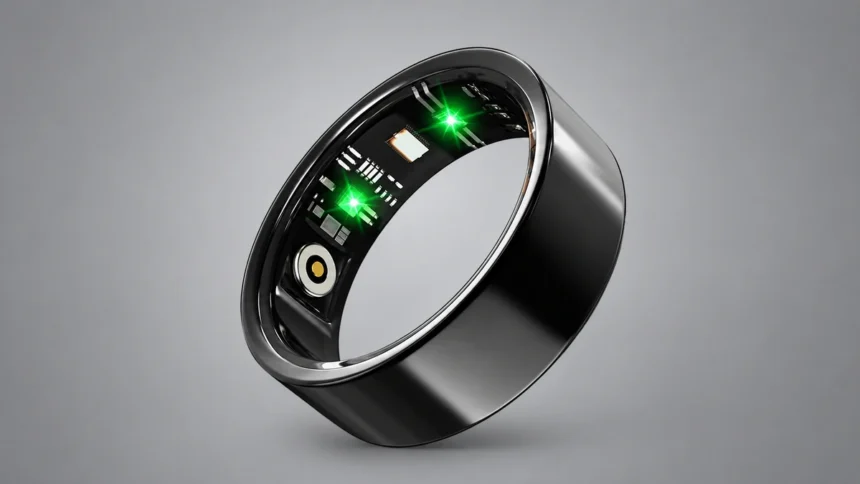
A smart ring is a wearable device that looks like a regular ring but has tiny sensors, a battery, and a low-power chip that can collect biometric information. It doesn’t have a screen or speaker like smartwatches do. Instead, it just quietly collects data about your body while you sleep and during the day.
Because rings are worn on the finger, they benefit from having strong, steady blood flow close to the skin’s surface. This makes the finger a useful location for collecting biometric signals, especially when the ring fits properly.
However, most of the detailed analysis and health insights are presented through the ring’s companion smartphone app. It pairs with a smartphone app via Bluetooth, where the raw numbers turn into readiness scores, sleep scores, and recovery trends. When you wear it with the app, you hardly notice that you’re wearing it.
The Sensors That Make It All Possible
Smart rings are smaller than a stick of gum, but they have real hardware inside:
- PPG sensors use small LEDs to shine light into your skin and detect changes in blood volume with each heartbeat. These signals can be used to estimate metrics such as heart rate and HRV.
- Temperature sensors track changes in skin temperature that may provide insights into recovery, menstrual-cycle trends, and changes from your normal baseline.
- Accelerometers can tell when you walk, toss and turn, or sit still.
- Some smart rings can estimate blood oxygen levels (SpO2), particularly during sleep.
These sensors gather raw data, which algorithms then turn into information you can understand.
How Smart Rings Track Your Health
This is what that hardware means in real life:
Sleep: Smart rings work great for this because people are much more likely to wear them to bed than a big smartwatch. A ring uses information about your movement, heart rate, and temperature to estimate how long you slept, how long you were in light, deep, and REM sleep, and how well you slept overall. Each morning, this information is often rolled into a single “sleep score.”
Heart rate and HRV: One of the most useful wearable metrics is heart rate variability, the small change in time between beats. HRV can provide insight into recovery and stress, especially when compared with your own baseline over time. Changes in HRV can be influenced by factors such as training, stress, sleep, illness, and recovery. The ring tracks this during the night, when movement is typically lower and readings can be more consistent.
Activity and steps: Accelerometers track how many steps you take, how many calories you burn, and how much you move overall. But don’t expect detailed GPS running routes; rings are meant for everyday activity, not serious training logs.
Body temperature trends: Instead of just reading a fever, rings track your body’s normal temperature over time and alert you to changes. Changes from your normal temperature baseline may provide useful wellness insights and can also support menstrual-cycle tracking on compatible rings.
Readiness scores: Many smart ring apps combine metrics such as sleep, HRV, temperature, and activity into a daily readiness or recovery score to quickly tell you whether your body may be ready for a hard workout or could benefit from more recovery.
Cycle tracking: Some smart rings use temperature trends and other data to help predict menstrual-cycle phases and estimated ovulation dates.
Smart Ring vs. Smartwatch: What’s the Real Difference?
Both keep track of some of the same health metrics, but they’re designed to do different things:
| Feature | Smart Ring | Smartwatch |
| Comfort overnight | Barely noticeable | Depends on size and personal preference |
| Battery life | Several days, depending on model | Varies widely by model |
| Screen/notifications | Usually none | Full display |
| Sleep tracking | A core strength | Available on many models |
| GPS & detailed workouts | Limited | Strong |
| Discretion | Looks like jewelry | Clearly a gadget |
For many, the two are like sides of the same coin: a watch during the day and a ring at night. If you only want one thing that you’ll wear all the time, though, a ring may be more comfortable for continuous or overnight wear.
Are Smart Rings Accurate?
Yes, but there are some exceptions. Some validated smart rings have shown good accuracy for resting or nighttime heart-rate measurements, although accuracy varies by device, metric, fit, movement, and individual factors. When the person is moving around a lot, the readings can become less accurate, and metrics like calorie burn are more like educated guesses than exact measurements. Also, keep in mind that most consumer smart rings and many of their wellness features are not intended to diagnose medical conditions. They’re great for spotting patterns over time, but they shouldn’t replace a doctor’s diagnosis.
What a Smart Ring Can’t Do
It’s easy to get excited about what these tiny gadgets can do, so let’s be clear about what they can’t do:
- No screen means no quick-glance stats on most smart rings. Want to see what your heart rate is at right now? You’re usually getting your phone out.
- Consumer smart rings generally cannot directly measure blood glucose, and you should be cautious of products claiming non-invasive glucose measurement. The FDA says it has not authorized, cleared, or approved any smartwatch or smart ring that independently measures or estimates blood glucose without piercing the skin. Blood-pressure capabilities also vary and should not be assumed to be available or clinically validated on every smart ring.
- There isn’t much or any built-in GPS or detailed workout data on most smart rings, so serious athletes may still need a separate sports watch.
- Fit, movement, sensor contact, environmental conditions, and individual characteristics can affect wearable readings, so trends over time are often more useful than a single measurement.
- It is not a diagnostic tool. A low readiness or recovery score is not a diagnosis; it is simply a signal to consider factors such as sleep, stress, activity, and recovery.
How to Choose the Right One
Oura, Samsung, Ultrahuman, RingConn, and Circular are all competing for your attention. Here are some quick questions that will help you choose:
- Do you have to pay for a subscription to get all the insights, or is everything included at the start?
- Cycle tracking, SpO2, or temperature? Which sensors are important to you?
- Is the app fun to use every day? Since you’ll be using it every day, a bad interface quickly becomes annoying.
- Did the company send a size guide? A poor fit can affect sensor contact and measurement quality, so using the manufacturer’s sizing guide is important.
Should You Get One?
You should get a smart ring if:
- You want to keep track of your sleep and recovery without wearing anything bulky.
- You prefer simple, discreet tech over a device with a display.
- You don’t need GPS or wrist-based notifications.
A smartwatch is still the better choice if you want to keep track of your workouts more accurately or quickly see your stats. Or, as many people are finding, wear both.
The Bottom Line
Smart rings are one of the most advanced pieces of everyday wearable tech. They pack a lot of sensors into a small design you might forget you’re wearing. From a ring that looks like it belongs on your finger, not a lab bench, they can provide useful insights into health and wellness trends by tracking metrics such as heart rate, temperature, movement, and sleep. As the technology improves and more brands enter the market, smart rings continue to gain new features and more advanced health-tracking capabilities.