




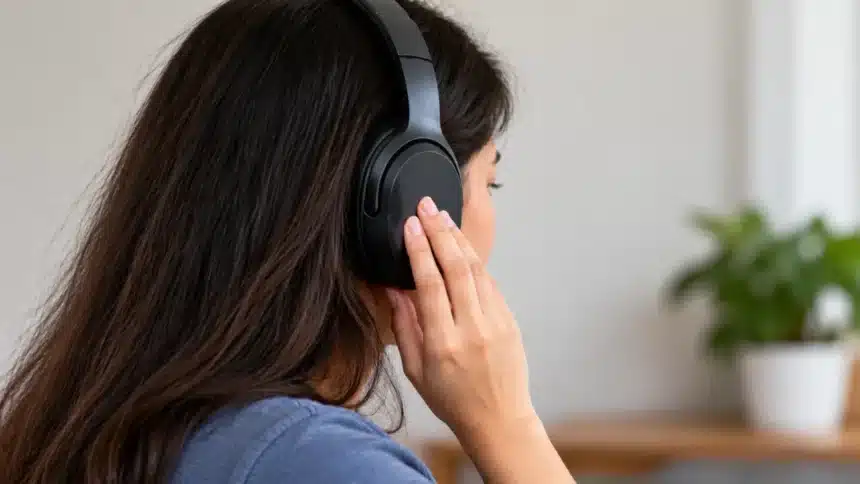
Active Noise Cancellation (ANC) headphones have become a must-have for travelers, remote workers, commuters, and music lovers. Whether you’re flying across the country, working in a busy coffee shop, or trying to focus in a noisy office, ANC technology can dramatically reduce unwanted background noise.
Yet many first-time users experience a strange and often unsettling sensation the moment ANC activates. Some describe it as feeling like their ears are plugged. Others compare it to the pressure changes during an airplane descent. A few even call it an “eardrum vacuum” effect.
- What Is the ANC Pressure Effect?
- How Does Active Noise Cancellation Actually Work
- The Biggest Myth: ANC Does Not Create a Vacuum
- Your Brain Is Doing Most of the Work
- Why Low Frequencies Are the Main Culprit
- Why Some People Feel It, and Others Don’t
- Earbuds vs. Headphones: Which Feels Worse?
- Common Symptoms Associated with ANC Discomfort
- ANC Pressure Effect vs. Actual Ear Pressure
- How to Reduce the Sensation
- Is the ANC Pressure Effect Harmful?
- Final Verdict
If you’ve ever turned on noise cancellation and wondered why your ears suddenly felt strange, you’re not imagining it. The sensation is real, but the explanation may surprise you.
What Is the ANC Pressure Effect?
The ANC pressure effect refers to the feeling of fullness, pressure, or suction that some people experience when using active noise-canceling headphones or earbuds.
Common descriptions include:
- Feeling like ears are underwater
- Sensation of descending in an airplane
- Pressure inside the ear canal
- Mild discomfort or fullness
- Feeling that the eardrums are being pulled inward
Among audio enthusiasts, this phenomenon is often referred to as “eardrum suck.” Although the nickname sounds dramatic, it accurately captures how many users describe the experience. Research on ANC headphone comfort has also documented this reported sensation. Read the research on ANC headphone discomfort.
How Does Active Noise Cancellation Actually Work
To understand the sensation, it helps to know how ANC operates.
Active Noise Cancellation uses:
- Tiny external microphones
- Internal audio processors
- Sound waves that oppose incoming noise
The headphones listen to ambient sounds and generate opposing sound waves designed to cancel them out before they reach your ears. This technology is particularly effective against steady, low-frequency sounds such as:
- Airplane engines
- Air conditioners
- Train and bus rumble
- Traffic noise
- Office HVAC systems
The result is a significantly quieter listening environment. For more about how noise-cancellation technologies work, see Devicology’s guide to Environmental Noise Cancellation (ENC).
The Biggest Myth: ANC Does Not Create a Vacuum
Many people assume ANC physically changes the air pressure inside their ears.
It doesn’t create a vacuum. Research into the “eardrum suck” sensation has found no measurable air-pressure difference in the tested conditions. However, the exact reasons people experience the sensation are still being investigated. Research on perceived low-air-pressure sensations with ANC headphones.
In other words, the sensation does not mean your ears are actually being compressed, pulled, or sucked inward by a vacuum.
So why does it feel that way?
Your Brain Is Doing Most of the Work
The answer may lie in how the auditory system processes sound.
Humans continuously use low-frequency background noise to understand their environment. The hum of an air conditioner, distant traffic, or the rumble of an airplane provides important environmental sound cues.
When ANC reduces many of these low-frequency sounds, some users experience an unusual sensation. Researchers have linked this discomfort to the acoustic characteristics of ANC and the way listeners perceive the resulting sound. The precise mechanism is not fully settled. Read research into the perception of suction with ANC headphones.
Think About It This Way
Imagine walking into a room where the lights instantly shut off.
Nothing happened to your eyesight, but the abrupt loss of visual information would feel strange.
The ANC effect is similar. The brain suddenly loses familiar background audio cues and struggles to interpret the silence.
For some people, the result feels like pressure.
Why Low Frequencies Are the Main Culprit
ANC technology performs best at canceling low-frequency sounds. These are exactly the sounds that steady background noise often contains.
Examples include:
- Engine noise
- Road vibration
- Air conditioning hum
- Train motion
- Aircraft rumble
When these frequencies disappear, some users experience what researchers and audio experts describe as an auditory mismatch. Research suggests that the characteristics of the remaining sound and the transition when ANC activates may contribute to the pressure sensation. It is not established that the brain simply interprets missing frequencies as physical pressure.
This is why the sensation can feel surprisingly similar to:
- Airplane cabin pressure
- Driving through mountains
- Going underwater
- Riding an elevator
Why Some People Feel It, and Others Don’t
One of the most interesting aspects of the ANC pressure effect is that not everyone experiences it.
Sensitivity Varies Widely
Factors that may influence susceptibility include:
- Individual hearing sensitivity
- Brain processing differences
- Previous ANC exposure
- Ear anatomy
- Personal comfort thresholds
Some people notice the sensation immediately and never fully adapt.
Others experience mild discomfort for a few minutes before their brains adjust.
Many users never notice it at all.
Earbuds vs. Headphones: Which Feels Worse?
The sensation is often stronger with earbuds than with over-ear headphones.
Why Earbuds Can Intensify the Feeling
In-ear models create a seal inside the ear canal.
This seal can:
- Increase awareness of internal sounds
- Create a stronger feeling of isolation
- Amplify perceived pressure
- Make users more sensitive to ANC effects
Over-ear headphones generally provide more space around the ear, which some listeners find more comfortable during extended listening sessions.
Common Symptoms Associated with ANC Discomfort
While most users adapt quickly, others may experience temporary symptoms.
Reported Effects Include:
- Ear fullness
- Mild headaches
- Dizziness
- Fatigue
- Disorientation
- Feeling off balance
- Pressure sensation
These symptoms are not experienced by everyone and can have causes other than ANC. Research has documented discomfort associated with wearing ANC headphones, including a perceived low-air-pressure sensation. It does not establish that every symptom listed above results directly from ANC. Read the study on noise-cancelling headphones and passenger discomfort.
ANC Pressure Effect vs. Actual Ear Pressure
| Feature | ANC Pressure Effect | Actual Ear Pressure Change |
| Physical Air Pressure Change | No measurable change has been demonstrated in tested ANC conditions | Yes, pressure can change |
| Common Cause | Acoustic characteristics of noise cancellation and perceived sound | Altitude or air pressure changes |
| Can Feel Similar | Yes | Yes |
| Eardrum Movement | Not established as a defining feature | May occur when pressure differs across the eardrum |
| Usually Dangerous | The sensation alone is not generally considered dangerous | Usually not, although some causes can require medical attention |
| Often Improves with Adaptation | Some users report improvement, but not everyone does | Not always |
Understanding this distinction helps explain why the feeling can be so convincing despite the absence of any measurable air-pressure change in the tested ANC conditions.
How to Reduce the Sensation
If ANC makes your ears uncomfortable, several adjustments may help.
Try Lower ANC Levels
Many modern headphones include:
- Adaptive ANC
- Adjustable ANC intensity
- Transparency modes
Reducing the cancellation strength can make the transition feel less dramatic.
Wear the Headphones Longer
Some users report that the brain gradually adapts to the altered sound environment.
A few short sessions can sometimes reduce sensitivity over time, although adaptation is not guaranteed.
Check the Fit
A poor fit can increase discomfort.
Experiment with:
- Different ear tips
- Alternative earbud sizes
- Looser headphone positioning
Use Transparency Mode Occasionally
Switching between ANC and ambient modes can help ease the transition into quieter environments.
Is the ANC Pressure Effect Harmful?
For most users, the pressure sensation itself is not considered evidence of a dangerous pressure change inside the ears. Research has documented the sensation without finding a measurable air-pressure difference under the tested conditions.
However, individuals with existing ear conditions, balance disorders, or unusual sensitivity should consult a healthcare professional if discomfort persists. Stop using ANC if it causes significant discomfort, dizziness, or pain rather than trying to force yourself to adapt.
Final Verdict
The so-called “eardrum vacuum” sensation caused by Active Noise Cancellation is one of the most misunderstood aspects of modern headphones. While it feels like physical pressure, the effect is usually not caused by actual air pressure changes inside the ear. Instead, research points to the way people perceive sound after ANC changes the acoustic environment, although the exact mechanism is not fully settled.
For some users, the sensation disappears after a few minutes. For others, it remains noticeable enough to influence headphone choices. Fortunately, modern ANC systems offer adjustable settings, improved algorithms, and comfort-focused designs that help reduce the effect.
If you’ve ever felt like your ears were being gently pulled inward when you switched on noise cancellation, you’re not alone. The feeling is real. A vacuum-like pressure change is not. Understanding the difference can make the experience far less mysterious and much easier to manage.