



Image Courtesy: Google DeepMind via Pexels
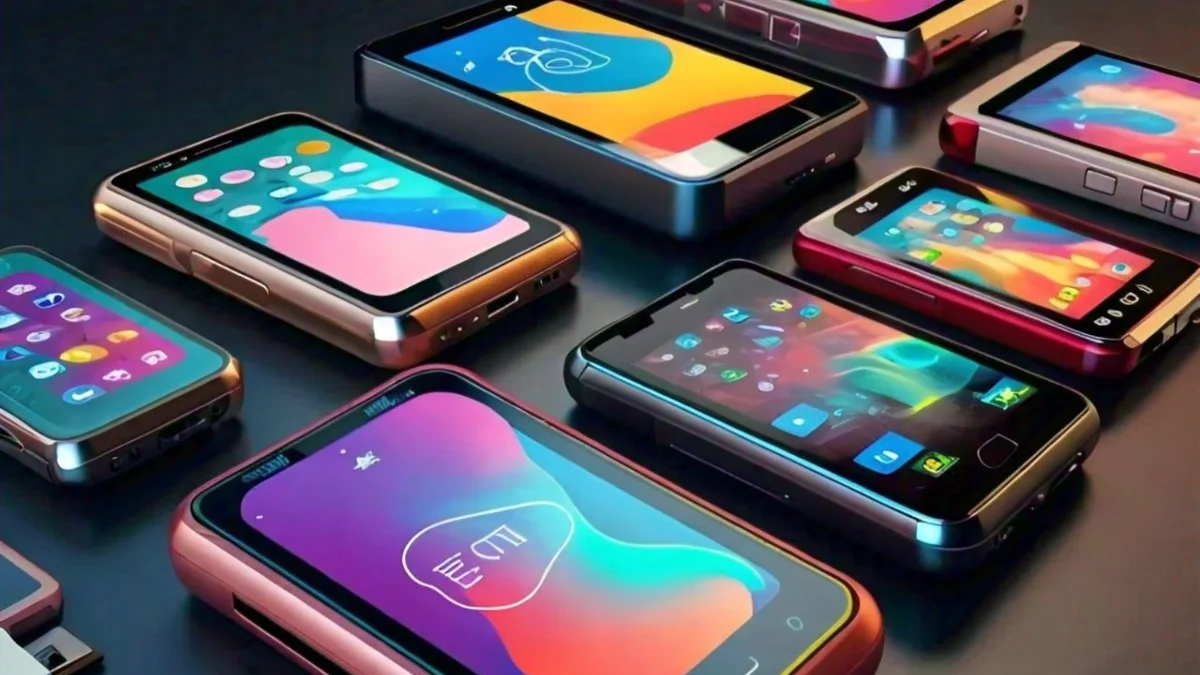
Your phone no longer runs only apps. This is what “on-device AI” means, why it’s more important than “cloud AI,” and how it’s changing everything you do on your phone without you even realizing it.
What Does On-Device AI Actually Mean
Most people think that when they talk about AI on a smartphone, they mean the phone sends requests to a distant server, waits for a response, and then shows the result. That’s how cloud AI works, and for years it was the only option because phones weren’t powerful enough to run large models locally.
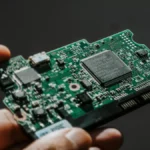
On-device AI is different. In this case, the model runs entirely on the phone’s chip and carries no data with it. No server, network request, or round trip. The math runs on the same silicon that handles the camera and game rendering. More specifically, it runs on a Neural Processing Unit (NPU), built from the ground up to handle the parallel matrix math AI models need.
In 2026, all high-end smartphones will have an NPU capable of tens of trillions of operations per second. The Apple A18 Pro gets 35 TOPS. Google’s Snapdragon 8 Elite gets 45 TOPS. These specs would have been enough to describe a decent GPU for a data center a few years ago. The hardware has been sent. What it makes possible is important.
Why it stays on the device: safe and fast
Security and speed are the two main reasons for on-device AI, and they go hand in hand. You send your words, photos, and inbox to a company-owned server when you dictate a message, use natural language to search your photo library, or ask your phone to summarize an email. This is what cloud AI does. Systems you can’t see handle it, and rules about how long data should be kept apply — rules you probably haven’t read.
The AI on the device keeps data where it belongs. The phone remembers what you say. The photos you send are never sent. Nothing about your health, your messages, or your files leaves the device. It’s not a marketing difference. Personal tasks are more important than general ones because they show how things are put together.
Latency is the other side of the same coin. Cloud AI can only work as fast as the internet connection allows. Cloud AI works more slowly or not at all when the network is busy, like when you’re in a basement, on an airplane, or somewhere else with a weak signal. In-device AI works quickly even when it’s not linked up. Live translation, face unlock, real-time translation, and smart photo editing all feel like they happen right away, and they do. You can’t get to any servers.
What Does It Actually Do on Your Phone
By the end of 2026, on-device AI will likely power most of the smartphone experience, even if the parts aren’t called AI.
Camera intelligence is the most visible. Your phone’s NPU runs a model every time it senses a scene (food, landscape, pet, low light, etc.) and changes how it handles information to match. There are many features that can be used right away, like computational photography, night mode, portrait segmentation, and real-time video stabilization. All of them rely on models and run in the same place.
Voice and language have moved on-device significantly. Speech recognition is just as good on-device as it was in the cloud. Because Siri works on the device, she doesn’t have to call home to handle most everyday requests. The Google Gemini Nano 4 doesn’t need to connect to the cloud to summarize, respond intelligently, or make suggestions based on the situation. It does all of these tasks since it runs directly on Pixel and Android flagship hardware.
On-device AI has real impact on health monitoring. Locally, the heart rhythm is analyzed, sleep stages are set, stress is found through HRV, and falls are found. Health features must work even when not connected because the data is private. Someone who finds a heart attack in the middle of nowhere at 3 a.m. can’t wait for the server to respond.
In over 50 language pairs, real-time translation now works even when the phone is not connected to the internet. This makes it very useful when you need it most, like when you’re traveling abroad, in transit, or somewhere else where you might not be able to connect to the internet.
On-Device vs Cloud: Not a Competition, a Division of Labour
The phrase “on-device vs. cloud” is not the best way to explain AI on a smartphone in 2026. A more accurate phrase is “on-device and cloud,” since each does what it does best. Sensitive, routine, or time-sensitive tasks run locally. However, the cloud is still a good place for big, complicated, or generative tasks, such as writing a 2,000-word paper from scratch, creating a photorealistic image from a text prompt, or reasoning across huge context windows, since it provides almost unlimited computing power.
Apple’s Private Cloud Compute best illustrates this architecture, but it is used with care. Apple sends tasks to its servers that are too big for the on-device model to handle. The request is encrypted, though, so not even Apple can read it. The cloud is no longer a replacement for the device; it is now something that goes with it.
The Shift That Is Still Happening
That’s not all that on-device AI can do in 2026. There are still more improvements to be made to model compression methods like quantization, pruning, and distillation. That means phone hardware can handle bigger, stronger models. Since most people didn’t expect this to happen so quickly, the gap between what a phone can do locally and what needs a data center gets smaller every year.
What has already changed is what people expect. Simple AI tasks like scene recognition, voice processing, or text summarization that smartphones can’t do while they’re not connected to the internet are no longer seen as competitive. Only about three years ago, on-device AI made a product stand out. Now it’s a must-have.
The Verdict
On-device AI is the most important change to smartphone architecture since multicore processors came out. Beyond adding new features, changes are being made to where calculations happen, who manages the data, and how quickly the phone responds. People think their phones are smarter, safer, and more reliable now. The smarts are no longer in a data center out in the cloud. It works even without a signal because the chip in your pocket makes it work.
Also Read: 7 Must-Try AI Features Hidden Inside Your Smartphone