
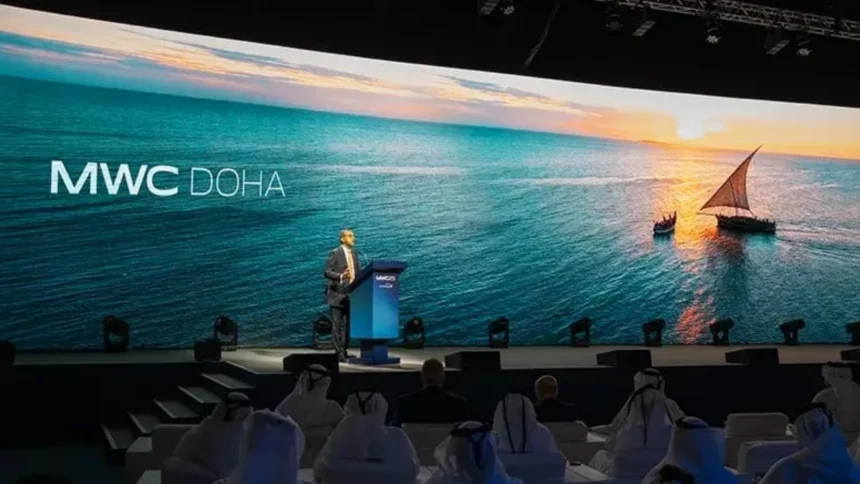
Several people were excited to see if Doha could live up to the expectations when Mobile World Congress (MWC) made its Middle East debut about a year ago. It did. Now the second edition is close, and it arrives with something the first one did not have: the United Nations’ top digital policy conference happening in the building next door.
For people working in corporate IT, telecom, government, or startups, the event could be an appropriate calendar entry. This is a thorough description of MWC26 Doha, including what has changed from 2025 and how to take advantage of it.
- MWC26 Doha at a Glance
- What Happened at the Inaugural Edition in 2025
- The Big Change for 2026: MWC and ITU PP-26 Under One Roof
- The IQ Era: Themes Driving the 2026 Programme
- Who Is Backing the Event
- Who Should Attend and What They Can Get Out of It
- Tips for Planning Your Visit
- Why Doha Matters Beyond the Event
- Final Thoughts
MWC26 Doha at a Glance
The best way to check the occurrence is to start with the fundamental analysis. You can get better insight by looking at the dates, venue, and organizers. Here’s a sneak peek of the same:
- Event: MWC26 Doha
- Dates: 8-10 November 2026
- Venue: Doha Exhibition and Convention Center (DECC), Qatar
- Organiser: GSMA and the Ministry of Communications and Information Technology (MCIT) of Qatar
- Event theme: The IQ Era
- Co-located with: ITU Plenipotentiary Conference (PP-26), 9-27 November 2026
The event is a part of the broader MWC family, which also includes separate events in Barcelona and Shanghai. The 2026 edition as per organizers is extended from 2 days to 3, which gives the show better breathing room. Doha serves as the region’s anchor for that series.
What Happened at the Inaugural Edition in 2025
It’s helpful to know what the first show actually accomplished before moving forward. The 2025 numbers set the bar that this year’s organisers now have to clear.
Over 9,000 people from 110 nations and territories attended the first edition. Approximately 275 speakers addressed the stage, and over 250 sponsors and exhibitors filled the floor. The audience was senior, there were about 60 government delegations there, and over 30 collaborations and announcements were made.
The Numbers That Stood Out
- About 20% of attendees were C-suite, and 41% were director level or above
- 61% came from telecoms-adjacent industries, which shows how far the conversation has moved beyond operators alone
- 100+ startups from the region and abroad took part
- 180+ media and analyst representatives covered the show
That mix matters. A conference full of vendors talking to each other is easy to build. One where decision-makers from banking, energy, logistics and government sit in the same sessions is much harder, and it is the reason the show sold out its exhibition space so quickly.
The Big Change for 2026: MWC and ITU PP-26 Under One Roof
The year’s top headline is this one. Who attends, what is discussed, and the stakes for each party are all changed by the co-location.
The ITU Plenipotentiary Conference is the highest decision-making body of the United Nations organization for digital technology, the International Telecommunication Union. It only meets once every four years. It chooses the ITU’s top executives, approves its budget plans, and establishes its strategic direction. This time, it is being held in Doha, near the MWC venues, by the Communications Regulatory Authority of Qatar.
Why the Pairing Matters
- Policy and product meet in one place. Regulators who set spectrum and standards rules can walk straight onto an exhibition floor showing the technology those rules will govern.
- The audience gets wider. Over 1,000 businesses, academic institutions, and research organizations are members of the ITU, which has 194 member states.
- Access is generous. ITU Member and Ministerial Programme delegates get open access to the MWC26 exhibition and stages.
- The timing is deliberate. Global telecom policy will be shaped by decisions made at PP-26 through 2030, a significant year for numerous national digital initiatives throughout the Gulf and beyond.
This presents a unique opportunity for vendors and operators to demonstrate the capabilities of the technology and have a conversation with the people who create the regulations. For lawmakers, it means seeing real deployments instead of slide shows.
The IQ Era: Themes Driving the 2026 Programme
Every big event needs a story to hold the sessions together. This year’s story is about intelligence, but in a broader sense than “AI everywhere.”
The organisers frame 2026 as The IQ Era, where progress comes from people and machines working together, public and private sectors aligning, and countries collaborating with their neighbours. It is a sensible framing, because most of the hard problems in connectivity today cannot be solved by one party alone.
AI in Action
The emphasis has shifted from talking about future uses of AI to showcasing its existing capabilities. Expect talks about incorporating AI into public services, networks, and customer operations, complete with real-world examples and candid insights from mistakes made along the way.
Connected Infrastructure
Everything else on the agenda is built upon networks. Fiber, satellite lines, data centers, 5G and 5G-Advanced, and the practical task of creating robust capacity that can handle AI-heavy traffic should all be discussed here.
Intelligent Economies
This track looks at what connectivity and data do for national growth. It builds on a GSMA Intelligence projection that mobile technologies and services will contribute around $470 billion to the MENA economy by 2030.
Who Is Backing the Event
Partners tell you where the money and the momentum sit. Strong local ownership coexists with international vendors in the 2026 lineup.
- In partnership with: Qatar’s Ministry of Communications and Information Technology
- Event partner: Communications Regulatory Authority (CRA)
- Strategic operator partners: Ooredoo and Vodafone Qatar
- Headline sponsor: Huawei
- Education partner: Qatar University
- Media partners: Euronews and The Wall Street Journal
- Intelligence partner: GSMA Intelligence
The joint hosting of MWC and PP-26, according to H.E. Mohammed bin Ali Al Mannai, Qatar’s Minister of Communications, is evidence of the nation’s expanding influence in international telecom policy.
According to GSMA Director General Vivek Badrinath, Doha will be at the forefront of conversations impacting connectivity worldwide. Both declarations are connected to the Qatar National Vision 2030 and the Digital Agenda 2030.
Who Should Attend and What They Can Get Out of It
Attending every conference is not required of everyone. This one is intended for a somewhat a dedicated group of people, so knowing where you fit in can help you plan your three days.
- Infrastructure providers and telecom operators: They can engage with authorities, scout vendors for network enhancements, and exchange notes with other local businesses.
- Leaders in business and industry: Teams in finance, energy, logistics, and transportation may assess if AI and connectivity solutions are ready for real-world use.
- Government and regulatory officials: The overlap between the PP-26 and the Ministerial Program makes this a useful forum for bilateral talks.
- Startups and investors: It is difficult to locate a local audience in one location that is both financially stable and eager to collaborate.
- Analysts, researchers and media: There will be a lot of announcements, especially on policy.
Tips for Planning Your Visit
A three-day event beside a month-long UN conference can get busy fast. A little planning goes a long way.
- Register early. Passes are still available at the time of writing, but exhibition space was in high demand last year and is expected to be again.
- Book meetings before you land. Pre-arranged slots are important because there aren’t many senior citizens on the floor.
- Combine floor time and stage time. Keynote addresses are useful, but the real activity usually happens during intersession conversations.
- Make travel and accommodation arrangements in advance. With PP-26 running alongside, accommodation near DECC may tighten as November approaches.
- Get the official MWC app. It is the most straightforward way to manage the schedule and agenda in person.
Why Doha Matters Beyond the Event
It’s worth pausing for a moment. One conference does not establish a tech hub, but this one exemplifies a larger trend.
Holding international events like this one is both a result of and a plan to expand Qatar’s years of investment in networks, cloud capacity, and digital government services. The Gulf is no longer merely a market for technology imports. There, partnerships, policy talks, and the production of regional commodities are becoming more prevalent. Landing a world-first pairing of MWC and the ITU’s flagship conference in only the second year shows how quickly that perception has shifted.
Final Thoughts
In just one year, MWC26 Doha went from being a “promising upstart” to an “important staple.” An unprecedented feature of the 2026 edition of MWC is a single location where experts in business, politics, and technology are working on the same issues at the same time. Its three-day schedule, unique subject, and close proximity to the ITU Plenipotentiary Conference enable this.
It is difficult to ignore whether your work involves connectivity, AI, or digital policy. Before making a reservation, check out the official MWC Doha website for the most recent schedule, speaker roster, and pass choices.