




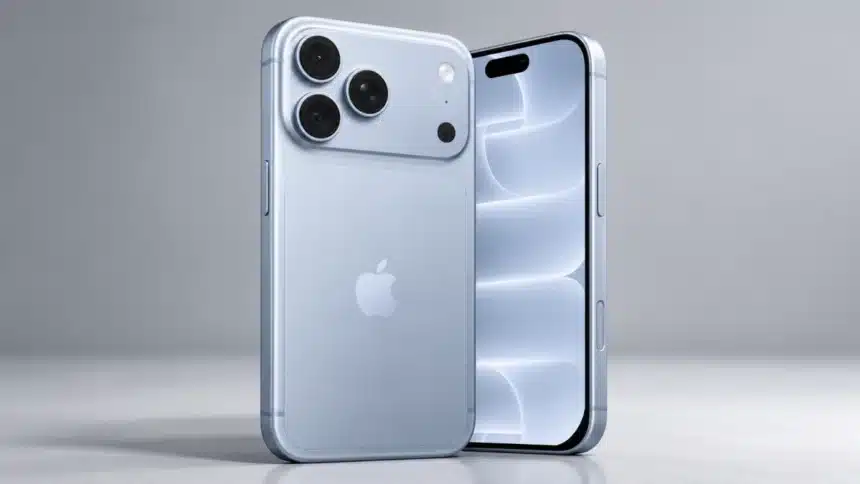
A camera with a variable aperture has a lens opening that can be adjusted to be wider or narrower. This lets more light in when the scene is dark and less light in when it’s bright. Apple’s first iPhones to feature this technology are the 18 Pro and 18 Pro Max. Apple needs it so the new, brighter main lens can work without making it hard to focus on people in groups.
The phones were unveiled at an Apple event on September 9, and you can now buy them. What is a variable aperture? How does Apple’s version work? Does it matter for everyday photos? Read this article till the end to learn more about variable aperture camera and how it works and its relation to iPhone 18 Pro.
- Key Takeaways
- What Is a Variable Aperture Camera?
- How Does the iPhone 18 Pro’s Variable Aperture Work?
- Why Is Apple Adding a Variable Aperture to the iPhone 18 Pro?
- 1. Better low-light photos
- 2. Avoiding the trade-off of a fixed, very bright lens
- 3. More creative control
- How Is It Different From Variable Aperture on Android Phones?
- What Are the Limitations?
- Is the Variable Aperture Worth Caring About?
- Conclusion
- FAQs
Key Takeaways
- With a variable aperture, the lens can control how much light reaches the sensor.
- The main camera on the iPhone 18 Pro has a four-setting range from ƒ/1.48 to ƒ/4.0 instead of the old fixed ƒ/1.78 aperture.
- More light comes in through a wider opening, making the backgrounds softer. A narrower opening, on the other hand, keeps more of the scene clear.
- It’s only on the 48MP main camera. The ultra-wide and telephoto lenses keep fixed apertures.
- The real-world benefit will be different, and early reports suggest it will not be very large.
What Is a Variable Aperture Camera?
The aperture in a lens controls how much light gets to the sensor. It works like your pupil: it gets bigger at night and smaller when it’s bright outside. It is shown by f-numbers; a lower number means a wider opening.
The opening of most phone cameras is fixed, which means it doesn’t change. The size of a variable aperture can be changed by moving its blades. DSLRs and mirrorless cameras do this all the time, but smartphones don’t do it nearly as often.
How Does the iPhone 18 Pro’s Variable Aperture Work?
Six laser-cut blades, each thinner than a hair, are used in the system. They are moved by a rotor mechanism inside a lens that was made just for the system. There are four settings on it: f/1.48, f/1.8, f/2.8, and f/4.0.
| Setting | What It Does | Best For |
| f/1.48 | largest aperture, most light, and the shallowest depth of field | Scenes at night, low light, and one subject |
| f/1.8 | Evened out the blur and light | Portraits and shots of everyday life |
| f/2.8 | A little more of the scene is in focus. | Two or three people, food, and scenes from the street |
| f/4.0 | The narrowest opening, and most of the scene is sharp | Group shots, landscapes, and close-ups of papers. |
Apple says that at f/1.8, the lens is best for taking portraits, but it can be opened up for more interesting shots. You don’t need to think about any of it. You can let the iPhone choose the aperture for you, or you can tap the six-dot button in the Camera app, choose Lens Aperture, and pick one of the four settings. If you tap Auto, you can take back control of the phone. You can now change aperture and shutter speed directly in the updated Camera app. These controls can also be shown in third-party apps.
Why Is Apple Adding a Variable Aperture to the iPhone 18 Pro?
There are three main reasons.
1. Better low-light photos
With the new lens, you should be able to get about 50% more light into a single shot than with the old one. There is less need for a long exposure or heavy processing at night when there is more light. This helps keep photos taken in low light sharp.
2. Avoiding the trade-off of a fixed, very bright lens
When taking pictures of a group, a fixed f/1.48 lens would have made an iPhone flaw even worse because it creates a shallower depth of field. The lens can be opened up wide when it’s dark and shrunk down when you want everyone to be clear.
3. More creative control
Many years ago, professional photographers wished they could directly change the depth of field on their iPhones. With its variable aperture and manual controls in the Camera app, the iPhone is becoming more like a real camera.
The feature wasn’t a shock. Analyst Ming-Chi Kuo said it would happen in 2026, even though earlier rumours said it would happen with the iPhone 17 Pro. It was also added to the Pro and Pro Max by Apple, even though rumours said it would only be added to the bigger model.
How Is It Different From Variable Aperture on Android Phones?
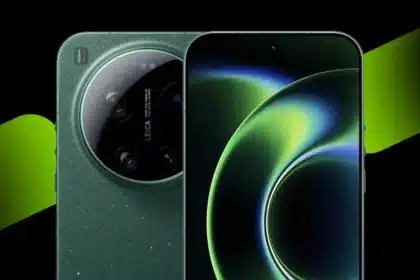
Apple isn’t the first phone company to try this out. It was automatic for the Samsung Galaxy S9 and S10 to switch between f/1.5 and f/2.4. Later phones, like the Xiaomi 14 Ultra and Huawei Mate 50 Pro, made the idea even better. You can change the Xiaomi 14 Ultra’s aperture from f/1.63 to f/4.0. Later, Samsung took the feature out of the Galaxy S20 line to focus on making sensors that are bigger and have better resolution.
Apple uses it in new places and ways. The main camera on an iPhone has a real physical variable aperture for the first time. Most people will be able to use it without having to learn anything about cameras because it works automatically by default.
What Are the Limitations?
Here are some common limitations:
- As of now, it’s not clear how much this small range will change iPhone photography. Background blur is also not as strong on a phone-sized sensor as it is on a large-sensor camera.
- Moving parts add to the risk. The system uses thin blades and moving parts. It will only become clear over time how long something lasts.
- It makes things more complicated because the best aperture changes depending on the light and the shot. Such variations can make selecting the aperture by hand more difficult for point-and-shoot photographers. Auto mode exists to avoid these complications.
- Only one lens does it; ultra-wide and telephoto shots don’t help.
Is the Variable Aperture Worth Caring About?
How you shoot makes a difference. For photos with little light, group shots, or close-ups of papers and goods, this tool works best. You might not even notice if you mostly take pictures during the day.
Also, you should know that it only works with certain hardware. Almost everything else in the camera update is coming to other iPhone models as well. This includes the new photographic styles and more advanced camera app options. The main thing about this camera that you can’t get any other way is the variable aperture.
Conclusion
With a variable-aperture camera, the lens can open or close more or less, depending on the light. This lets it gather more light in low light or keep more of the scene sharp in bright light. That means the main camera on the iPhone 18 Pro and Pro Max has four steps and an aperture that ranges from f/1.48 to f/4.0. This is something Apple is adding so that the lens can be made brighter in low light without messing up group shots. It’s not just another software trick; it’s a real hardware upgrade. How much it changes your photos depends on what you shoot, and it’s still unclear how long it will last.
FAQs
1. Do all the cameras on the iPhone 18 Pro have a variable aperture?
Not at all. The 48MP main Fusion camera is the only one with it. There is no moving the ultra-wide or telephoto lenses.
2. Can I control the aperture manually?
Yes. Start the Camera app, press the six-dot button, pick Lens Aperture from the menu, and then choose a setting. If you tap “Auto,” the iPhone will make a new choice.
3. Will a variable aperture make my photos better?
Since the lens can open up or down, it should help the most in low light and when taking pictures of groups. In everyday shooting, the effect might not be noticeable, so it’s best to leave it on Auto by default.