



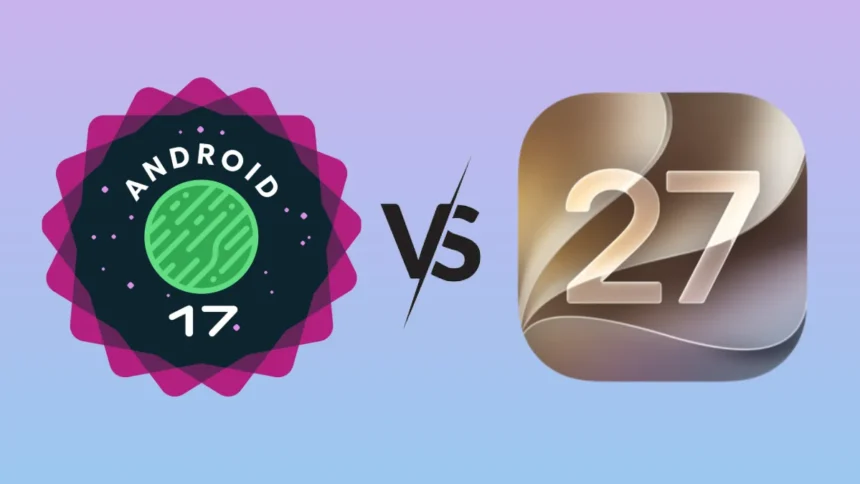
When comparing Android 17 vs iOS 27, mobile software prioritizes deep intelligence over cosmetic changes, following major announcements at Google I/O on May 19 and Apple WWDC on June 8.
Google and Apple are taking distinct strategic approaches to achieve this vision, creating critical differences that heavily impact which platform suits your daily workflow.
Quick Comparison: Android 17 vs iOS 27
| Feature / Aspect | Android 17 (Google) | iOS 27 (Apple) |
| Primary AI Engine | Gemini Intelligence / Gemini Spark | Siri AI (Powered by Gemini models) |
| Design Language | Material 3 Expressive (System-wide) | Refined “Liquid Glass” with Transparency Slider |
| Multitasking Tools | Bubbles, “Continue On” cross-device sync | Split-screen (Exclusive to iPhone Fold) |
| Privacy Feature | Contacts Picker, Local Network Permissions | App Tracking Transparency (System-level) |
| Rollout / Compatibility | Pixel first, gradual rollout to other brands | Immediate global rollout for all iOS 26 devices |
The AI Race: Gemini vs Siri
This is what makes the two updates different.
- Google’s Approach: Google says that “Gemini Intelligence” in Android 17 is an AI layer that works across the whole system and does things for you without waiting for you to tell it to. It works with a feature called Gemini Spark, which can talk directly to apps to automate many tasks, such as ordering food or booking rides. People can also make their own widgets by telling it what they want. As a general rule, Google wants people to think of AI not as an OS chatbot but as the OS itself.
- Apple’s Approach: Apple is being more careful with iOS 27, but it may also be more anticipated after being promised for so long. “Siri AI,” a redesigned assistant that uses some of Google’s Gemini models to power it, was the big news at WWDC 2026. Siri AI can talk to you a lot more. In order to do things that involve more than one app at once, it can understand what’s on your screen and remember what you said during a conversation. It can also search for personal information across apps. You don’t have to look through menus; you just ask. Apple is not like Google. Apple doesn’t want AI to be a separate feature that you can see. Instead, they want it to be built into the OS.
The EU Catch: Apple has a big problem: when iOS 27 first comes out, Siri AI won’t work in the EU. Apple says this is because of the Digital Markets Act. iOS, watchOS, and visionOS users with an iPhone in the EU will still get Siri AI, but not on their phones at first. For Android users in the EU, this is a real regional plus.
Design and Everyday Usability
- Android 17 Updates: Material 3 Expressive is a more expressive and flexible visual language that was only available on Pixel phones before Android 17. Starting with Android 17, all Android phones can use it. New are “Bubbles,” which are floating app windows that let users use more than one app at the same time, and full-screen lock screen widgets that make it easier to see things quickly.
- iOS 27 Updates: iOS 27 improves without starting from scratch. Apple added a transparency slider to last year’s “Liquid Glass” redesign so users can adjust the glass effect to their liking. They also added an undo/redo button for making changes to the way things look and sharper, layered app icons with better contrast. Apple says iOS 27 makes animations smoother and apps respond faster, even on older iPhones. It also makes AirDrop transfers 80% faster. This release is more of a “fix the plumbing” kind of thing, like other under-the-hood improvements. It’s not a complete redesign.
Must Read: Which iOS 27 Features Does Android Already Have?
Multitasking and Cross-Device Integration
Android Capabilities: Still, Android 17 looks like it would work better. Google’s “Continue On” tool lets Android phone users start a task and finish it on a ChromeOS or Windows computer. You can use the same device to do more than one thing at once, like Bubbles. As more companies make hardware with more than one screen, Android 17 also has changes made just for foldable devices. These changes are becoming more important.
Apple Capabilities: For the first time, Apple is letting you really switch between apps on the split-screen iPhone. This will only work on the iPhone Fold, though, when it comes out in September and runs iOS 27. It will also be able to hold two apps at once and have sidebars. Since most iPhone owners don’t have hardware that can be folded, this feature won’t work for them. For now, Android’s story about being able to use apps on multiple devices is more useful.
Privacy
iPhone maker Apple has been known for a long time to care about privacy, and iOS 27 doesn’t really change that. Along with a clear need for local network permissions and SMS one-time password protection, Android 17 adds a Contacts Picker that stops apps from accessing your whole address book. These features really close the gap. Things are getting better since these changes were made. You can’t just ignore them.
But Android still doesn’t have a feature like App Tracking Transparency that works at the system level. This still means that iOS is better for people who care about privacy the most. The gap is still there, but it’s getting smaller.
Compatibility and Rollout
In June 2026, Pixel phones were the first to get Android 17. As is Google’s habit, other manufacturers would get it later. The developer beta of iOS 27 came out on June 8, right after WWDC. The public beta will be out in July, and the stable release will be out with the iPhone 18 line in September.
It’s important to remember that this cycle there will be no drops of iPhones. Everything that already has iOS 26 can run iOS 27. This includes the iPhone 11 and the second-generation iPhone SE. The iPhone 15 Pro and newer models with at least 8GB of RAM and an A17 Pro chip or better are still the only ones that can use Apple Intelligence features. This means that not all people with hardware that supports it will be able to use the parts of iOS 27 that focus on AI.
Final Verdict: Which One Actually Wins?
There might not be a huge difference between the two OSs in 2026 because the year is supposed to be about “AI and ironing kinks out” rather than big changes.
Right now, the Android 17 release dates that are most likely to happen are for phones that can do things for you, fit well with a foldable or a laptop, and get AI features right away without having to wait for a slow rollout.
iOS 27 is the better long-term choice for iPhone users who want a more integrated, screen-aware assistant, are willing to wait for it to get better, and don’t mind the EU exception. With Siri AI and the iPhone Fold’s ability to do more than one thing at once fully developed, this is even more true. It’s pretty clear that Android 17 wins this time.
Must Read: How to Quickly Fix Android 17 Setup Warm & Overheating Problems
Visit Devicology for the latest Tech News, Guides, and in-depth Reviews. Follow us on Whatsapp, LinkedIn, X (Twitter) and Instagram to never miss an update!