




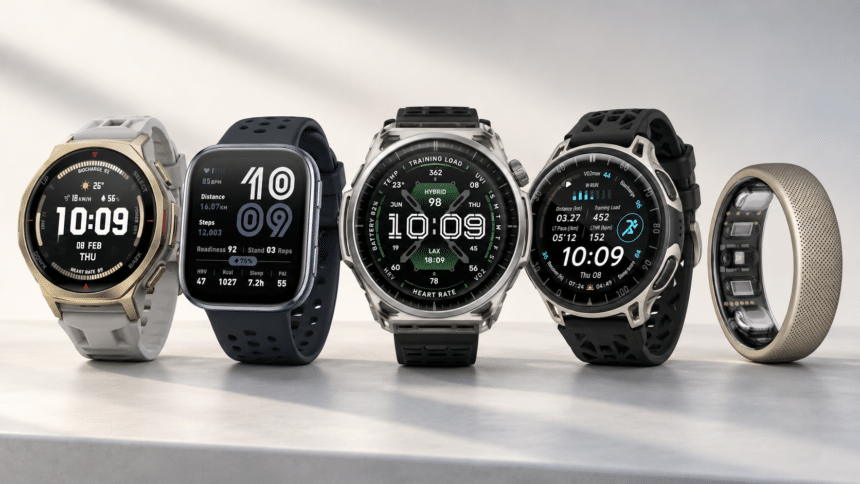
Amazfit wearables are now built around one clear idea: every athlete trains differently, so every athlete deserves a different wearable. Here are the five that matter most right now.
There is a moment in every fitness journey where the free app on your phone stops being enough. You want real data. You want structure. You want something on your wrist that actually understands the difference between a tempo run and a deadlift session.
- The Training World Philosophy
- Quick Comparison: All 5 Amazfit Wearables at a Glance
- 1. Amazfit Balance 3: The All-Around Powerhouse
- 2. Amazfit Cheetah 2 Pro: The Speed Machine
- 3. Amazfit T-Rex Ultra 2: The Range Beast
- 4. Amazfit Bip 6: The Essentials Entry Point
- 5. Amazfit Helio Ring: Beyond the Wrist
- Why This Lineup Actually Matters
- The Athlete Roster Tells the Story
- The Bottom Line
For years, that moment meant reaching for a Garmin or an Apple Watch and accepting the price tag that came with it. But Amazfit, the brand built by Zepp Health (formerly Huami), has been quietly rewriting that story. And in 2026, they have done something genuinely interesting.
Instead of just releasing a bunch of watches and hoping people figure out which one to buy, Amazfit organized its product line around a concept they call “Training Worlds.” Five distinct categories. Five different types of athletes. Five wearables built with real purpose behind them.
The screenshot from their homepage tells the story at a glance. But the details behind each category are where things get really compelling. Let’s break them down.
The Training World Philosophy
Before we get into the wearables themselves, it is worth understanding what Amazfit is actually doing here. Most smartwatch brands organize their lineup by price: budget, mid-range, premium. Amazfit flipped that on its head.
Their lineup is organized by how you train:
- All-Around for hybrid athletes who mix disciplines
- Speed for runners and competitive athletes chasing pace
- Range for trail runners and outdoor adventurers
- Essentials for beginners building consistency
- Helio for athletes who want data from beyond the wrist
It is a smart approach because it removes the guesswork. You do not need to compare spec sheets for an hour. You just need to know what kind of athlete you are.
Quick Comparison: All 5 Amazfit Wearables at a Glance
| Wearable | Training World | Price | Battery Life | Key Material | Best Feature |
| Balance 3 | All-Around | $369.99+ | 21 days | Stainless Steel/Titanium | Hybrid training intelligence |
| Cheetah 2 Pro | Speed | $449.99 | 20 days / 31hrs GPS | Grade 5 Titanium | AI-driven running plans |
| T-Rex Ultra 2 | Range | $549.99 | 30 days / 50hrs GPS | Fiber-reinforced polymer / Grade 5 titanium components | Offline route planning |
| Bip 6 | Essentials | $79.99 | 14 days | Aluminum Alloy | 140+ modes at an unbeatable price |
| Helio Ring | Helio | $149.99 | Up to 4 days | Titanium Alloy | Zero subscription sleep tracking |
Now, let’s get into the five wearables that define each world.
1. Amazfit Balance 3: The All-Around Powerhouse
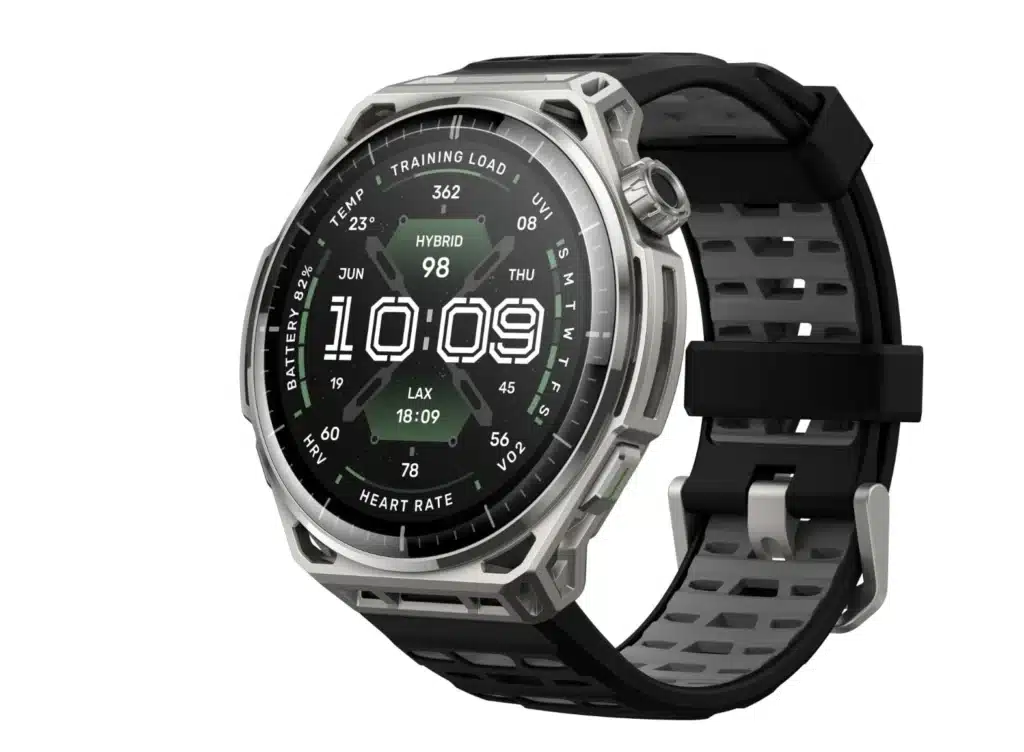
Training World: All-Around | Price: $369.99 (Stainless Steel) / $449.99 (Titanium)
If you are the kind of person who runs three days a week, lifts twice, throws in a HYROX session on Saturday, and still wants a watch that looks sharp at dinner, the Balance 3 is built for you.
Launched in June 2026 at a splashy event in New York, this is Amazfit’s flagship all-rounder. The philosophy behind it is what they call “Hybrid Training,” the idea that strength, endurance, and recovery are not separate goals but interconnected parts of the same system.
What makes it stand out:
- 1.5-inch AMOLED display with 3,000 nits of peak brightness (readable in direct sunlight, no squinting required)
- Sapphire crystal glass that resists scratches far better than standard glass
- 21-day battery life in typical use, which is borderline absurd for a watch this feature-rich
- 64GB of storage for offline maps, music, and podcasts
- Dual-band GPS with six satellite systems for accurate tracking whether you are on a city sidewalk or a mountain trail
- Zepp Coach adaptive training plans that adjust based on your recovery and performance data
Amazfit’s All-Around and Hybrid Training ecosystem features athletes like Derrick Henry (NFL All-Pro running back), Hunter McIntyre (3x HYROX World Champion), and Linda Meier (HYROX World Champion). That is not just marketing fluff. These are athletes who genuinely train across multiple disciplines, which is exactly the audience this Training World serves.
Who should buy it: Hybrid athletes, CrossFit enthusiasts, HYROX competitors, and anyone who refuses to pick just one sport.
2. Amazfit Cheetah 2 Pro: The Speed Machine
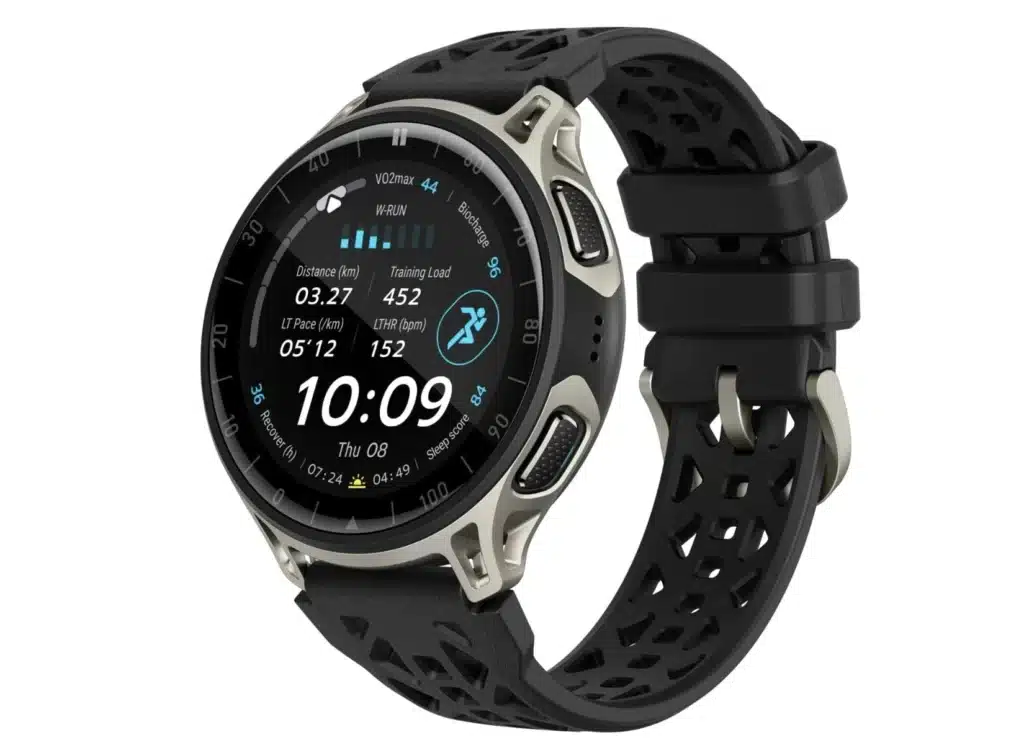
Training World: Speed | Price: $449.99
The name says it all. The Cheetah 2 Pro is not trying to be everything to everyone. It is a running watch, built for people who care about splits, cadence, ground contact time, and shaving seconds off their personal bests.
This watch immediately drew comparisons to Garmin’s Forerunner lineup. And honestly? Those comparisons are fair. The Cheetah 2 Pro plays in the same performance-running arena while offering its own mix of training and navigation features.
What makes it stand out:
- Grade 5 titanium frame and case that keep the weight down without sacrificing durability
- Sapphire AMOLED display with 3,000 nits brightness
- 31 hours of accurate GPS tracking on a single charge, enough to cover even the most generous marathon cutoff times
- Up to 20 days of typical use between charges
- 170+ workout modes with deep running-specific metrics
- Turn-by-turn navigation with automatic re-routing if you take a wrong turn mid-run
- Built-in LED flashlight (red and white) for early morning or late evening sessions
- AI-driven Zepp Coach that builds personalized training plans and adjusts them as you progress
The Speed category is backed by some serious names: Gabby Thomas (3x Olympic Gold Medalist), Josh Kerr (2x Olympic Medalist in middle distance), and Amanal Petros (professional marathon runner).
Who should buy it: Dedicated runners, marathon trainers, track athletes, and anyone whose idea of a good weekend involves a tempo run followed by interval work.
3. Amazfit T-Rex Ultra 2: The Range Beast
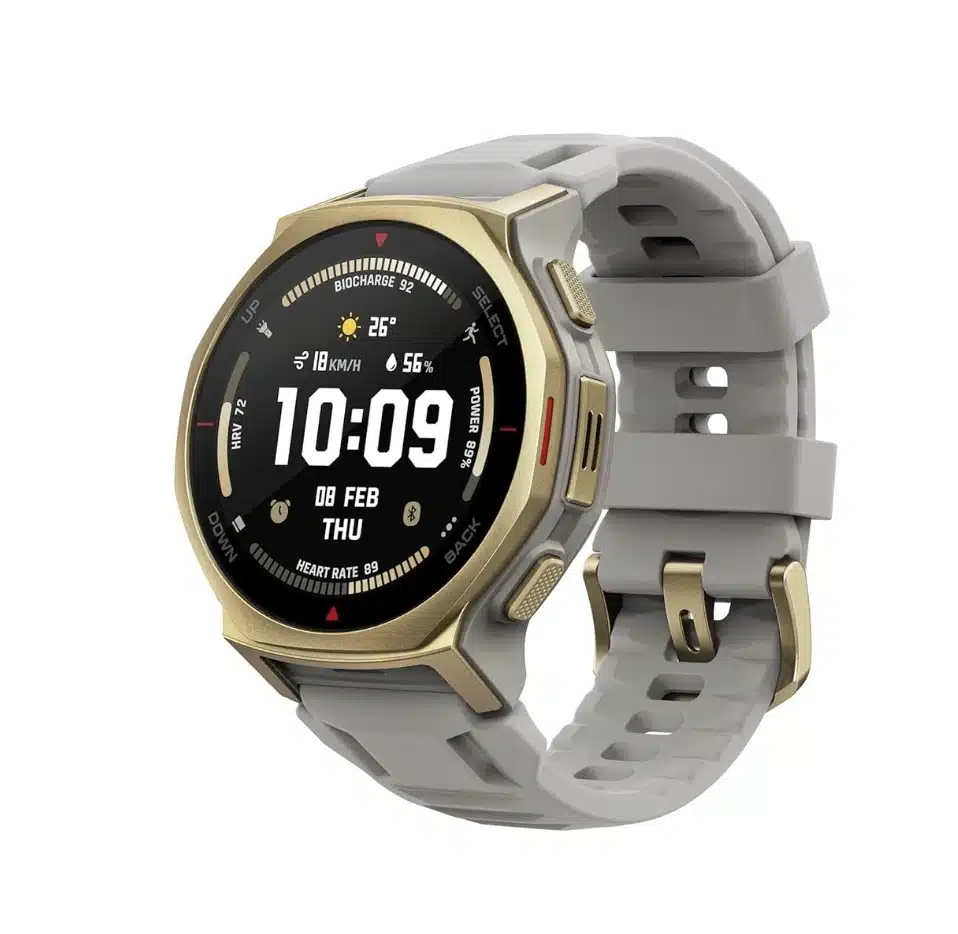
Training World: Range | Price: $549.99
If the Balance 3 is the Swiss Army knife and the Cheetah 2 Pro is the scalpel, the T-Rex Ultra 2 is the tank. This watch was built for people who train in places where cell service does not exist and the weather changes every twenty minutes.
Reviewers have been falling over themselves praising this one. ZDNET compared it directly to a $1,300 Garmin for outdoor tracking and called it “surprisingly close.” T3 called the battery life “outstanding” and the hardware “genuinely premium.” That is high praise for a watch that costs less than half of what its closest Garmin competitor demands.
What makes it stand out:
- 51mm body with a fiber-reinforced polymer case, Grade 5 titanium components, and sapphire glass that is built for demanding outdoor conditions
- Rugged construction designed for challenging outdoor environments
- 30-day battery life in typical use, or 50 hours of high-accuracy GPS tracking
- 870 mAh battery (a massive upgrade from the 700 mAh in the T-Rex 3 Pro)
- Offline maps and route planning with full-color navigation
- 64GB of storage for maps and music
- Six satellite network support for outdoor positioning
- Built-in flashlight for emergencies and low-light navigation
The Range category features pro ultra trail runners like Ruth Croft, Rod Farvard, and Fernanda Maciel. These are athletes who run ultra-distance races through mountains. If the T-Rex Ultra 2 is designed around this kind of training, it is built for demanding outdoor use.
Who should buy it: Trail runners, hikers, mountaineers, ultra-distance athletes, and anyone whose training takes them off the grid.
4. Amazfit Bip 6: The Essentials Entry Point
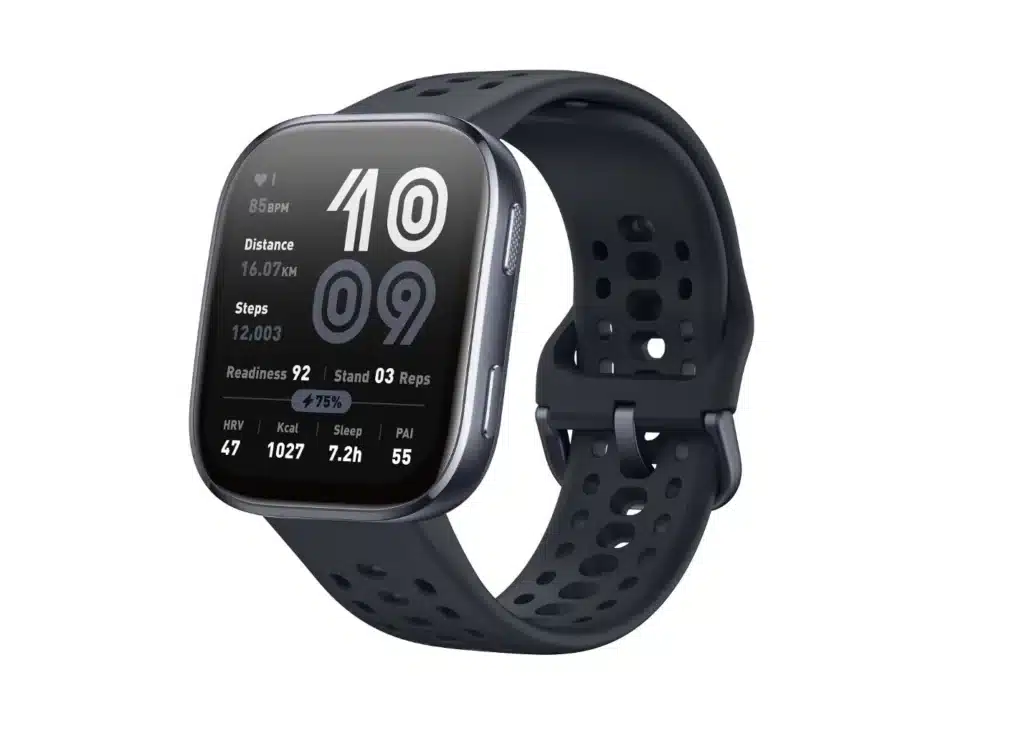
Training World: Essentials | Price: $79.99
Here is the thing about fitness watches: not everyone needs a titanium case and offline maps for 100km routes. Some people just need a reliable, good-looking watch that tracks their workouts, monitors their sleep, and does not cost more than a nice pair of running shoes.
That is exactly what the Bip 6 delivers. And it does it so well that TechRadar said it “exceeded expectations,” while reviewers have compared its value with much more expensive smartwatches.
What makes it stand out:
- AMOLED display that looks far more expensive than it is
- 140+ workout tracking modes with built-in GPS
- Two-week battery life on a single charge
- 5 ATM water resistance for swimming and rain
- BioTracker technology for heart rate, sleep, blood oxygen, and stress monitoring
- Aluminum alloy frame available in multiple colorways
- Zepp Flow voice commands that reduce the need for button navigation
- Bluetooth calling and supported notification replies right from your wrist
At $79.99, the Bip 6 actually launched for less than its predecessor, the Bip 5 ($89.99). That is rare in tech. Usually, newer means pricier. Amazfit went the other direction, and the result is arguably one of the most compelling budget smartwatches in its price range.
Who should buy it: Beginners, casual fitness enthusiasts, students, anyone building a workout habit for the first time, or people who simply do not want to spend $400 on a watch.
5. Amazfit Helio Ring: Beyond the Wrist
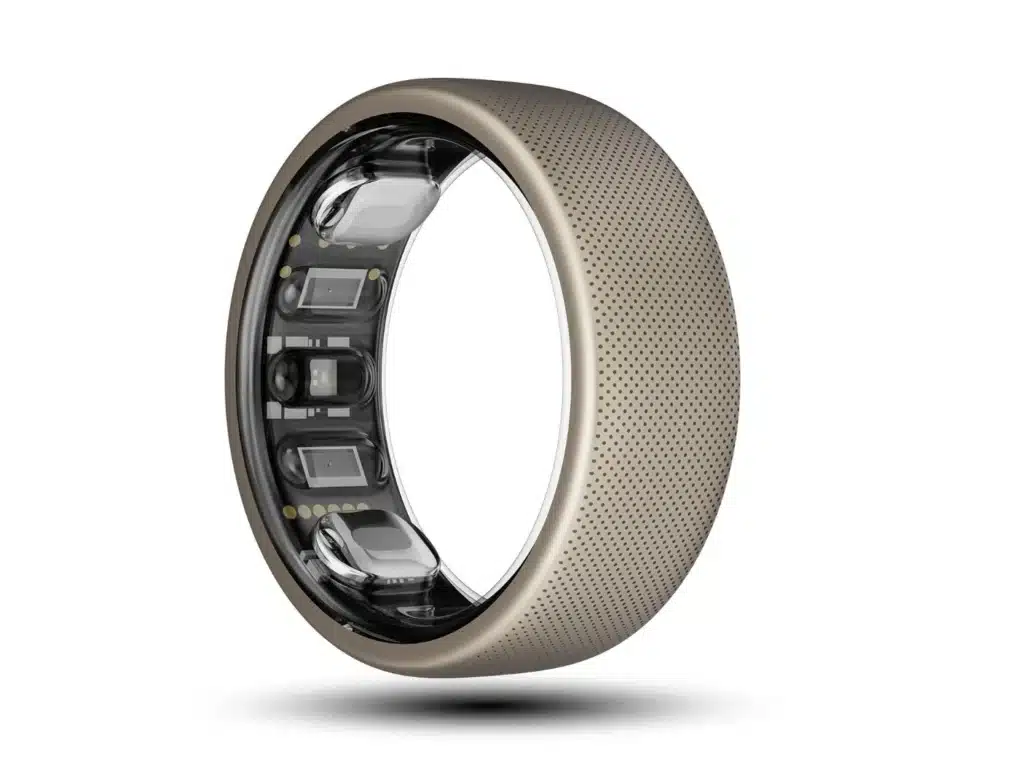
Training World: Helio | Price: $149.99
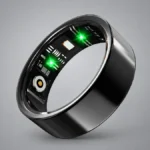
This one is different. The Helio Ring is not a watch at all. It is a smart ring, and it represents Amazfit’s belief that training data should not be limited to what sits on your wrist.
The Helio system (which also includes the Helio Strap for arm-based training and recovery tracking) is designed to work alongside Amazfit watches. Wear the ring to bed for sleep and recovery tracking. Wear your watch during training for performance data. The Zepp app pulls compatible data together into one unified picture.
What makes it stand out:
- Lightweight titanium alloy construction that is comfortable enough to sleep in
- Sleep, recovery, and heart rate tracking without wearing a bulky watch to bed
- No required subscription fees for its core health and recovery features
- Zepp Aura Premium included free for Helio Ring users, with customized sleep sounds, weekly/monthly sleep reports, and an AI chatbot for wellness questions
- Integration with compatible Amazfit watches through the Zepp app
- Available in sizes 8, 10, and 12
- Up to 4 days of battery life
At $149.99 with no required subscription costs for its core features, the Helio Ring undercuts several premium smart rings. And it offers many of the same core sleep and recovery-tracking categories. For athletes who want complete recovery data without sleeping in a chunky smartwatch, this is a compelling option.
Who should buy it: Recovery-focused athletes, anyone who hates wearing a watch to bed, data enthusiasts who want the full picture, and people already in the Amazfit ecosystem looking to level up.
Why This Lineup Actually Matters
Let’s zoom out for a second.
The smartwatch market in 2026 is crowded. Apple dominates the mainstream. Garmin owns the serious athlete space. Samsung is pushing hard with Galaxy Watch. And yet, Amazfit is carving out a lane that none of those brands have fully claimed: premium training features at prices that do not make you wince.
The Balance 3 at $369.99 competes with watches that cost $500 or more. The T-Rex Ultra 2 at $549.99 goes toe-to-toe with premium outdoor watches, including Garmin’s Fenix lineup. The Bip 6 at $79.99 is dramatically cheaper than an Apple Watch SE. And the Helio Ring at $149.99 offers smart-ring health and recovery tracking without a required subscription for its core features.
But the real differentiator is not price. It is the Training World framework itself. By organizing wearables around training styles instead of price tiers, Amazfit made the buying decision feel personal rather than transactional. You are not picking a budget or a premium wearable. You are picking the one that matches how you actually move through the world.
And that is a much better way to shop.
The Athlete Roster Tells the Story
One more thing worth mentioning. Amazfit’s ambassador lineup includes real, accomplished athletes:
- Gabby Thomas (3x Olympic Track Gold Medalist)
- Derrick Henry (NFL All-Pro Running Back)
- Hunter McIntyre (3x HYROX World Champion)
- Josh Kerr (2x Olympic Track and Field Medalist)
- Grant Fisher (2x Olympic Track and Field Medalist)
- Ruth Croft (Pro Ultra Trail Runner)
- Jasmine Paolini (Olympic Gold Medalist, Doubles)
These athletes come from running, HYROX, trail running, football, and tennis, reflecting the range of sports Amazfit targets with its training ecosystem.
The Bottom Line
Amazfit is not trying to be Apple. They are not trying to be Garmin. They are building something that sits in a space neither of those brands fully occupies: serious training tools at prices that respect your wallet.
Whether you are a hybrid athlete who needs the Balance 3, a runner chasing PRs with the Cheetah 2 Pro, an adventurer pushing limits with the T-Rex Ultra 2, a beginner finding your rhythm with the Bip 6, or a recovery-obsessed data nerd rocking the Helio Ring, there is a wearable in this lineup that was built specifically for the way you train.
And honestly? That is more than most brands can say.