


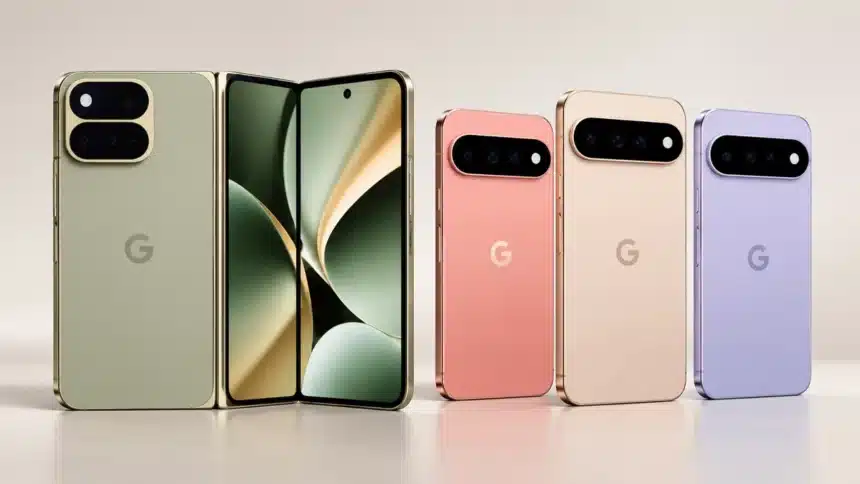
The Pixel 11 lineup from Google is now official, and the Pixel 11 Pro Fold is the star of the show. Google is marketing this foldable phone with a simple claim: it’s thinner, lighter, and three times stronger than before. The Pixel 11 Pro, Pro XL, and regular Pixel 11 are all sitting next to it. They are all based on Google’s newest chip and have more Gemini AI built right in.
If you’re trying to decide which phone to get, here’s a full list of what’s new, what each one has to offer, and where they fit in.
The Big Story: A Foldable Built to Last
One problem with foldables has always been that they don’t last long. The Pixel 11 Pro Fold from Google has a new hinge and composite back that the company says is three times stronger than the last generation. It is also thinner and lighter than the Pixel 10 Pro Fold, though. It retains an IP68 rating for dust and water resistance. So the extra durability doesn’t mean less protection.
The phone still has two screens: an 8-inch Super Actua Flex screen on the inside for full tablet use and a 6.5-inch Super Actua screen on the outside for quick glances and one-handed tasks. Google says that both screens are now 20% brighter, reaching a maximum brightness of 3,600 nits, and that scrolling on the outer screen is now smoother when used every day.
Meet HiLight: A Notification LED for the Gemini Era
One feature that makes the Pixel 11 Pro line stand out is HiLight, which is only available on that line. When your phone is face-down, a soft glow lets you know when a favorite contact calls or when Gemini is listening, thinking, or responding. You don’t have to turn the phone over or turn on the screen to see this. In a small way, it’s like the notification LEDs on older phones, but it’s been rethought for an AI-first phone.
Cameras: Bigger Zoom, Better Light
This year, the Pixel 11 Pro Fold’s camera system gets a big boost:
- 30x Super Zoom, which lets you get close to faraway objects while using Google’s computational photography to preserve detail.
- The main lens has 48 MP and an upgraded sensor for improved low-light photography.
- Three cameras on the back: a 48 MP wide camera, a 10.5 MP ultrawide camera, and a 10.8 MP telephoto camera; plus two 10 MP cameras on the front and inside for selfies and video calls from either screen.
Google is also using software in this case. Magic Capture is a feature that analyzes frames to help capture the best moment and create high-quality photos. This is meant to get rid of the problem of “which shot was the good one?”
The Chip Behind It All: Tensor G6 and Titan M3
This group of Pixel 11 phones all have the new Google Tensor G6 chip and the Titan M3 security chip. Google says that this generation has some big improvements over the last one:
- Up to 50% more TPU compute for AI tasks on the device
- On-device AI tasks run up to 3.5 times faster while using up to 3.5 times less energy
- Launching apps about 15% faster
The Titan M3 chip is designed to help protect against more advanced digital attacks. It works with Tensor G6 to provide hardware-backed security, including post-quantum cryptography for secure boot.
Gemini Intelligence Is the Real Pitch
Google’s main sales pitch for this generation is Gemini Intelligence, which means “less tapping, more living.”
Forget about the hardware. In real life, that means:
- Gemini is able to handle small tasks across apps, like putting flight information from Gmail right into your calendar, where supported.
- You can give Gemini everyday tasks like ordering groceries, booking a ride, or reordering something you buy often to do in the background while you stay in charge, where supported.
- Gemini makes voice typing much better with Rambler, which can get rid of unnecessary words and automatically format your rough ideas into a polished draft.
- You can share your camera feed on Gemini Live to get real-time help with whatever is in front of you.
Eligible Pixel 11 Pro and Pro Fold buyers can get six months of Google AI Pro, which includes higher Gemini usage limits and 5 TB of cloud storage. Eligibility and regional terms apply.
Battery and Charging
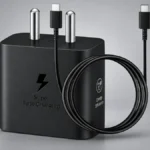
The Pixel 11 Pro Fold is rated to last 24 hours or more, and it takes about 30 minutes to charge to 50% when plugged in using a compatible 30W USB-C PPS charger or higher. Wireless charging also sees big improvements. With Google’s Pixelsnap wireless charging, it can now charge up to 20% faster than the previous generation, reaching up to 25W with Qi2.2. It also has Extreme Battery Saver for when you need to extend battery life as much as possible.
How the Lineup Breaks Down
| Specification | Pixel 11 Pro Fold | Pixel 11 Pro / Pro XL | Pixel 11 |
| Display | 6.5″ outer + 8″ inner, Super Actua/Flex | 6.3″ or 6.8″ Super Actua | 6.3″ Actua |
| Peak brightness | 3,600 nits | 3,600 nits | 3,000 nits |
| Chip | Tensor G6 | Tensor G6 | Tensor G6 |
| RAM | 16 GB | 12 GB / 16 GB, depending on storage | 12 GB |
| Rear camera | 48 MP wide + 10.5 MP ultrawide + 10.8 MP telephoto, 30x zoom | 50 MP wide + 48 MP ultrawide + 48 MP telephoto, 120x zoom | 48 MP wide + 13 MP ultrawide + 10.8 MP telephoto, 30x zoom |
| Battery life | 24+ hours | 30+ hours | 30+ hours |
| Storage | 256 GB / 512 GB / 1 TB | 256 GB / 512 GB | 256 GB / 512 GB |
One important thing to note is that the Pixel 11 and Pro Fold don’t have the 120x “Pro Zoom” or 8K video that the Pro and Pro XL do. Also, only the Pro line-up has the HiLight feature.
Pricing and Availability
In the US, the Pixel 11 Pro Fold starts at $1,899 ($1,269 with an eligible trade-in) for the base storage configuration. You can pay $35.25 a month for 36 months with financing, subject to eligibility. Other Pixel 11 phones start much cheaper. The Pixel 11 starts at $899, while the Pixel 11 Pro starts at $1,099.
The Fold comes in Obsidian and Olive in the US, while the other Pixel 11 phones have their own color options. All of the phones in the line have an IP68 rating.
Should You Care?
You might like the idea of a foldable phone but have been hesitant because you’re worried about how long it will last. This generation offers a reinforced design that doesn’t sacrifice screen size or brightness. This isn’t just a spec bump for everyone else; Google is building a whole phone around Gemini that does real work for you in the background, not just answers your questions when you ask them. You can decide if that’s worth the Fold’s high price if you want a tablet-sized screen in your pocket. But the Pixel 11 series makes it clear that Google’s plans for AI and its hardware roadmap are now moving together.