


A quick note before we start. Apple has not held its launch event yet. Every detail in this article comes from supply chain leaks, dummy unit photos, and reporting from outlets like Bloomberg, MacRumors, and Macworld, gathered right up to the first week of September 2026.
Apple is set to unveil the iPhone 18 Pro lineup at its “Surprise and shine” event on September 9, 2026, with phones likely going on sale around September 18. I have flagged anything that is still genuinely uncertain, so you know exactly what to trust and what to treat as a strong guess.
The Launch Timeline
Apple is breaking from its usual habit this year. Instead of four new iPhones arriving together in September, the lineup is split across two seasons.
- September 2026: iPhone 18 Pro, iPhone 18 Pro Max, and Apple’s first foldable iPhone
- Spring 2027: The standard iPhone 18, iPhone 18e, and a second-generation iPhone Air
If you want a new iPhone this fall, the Pro models are your only new option, since the budget-friendly versions have been pushed back by roughly six months. Tim Cook has already warned investors on an earnings call that supply constraints could get worse this cycle, so I would not wait until the last minute if you have your eye on a specific color.
Design: Familiar Shape, New Palette
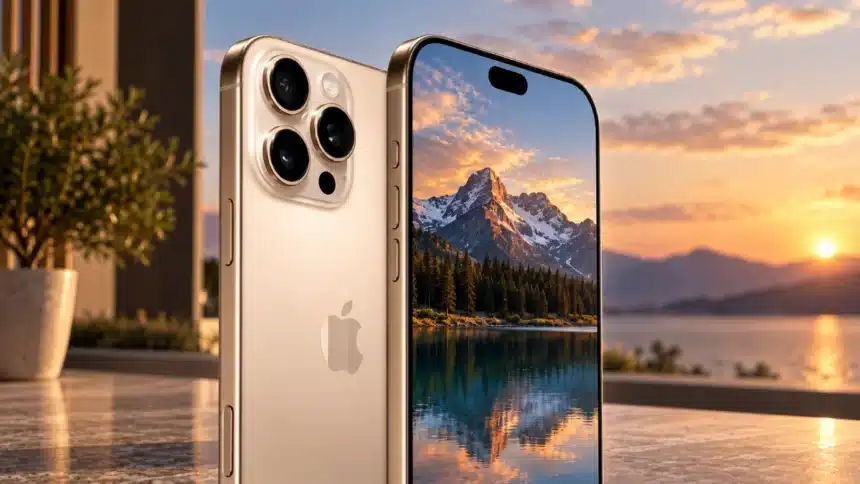
Do not expect a dramatic redesign. Reports consistently describe the iPhone 18 Pro as sharing its core shape with the iPhone 17 Pro, meaning the same aluminum frame with a glass window around the camera plateau and MagSafe area. What does change is the finish and the color lineup.
Apple is reportedly retiring Cosmic Orange, last year’s breakout hit, in favor of a new signature shade called Dark Cherry. Multiple independent leaks, including dummy models and SIM tray photos from leaker Sonny Dickson, point to a smaller final color lineup, with the latest evidence pointing most strongly to Dark Cherry, Light Blue, and Silver.
| Color | What it actually looks like |
| Dark Cherry | A deep wine red with a purple undertone, closer to burgundy than to bright red |
| Light Blue (also called Sky Blue) | A soft, muted blue similar to the Sierra Blue seen on the iPhone 13 Pro |
| Silver | The same neutral silver Apple has offered for years |
One thing to watch: some earlier reports also mentioned Dark Gray or a true black option, and Apple has a history of testing colors that do not make the final cut. The latest leak from Sonny Dickson points to Silver, Dark Cherry, and Sky Blue, so those currently look like the safest bets. If you are set on a specific shade, do not assume it will definitely make the final cut until Apple confirms it on stage.
There is also a smaller, more practical tweak. Suppliers say Apple has improved how the glass camera window lines up with the metal frame around it, so the color match between the two materials should look cleaner than on the iPhone 17 Pro.
Display
The screen size is not expected to change:
- iPhone 18 Pro: 6.3-inch LTPO OLED, 120Hz refresh rate
- iPhone 18 Pro Max: 6.9-inch LTPO OLED, 120Hz refresh rate
The more interesting story is what happens around the screen. The Dynamic Island is rumored to shrink, and some reports say Apple is finally moving the Face ID infrared components underneath the display glass.
This has been a recurring rumor for two straight years, so treat it with some caution. More recent reporting suggests a smaller Dynamic Island is possible, while a full under-display Face ID system is less certain. Until Apple confirms it on stage, I would not bank on this feature.
Performance: The First 2nm iPhone Chip
This is the part of the story I find genuinely exciting, not just a spec bump for the sake of a bigger number on a box.
The iPhone 18 Pro is expected to run on Apple’s new A20 Pro chip, built on TSMC’s 2nm manufacturing process. Every iPhone chip since the A14 has used FinFET transistors. The A20 Pro reportedly switches to a newer transistor design called Gate-All-Around, which lets Apple pack more transistors into the same space.
What that means for you in practical terms:
- Roughly 15 to 18 percent faster processing than the A19 Pro, based on early estimates
- Up to 30 percent better power efficiency, which should translate into real battery life gains rather than just benchmark scores
- A packaging method called WMCM (wafer-level multi-chip module) that integrates the RAM more closely with the processor, which could help with on-device AI tasks like Apple Intelligence running more smoothly without draining the battery as fast
Twelve gigabytes of RAM is expected to be standard across both Pro models this year.
Camera: The Biggest Change in Years
If you photograph a lot on your phone, this is the section to read twice.
Since the iPhone 14 Pro, the Pro’s main camera has used a fixed f/1.78 aperture. The iPhone 18 Pro lineup is expected to break that streak with a mechanical variable aperture on the main 48-megapixel lens. Recent reports suggest both Pro models could get the feature, although some reports have suggested it could be limited to the Pro Max.
Here is why that actually matters, in plain terms:
- In bright daylight, a narrower aperture lets the camera control the amount of light reaching the sensor optically, which could mean less blown-out sky and more natural-looking shots.
- For video, a narrower aperture can help control exposure and depth of field in bright conditions, giving creators more optical control instead of relying entirely on software.
- In low light, opening the aperture wider lets in more light for cleaner night shots and a more convincing background blur without needing Portrait Mode’s software simulation.
The rear setup is still expected to be a 48MP triple-camera system (main, ultrawide, telephoto), but the telephoto lens is also rumored to get a wider aperture for better low-light zoom shots, something anyone who has tried to zoom in at a concert or a dark restaurant will appreciate. The front camera is also expected to remain at an 18MP output, although details about the underlying sensor configuration remain unconfirmed.
One more supply chain detail worth mentioning: LG Innotek and Foxconn are reportedly building the variable aperture mechanism, with actuators supplied by Luxshare ICT and Sunny Optical. That level of manufacturing detail being locked in this close to launch is usually a good sign the feature will actually ship, though nothing is final until Apple says so.
Battery and Charging
Reported battery figures vary a bit depending on the source, which happens when Apple has not confirmed anything yet. For the US models, the most recently reported figures are:
| Model | Rumored US battery capacity |
| iPhone 18 Pro | Around 4,288 mAh |
| iPhone 18 Pro Max | Around 5,567 mAh |
Interestingly, some leaks suggest the exact capacity may depend on whether you buy a version with a physical SIM slot or an eSIM-only model, since the SIM tray itself takes up internal space. The US models are expected to remain eSIM-only, while some other markets may use physical SIM hardware and therefore have slightly different battery capacities.
Combined with the A20 Pro’s efficiency gains, real-world battery life should improve even without a massive jump in raw capacity. Current reporting does not point to Apple moving significantly beyond the roughly 40W wired charging speeds seen recently.
Connectivity: The C2 Modem
Apple’s custom C2 modem is expected to become more widely available across the iPhone 18 Pro lineup. Alongside it, the phone is rumored to support 5G NR-NTN satellite connectivity, an expansion beyond the current Emergency SOS satellite feature.
In plain English, this could eventually mean sending regular text messages, getting Apple Maps directions, and even loading basic web pages through a direct satellite connection when you have zero cell signal, not just in a life-threatening emergency. US models may still pair a Qualcomm modem for certain mmWave 5G bands, according to some reports, so full details on modem-by-region differences are still unconfirmed.
Pricing: What You Should Budget For
This is one of the least certain parts of the iPhone 18 Pro story, as Apple has not announced the official US pricing yet.
For reference, the iPhone 17 Pro starts at $1,099, while the iPhone 17 Pro Max starts at $1,199. Both models start with 256GB of storage.
Current reports suggest Apple could raise the starting prices for the iPhone 18 Pro lineup. Some estimates put the iPhone 18 Pro at around $1,249 to $1,299, while the iPhone 18 Pro Max could start around $1,349 to $1,399. However, these are industry estimates and not confirmed Apple prices.
The expected storage lineup is 256GB, 512GB, and 1TB for the iPhone 18 Pro, while the Pro Max could also offer a 2TB option. The final storage configurations and prices will be confirmed by Apple at its September 9 event.
My honest take: if you are planning to buy the iPhone 18 Pro, it would be sensible to budget for a price increase rather than assuming Apple will keep last year’s $1,099 starting price.
Who Should Actually Wait for This Phone
Not every upgrade cycle is worth chasing, so here is where I land after going through all of this.
Worth the wait if you:
- Shoot a lot of photos or video and want real optical control over exposure and depth, not just software processing
- Are still on an iPhone 15 Pro or older, where the combined chip, camera, and battery gains will feel substantial
- Travel to places with unreliable cell coverage and would use expanded satellite features regularly
Probably fine to skip if you:
- Bought an iPhone 17 Pro or Pro Max last year. The design is staying largely the same, and the standout new feature (variable aperture) is nice but not essential for casual shooters.
- Mainly care about screen size and Face ID placement changes, both of which are looking less certain to arrive this generation than originally rumored
- Are budget-conscious and were hoping for a standard iPhone 18. That model is currently expected in spring 2027, so a Pro is your only new-iPhone option this fall
Final Word
The iPhone 18 Pro looks like a phone built around one real, tangible upgrade: a camera that finally moves beyond a fixed aperture after four generations of the same lens. Pair that with the first 2nm Apple chip and a modem doing more with satellite connectivity, and this is not just a color refresh dressed up as a new model.
What it is not, at least based on everything reported so far, is a redesign. If you were hoping for a fundamentally new look, September 9 will likely disappoint you. If you care about how your photos and videos actually turn out, this might be the most meaningful camera upgrade the Pro line has had in years.
Apple’s event is four days away as of this writing. Treat every number above as the industry’s best guess rather than a guarantee, and check back once Apple actually takes the stage.
Editor’s Note: This article is based on leaks, reports, and industry sources available as of September 5, 2026. Apple has not officially confirmed the iPhone 18 Pro’s specifications, features, colors, pricing, or availability yet. We will update this article when Apple officially announces the new iPhone lineup on September 9.